
Miller Fisher syndrome
A Guillain-Barré variant with paralysed eye movements, unsteady walking and lost reflexes after an infection, linked to anti-GQ1b antibodies.
What it is
Miller Fisher syndrome is an acute immune-mediated neuropathy and a variant of Guillain-Barré syndrome, defined by the triad of ophthalmoplegia, ataxia and areflexia. It usually follows a respiratory or gastrointestinal infection, and most patients have anti-GQ1b IgG antibodies. It typically recovers well over weeks to months.
Who gets it
Rare; accounts for a small share of Guillain-Barré cases in Western countries and a larger share in East Asia. More common in men and in middle age.
Causes
- Post-infectious autoimmunity, often after Campylobacter jejuni or Haemophilus influenzae infection
- Molecular mimicry producing anti-GQ1b antibodies
Risk factors
- Recent respiratory or diarrhoeal infection
- East Asian ancestry (higher relative frequency)
Pathophysiology
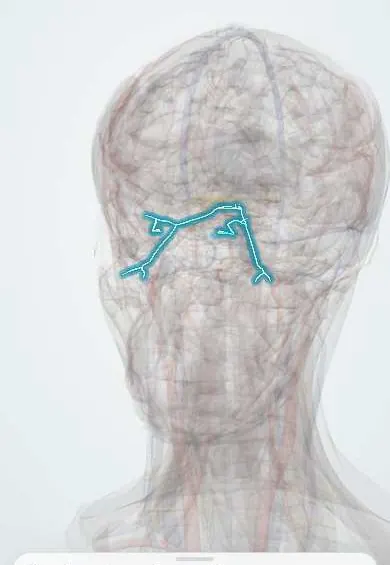
Antibodies against the ganglioside GQ1b, which is concentrated in the paranodal regions of the oculomotor, trochlear and abducens nerves and in muscle spindle afferents, block nerve conduction. This explains the selective eye-movement paralysis and the sensory ataxia with lost reflexes.
Classification
- Classic Miller Fisher syndrome (complete triad)
- Incomplete forms: acute ophthalmoparesis without ataxia, acute ataxic neuropathy
- Overlap with Guillain-Barré syndrome (limb weakness) or Bickerstaff brainstem encephalitis (drowsiness, hyperreflexia)
Symptoms and signs
- Double vision progressing to limited eye movements in all directions
- Unsteady, wide-based gait
- Ptosis and sometimes dilated poorly reactive pupils
- Facial or bulbar weakness in some patients
- Tingling of the limbs
Diagnosis
- Clinical
- Acute ophthalmoplegia, ataxia and areflexia after an infection, with normal consciousness.
- Tests
- Anti-GQ1b IgG antibodies (positive in most cases); cerebrospinal fluid albumino-cytological dissociation (often after the first week); nerve conduction studies; respiratory function monitoring.
- Imaging
- MRI of the brain to exclude a brainstem stroke, tumour or encephalitis, usually normal.
Differential diagnosis
- Brainstem stroke
- Myasthenia gravis
- Botulism
- Wernicke encephalopathy
- Bickerstaff brainstem encephalitis
Acute ophthalmoplegia: Miller Fisher vs its look-alikes
| Feature | Miller Fisher syndrome | Brainstem stroke | Myasthenia gravis | Botulism |
|---|---|---|---|---|
| Onset | Over days, after an infection | Sudden, within minutes | Fluctuating and fatigable over weeks | Hours to days after toxin from food, a wound or injection |
| Tendon reflexes | Lost | Normal or brisk | Normal | Normal or reduced |
| Ataxia | Present, with lost reflexes | Possible, with other brainstem signs | Absent | Absent |
| Pupils | Usually normal, sometimes sluggish | Depend on the site | Always normal | Dilated and poorly reactive |
| Consciousness | Normal | May be reduced | Normal | Normal |
| Key test | Anti-GQ1b IgG; CSF after the first week | MRI with diffusion | Ice-pack test, acetylcholine receptor antibodies | Toxin assay of serum or stool |
Goal of treatment
Support the patient and watch for spread of weakness until spontaneous recovery.
Treatment
- Follow-up
- Admission and monitoring of breathing and swallowing, especially in overlap forms.
- Medical
- Intravenous immunoglobulin or plasma exchange may be used in severe or overlap cases, as in Guillain-Barré syndrome.
- Conservative
- Prisms or occlusion for double vision and lubrication if the lids do not close well.
- Rehabilitation
- Physiotherapy for gait and balance.
Complications
- Respiratory failure in overlap with Guillain-Barré
- Exposure keratopathy
- Falls
Common traps
- The ataxia means a cerebellar or brainstem lesion: in classic Miller Fisher the ataxia is largely sensory from blocked spindle afferents, with lost reflexes; drowsiness and brisk reflexes instead suggest Bickerstaff brainstem encephalitis
- A normal CSF in the first days excludes the diagnosis: albumino-cytological dissociation often appears only after the first week, so anti-GQ1b IgG is the more useful early test
- Dilated pupils with ophthalmoplegia rule it out: pupils can be involved, but fixed dilated pupils with descending paralysis, dry mouth and normal sensation should prompt a search for botulism
- Eye-only signs carry no breathing risk: Miller Fisher can overlap with Guillain-Barré, so spreading limb weakness, swallowing trouble and falling respiratory function must be watched for
- Every patient needs immunoglobulin or plasma exchange: the pure form usually recovers on its own, and these treatments are kept for severe or overlap cases
Prognosis
Good: most patients recover eye movements and gait within about six months, usually without lasting deficit.
Test yourself
Think of the answer, then tap the question to see it.
Ten days after diarrhoea, an alert man has double vision, an unsteady gait and absent reflexes. What is the likely diagnosis and test?
Miller Fisher syndrome: send anti-GQ1b IgG and do MRI to exclude a brainstem lesion; the CSF may still be normal this early.
Why are the eye muscles and reflexes affected while limb strength is usually spared?
GQ1b is concentrated in the ocular motor nerves and in muscle spindle afferents, and much less in limb motor nerves.
A patient with Miller Fisher syndrome becomes drowsy with brisk reflexes and extensor plantars. What has changed?
This suggests Bickerstaff brainstem encephalitis, the central end of the same anti-GQ1b spectrum: brain MRI and close monitoring.
What must be monitored in a patient admitted with Miller Fisher syndrome, and why?
Breathing, swallowing, cough and limb strength, because overlap with Guillain-Barré syndrome can lead to respiratory failure.
How does botulism differ from Miller Fisher syndrome at the bedside?
Botulism gives descending paralysis with fixed dilated pupils, dry mouth and normal sensation, without the post-infectious sensory ataxia of Miller Fisher.
Why it happens
In neurology
- Double vision: one eye or two, which nerve
- Facial pain and neuralgias: trigeminal, glossopharyngeal, post-herpetic
Connections
Educational information, not medical advice. For any symptom, see a health professional.
Sources: Miller Fisher Syndrome (StatPearls Publishing (NCBI Bookshelf), 2023).
Spotted a mistake?We are always improving for the community. Tell us what is wrong and our team will review it.Report a mistake
Representative model, for educational purposes only.