Conditions · Hematology and oncology
Pure red cell aplasia (incl. Diamond–Blackfan anaemia) !
The bone marrow stops making red blood cells while white cells and platelets stay normal, causing severe anaemia.
Updated 2026-11-01
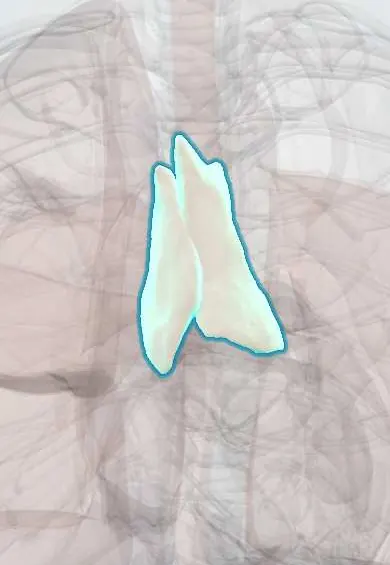
Structures involved
Tap one to see what it is and open it in 3D.
Why it happens
What it is
A bone marrow failure limited to the red cell line: erythroid precursors are almost absent, reticulocytes fall close to zero and a normocytic anaemia develops, while white cells and platelets are normal. It can be congenital (Diamond–Blackfan anaemia), transient (parvovirus B19) or acquired and chronic (immune).
Who gets it
Rare. Diamond–Blackfan anaemia affects about 5–7 per million newborns and appears in the first year of life. Acquired forms are mostly seen in adults; transient red cell aplasia from parvovirus B19 is common in children with sickle cell disease, which is present in Colombia's Caribbean and Pacific populations.
Causes
- Diamond–Blackfan anaemia: autosomal dominant mutations in ribosomal protein genes, most often RPS19
- Parvovirus B19, which infects and destroys erythroid progenitors (transient in people with haemolysis, chronic in the immunocompromised)
- Thymoma and other tumours
- Large granular lymphocyte leukaemia and chronic lymphocytic leukaemia
- Autoimmune diseases such as systemic lupus erythematosus
- Drugs, including antibodies against erythropoiesis-stimulating agents and some anticonvulsants
- ABO-incompatible stem cell transplantation; pregnancy
- Idiopathic (more than half of acquired cases)
Risk factors
- Chronic haemolytic anaemia (sickle cell disease, hereditary spherocytosis) for parvovirus aplastic crisis
- Immunosuppression: HIV, transplantation, chemotherapy
- Thymoma or lymphoproliferative disease
- Family history of Diamond–Blackfan anaemia
- Treatment with erythropoiesis-stimulating agents in chronic kidney disease
Pathophysiology
Red cell production stops at the progenitor stage. In Diamond–Blackfan anaemia, defective ribosome assembly activates p53 and causes erythroid progenitors to die. Parvovirus B19 enters erythroid progenitors through the P antigen and kills them; in healthy people the pause in production is not noticed, but in haemolytic anaemias, where red cells survive only days, haemoglobin falls sharply. In acquired immune forms, T cells or autoantibodies suppress erythroid progenitors or erythropoietin itself. Erythropoietin levels are high because the kidney senses the anaemia.
Classification
- Congenital: Diamond–Blackfan anaemia
- Acquired transient: parvovirus B19 aplastic crisis, drug reactions, transient erythroblastopenia of childhood
- Acquired chronic: idiopathic, thymoma-associated, lymphoproliferative, autoimmune, anti-erythropoietin antibodies, chronic parvovirus in the immunocompromised
Symptoms and signs
- Pallor, fatigue and breathlessness on exertion
- Palpitations and tachycardia
- No bleeding or recurrent infections, because platelets and white cells are normal
- Diamond–Blackfan anaemia: anaemia in infancy, with thumb malformations, cleft palate, small head or short stature in about half
- Thymoma: chest symptoms or myasthenia gravis in some patients
Diagnosis
- Clinical
- Suspect it when a normocytic (in Diamond–Blackfan anaemia often macrocytic) anaemia has a very low reticulocyte count and normal white cells and platelets, with no bleeding or haemolysis to explain it.
- Tests
- Full blood count and reticulocyte count; bone marrow aspirate and biopsy showing near-absence of erythroid precursors with normal other lines (giant pronormoblasts suggest parvovirus). Parvovirus B19 PCR in blood (serology may be negative in immunocompromised patients). Flow cytometry for large granular lymphocytes, autoimmune serology and HIV test. In Diamond–Blackfan anaemia, raised red cell adenosine deaminase and ribosomal protein gene testing.
- Imaging
- CT of the chest to look for thymoma in every adult with acquired chronic pure red cell aplasia.
Differential diagnosis
- Aplastic anaemia (all three lines low)
- Myelodysplastic syndrome
- Anaemia of chronic kidney disease
- Fanconi anaemia and other inherited marrow failure syndromes
- Transient erythroblastopenia of childhood
Goal of treatment
Support the haemoglobin, remove or treat the cause, and restore red cell production with immunosuppression when the cause is immune.
Treatment
- Acute
- Red cell transfusion for symptomatic anaemia, including parvovirus aplastic crisis in sickle cell disease.
- Medical
- Remove the cause: stop the offending drug; intravenous immunoglobulin for chronic parvovirus infection in immunocompromised patients; treat lymphoproliferative or autoimmune disease.
- Medical
- Immune acquired forms: immunosuppression with corticosteroids and/or a calcineurin inhibitor such as ciclosporin, with other agents for refractory disease. Diamond–Blackfan anaemia: corticosteroids, or chronic transfusion with iron chelation; stem cell transplantation can cure it.
- Surgical
- Removal of a thymoma (thymectomy), which is needed for the tumour itself even though the anaemia does not always improve.
- Follow-up
- Regular haemoglobin and reticulocyte checks, ferritin for transfusion iron overload, and isolation precautions for parvovirus in hospital.
Complications
- Transfusion-dependent iron overload
- Heart failure from severe anaemia
- Side effects of long-term immunosuppression and corticosteroids (infection, growth delay in children)
- Diamond–Blackfan anaemia: higher risk of myelodysplastic syndrome, acute myeloid leukaemia and osteosarcoma
Prognosis
Parvovirus and drug-induced forms usually resolve once the virus is cleared or the drug is stopped. Most immune acquired cases respond to immunosuppression, but relapses are common. In Diamond–Blackfan anaemia, a minority have spontaneous remission; the rest depend on steroids or transfusions unless transplanted.
Test yourself
Think of the answer, then tap the question to see it.
Which blood findings define pure red cell aplasia?
Anaemia with a very low reticulocyte count and normal white cells and platelets.
Which tumour must be sought in an adult with acquired pure red cell aplasia?
Thymoma, with CT of the chest.
Why does parvovirus B19 cause an aplastic crisis in sickle cell disease?
It stops red cell production, and sickle red cells survive only a short time, so haemoglobin falls quickly.
What is the treatment for chronic parvovirus B19 red cell aplasia in an immunocompromised patient?
Intravenous immunoglobulin.
Which gene is most often mutated in Diamond–Blackfan anaemia?
RPS19, a ribosomal protein gene.
Related conditions
- Aplastic anaemia
- Erythema infectiosum (fifth disease, parvovirus B19)
- Sickle cell disease
- Myasthenia gravis
- Chronic lymphocytic leukaemia
- Systemic lupus erythematosus
- Myelodysplastic syndromes
- Fanconi anaemia
- HIV infection and AIDS
- Autoimmune haemolytic anaemia
- Chronic kidney disease
Educational information, not medical advice. For any symptom, see a health professional.
Sources: Diamond-Blackfan anemia (MedlinePlus Genetics (U.S. National Library of Medicine), 2025); Treatment strategy for acquired pure red cell aplasia: a systematic review and meta-analysis (Blood Advances (PubMed Central), 2023); About Parvovirus B19 (Centers for Disease Control and Prevention (CDC), 2024).
Spotted a mistake?We are always improving for the community. Tell us what is wrong and our team will review it.Report a mistake
Representative model, for educational purposes only.