
Scleroderma renal crisis
In scleroderma the kidney's small arteries can suddenly clamp down: blood pressure soars and the kidneys fail in days. A prompt ACE inhibitor saves lives.
What it is
A life-threatening complication of systemic sclerosis: abrupt, usually severe hypertension with acute kidney injury, caused by narrowing of the small renal arteries and often accompanied by thrombotic microangiopathy (haemolysis with schistocytes and low platelets). About 10% of cases are normotensive.
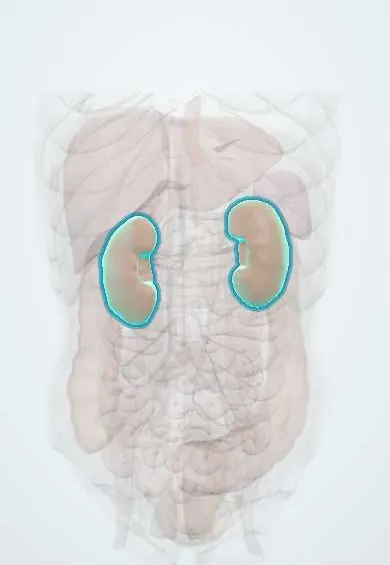
Who gets it
It affects about 5% of people with systemic sclerosis overall in recent series, more often those with diffuse cutaneous disease (around 10–14%) than limited disease (about 3%); Japan reports the lowest rates. About three quarters of cases occur in the first years of the disease, counted from the first symptom other than Raynaud phenomenon. Its frequency has fallen as clinicians avoid high-dose glucocorticoids in patients at risk.
Causes
- Systemic sclerosis, almost always early diffuse cutaneous disease
- Rarely limited disease or overlap syndromes such as mixed connective tissue disease
- Triggers: high-dose glucocorticoids, ciclosporin, and anything that lowers renal blood flow (dehydration, low cardiac output, cardiac involvement by scleroderma)
Risk factors
- Early diffuse cutaneous disease with rapidly progressing skin thickening
- Anti-RNA polymerase III antibodies: up to half of carriers develop renal crisis (it is very rare with anti-centromere antibodies)
- High-dose glucocorticoids
- Tendon friction rubs, large-joint contractures, new anaemia, pericardial effusion, heart involvement or proteinuria
Pathophysiology
Endothelial injury and intimal proliferation narrow the interlobular and arcuate arteries (onion-skin lesions) → a trigger (glucocorticoids, low flow, vasospasm or «renal Raynaud») further cuts cortical blood flow → juxtaglomerular hyperplasia and a surge of renin → angiotensin II raises blood pressure and constricts renal vessels further, a self-sustaining loop → creatinine rises, and red cells and platelets are sheared in the damaged vessels (microangiopathic haemolytic anaemia, thrombocytopenia) → hypertensive emergency with encephalopathy, retinopathy, acute heart failure or pericarditis. ACE inhibition breaks the loop and, by blocking bradykinin breakdown, adds vasodilation.
Classification
- Hypertensive renal crisis (about 90%): new or accelerated hypertension with acute kidney injury
- Normotensive renal crisis (about 10%): acute kidney injury and thrombotic microangiopathy without a rise in blood pressure, with worse long-term outcomes
- Classification criteria (Scleroderma Clinical Trials Consortium) combine new hypertension, acute kidney injury, microangiopathic haemolytic anaemia with thrombocytopenia, target-organ damage and kidney histology
Symptoms and signs
- Often silent at first, with only a rise in home blood pressure
- Headache, blurred vision, confusion or seizures (hypertensive encephalopathy)
- Breathlessness and oedema from acute heart failure; chest pain from pericarditis
- Falling urine output
Diagnosis
- Clinical
- Suspect it in any patient with early diffuse systemic sclerosis, especially anti-RNA polymerase III positive, who develops a new rise in blood pressure, rising creatinine or falling urine output. Patients at risk check their blood pressure at home so a rise is caught early.
- Tests
- Creatinine and urine output; urinalysis (mild proteinuria, microscopic haematuria, few casts); full blood count and blood smear for schistocytes, platelets, LDH, haptoglobin and reticulocytes; plasma renin (very high); ADAMTS13 when thrombocytopenia is marked, to exclude TTP; anti-RNA polymerase III antibodies. Kidney biopsy only when the diagnosis is doubtful (normotensive, fever, active sediment, overlap disease), because hypertension and low platelets raise its risk.
- Imaging
- Fundoscopy for hypertensive retinopathy; echocardiography for heart failure or pericardial effusion; kidney Doppler ultrasound to exclude renal artery stenosis; brain MRI for encephalopathy (posterior reversible encephalopathy syndrome).
Differential diagnosis
- Thrombotic thrombocytopenic purpura
- Atypical haemolytic uraemic syndrome
- ANCA-associated vasculitis, including overlap with systemic sclerosis
- Lupus nephritis in overlap disease
- Malignant hypertension from other causes, or renal artery stenosis
- Prerenal or drug-induced acute kidney injury
High blood pressure, AKI and low platelets: is it scleroderma renal crisis?
| Condition | Clue | Blood pressure | Key test | Treatment |
|---|---|---|---|---|
| Scleroderma renal crisis | Early diffuse systemic sclerosis, anti-RNA polymerase III, recent steroids | High (normal in about 10%) | Very high renin; ADAMTS13 not severely reduced | ACE inhibitor, titrated up quickly |
| Thrombotic thrombocytopenic purpura | Neurological signs, fever, very low platelets | Often normal or mildly raised | ADAMTS13 severely reduced | Plasma exchange and immunotherapy |
| Atypical haemolytic uraemic syndrome | Complement disorder, often after a trigger | Often high | Complement studies; ADAMTS13 normal | Complement inhibitor |
| ANCA-associated vasculitis | Active urine sediment, lung involvement, fever | Variable | ANCA; crescents on biopsy | Immunosuppression |
| Malignant hypertension from other causes | No scleroderma features | Very high | Search for the secondary cause | Controlled lowering with antihypertensives |
Goal of treatment
Break the renin–angiotensin loop at once with an ACE inhibitor, bring blood pressure back to the patient's baseline over a few days, support the kidney with dialysis if needed, continue the ACE inhibitor for life, and allow up to two years for kidney recovery before transplantation.
Treatment
- Acute
- ACE inhibitor started immediately and titrated up quickly to bring blood pressure to the patient's baseline over a few days (agent and steps set by the guideline); continue it even if creatinine keeps rising, because kidney function often worsens before it improves.
- Acute
- If blood pressure stays high despite the ACE inhibitor, add calcium channel blockers, alpha-blockers or clonidine; intravenous vasodilators (including a prostacyclin analogue) in a hypertensive emergency. Avoid beta-blockers, which can worsen renal vasospasm and lower cardiac output.
- Medical
- Angiotensin receptor blockers only when an ACE inhibitor cannot be used: they are not equivalent because they do not block bradykinin breakdown, and combining both adds adverse effects without proven benefit.
- Procedure
- Dialysis when needed (about a fifth to two fifths of cases); enough kidney function to stop dialysis can return up to 2 years later.
- Surgical
- Kidney transplantation after waiting for possible recovery; graft survival now resembles other causes of kidney failure, and recurrence in the graft is uncommon.
- Follow-up
- Platelets, haemolysis markers, creatinine and blood pressure followed closely in the acute phase (platelet recovery is often the first sign of response); afterwards, home blood pressure and regular kidney checks, and avoidance of high-dose glucocorticoids.
Complications
- Permanent kidney failure needing long-term dialysis or transplantation
- Hypertensive encephalopathy, seizures and posterior reversible encephalopathy syndrome
- Acute heart failure, pericardial effusion and arrhythmias
- Death: about 20% within 6 months
Common traps
- Stop the ACE inhibitor when creatinine rises: kidney function often keeps falling for days after it is started; that is expected, and the ACE inhibitor is what saves the kidney and the patient
- An ACE inhibitor taken beforehand prevents renal crisis: it does not, and patients already taking one when the crisis begins do worse, probably because it hides the warning rise in blood pressure
- A normal blood pressure rules it out: about 10% are normotensive, and a rise from a usually low baseline to a normal-looking value can already be the crisis
- An angiotensin receptor blocker works just as well: it does not block bradykinin breakdown and is not equivalent; use it only if an ACE inhibitor is impossible
- High-dose steroids treat it because scleroderma is autoimmune: high-dose glucocorticoids are a trigger of renal crisis, not a treatment
Prognosis
Before ACE inhibitors, renal crisis was the leading cause of death in scleroderma; they cut mortality sharply, yet it remains about 20% at 6 months and has not improved further since. About 20–40% need dialysis, and many of them come off it within 2 years. Normotensive presentation and taking an ACE inhibitor before the crisis are linked to worse outcomes; patients with anti-RNA polymerase III, though more likely to need dialysis, are also more likely to recover. Survival is better after transplantation than on long-term dialysis.
Prevention
- Avoiding high-dose glucocorticoids, and using ciclosporin with caution, in early diffuse disease
- Home blood pressure monitoring in patients at risk, with prompt review of any rise from baseline
- Early recognition rather than prophylactic ACE inhibitors, which have not been shown to prevent renal crisis
Test yourself
Think of the answer, then tap the question to see it.
Which drug class is the key treatment for scleroderma renal crisis, and what do you do if creatinine rises after starting it?
An ACE inhibitor, titrated up quickly. Continue it: creatinine often keeps rising for a while, and stopping removes the only treatment shown to improve survival.
Which three risk factors best predict scleroderma renal crisis?
Early diffuse cutaneous disease with rapid skin thickening, anti-RNA polymerase III antibodies and high-dose glucocorticoids (also tendon friction rubs and heart involvement).
Why are angiotensin receptor blockers not a full substitute for ACE inhibitors in renal crisis?
ACE inhibitors also block the breakdown of bradykinin, a vasodilator that helps reopen the renal vessels; receptor blockers lack this effect and have not proved equivalent.
A woman with diffuse scleroderma for 2 years has a blood pressure of 135/85 (her usual is 95/60), headache and a creatinine above baseline. What is happening and what next?
Probable scleroderma renal crisis: a rise from her own baseline counts. Admit her, start an ACE inhibitor now, check platelets, smear and LDH, and follow creatinine.
How long can it take to come off dialysis after scleroderma renal crisis, and why does it matter?
Up to about 2 years, so the decision to transplant is delayed until it is clear the kidneys will not recover.
Connections
Educational information, not medical advice. For any symptom, see a health professional.
Sources: Renal Disease and Systemic Sclerosis: an Update on Scleroderma Renal Crisis (Clinical Reviews in Allergy and Immunology, 2023); Scleroderma renal crisis: Case reports and update on critical issues (European Journal of Rheumatology, 2021); Scleroderma and Renal Crisis (StatPearls (NCBI Bookshelf), 2023).
Spotted a mistake?We are always improving for the community. Tell us what is wrong and our team will review it.Report a mistake
Representative model, for educational purposes only.