Conditions · Pediatrics and neonatology
Transient synovitis of the hip !
A short-lived, harmless inflammation of the hip lining in young children that causes a sudden limp. It must be told apart from a hip infection.
Updated 2026-11-01
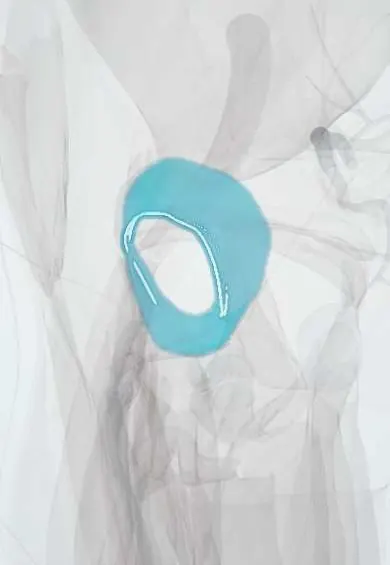
Structures involved
Tap one to see what it is and open it in 3D.
- Hip capsule
- Femoral head cartilage
- Femur
- Hip bone
- Acetabular labrum
- Ligament of the femoral head
- Acetabular cartilage
Why it happens
What it is
A self-limiting, non-bacterial inflammation of the synovial membrane of the hip, also called toxic synovitis or irritable hip. It is the commonest cause of acute hip pain and limp in children, and a diagnosis of exclusion.
Who gets it
Most common between 3 and 10 years of age, about twice as often in boys. It frequently follows an upper respiratory infection. It is a very frequent reason for paediatric emergency visits for limp, including in Colombia.
Causes
- Unknown; often follows a viral upper respiratory infection
- Minor trauma or a hypersensitivity reaction are proposed triggers
Risk factors
- Age 3 to 10 years
- Male sex
- Recent viral infection
Pathophysiology
Inflammation of the synovium produces a sterile joint effusion that distends the hip capsule and causes pain. The child holds the hip in flexion, abduction and external rotation, the position of greatest capsular volume. The effusion settles on its own within days to two weeks without damage to cartilage or bone.
Symptoms and signs
- Sudden limp or refusal to bear weight, usually on one side
- Pain in the groin, thigh or knee (referred hip pain)
- Hip held flexed and externally rotated, with limited and painful internal rotation
- No fever or only low-grade fever; the child looks well
- Recent cold or viral illness
Diagnosis
- Clinical
- A well-looking child of 3 to 10 years with acute limp and mild restriction of hip movement after a viral illness. Kocher criteria (fever over 38.5 °C, non-weight-bearing, ESR over 40 mm/h, white cell count over 12,000/mm³; CRP over 2 mg/dL added later) help separate it from septic arthritis: the more criteria, the higher the probability of infection.
- Tests
- Complete blood count, ESR and CRP are normal or only slightly raised. If septic arthritis cannot be excluded, ultrasound-guided aspiration of the joint with Gram stain and culture.
- Imaging
- Hip ultrasound shows an effusion (it does not distinguish sterile from septic fluid). Radiographs, including frog-leg lateral view, are usually normal and help exclude Perthes disease, slipped epiphysis and fracture. MRI if symptoms persist or osteomyelitis is suspected.
Differential diagnosis
- Septic arthritis of the hip (orthopaedic emergency)
- Osteomyelitis of the proximal femur or pelvis
- Legg–Calvé–Perthes disease
- Slipped capital femoral epiphysis (adolescents)
- Juvenile idiopathic arthritis, reactive arthritis, leukaemia, toddler's fracture or non-accidental injury
Goal of treatment
Relieve pain, allow the effusion to resolve, and make sure septic arthritis and other serious causes are not missed.
Treatment
- Conservative
- Rest and limited activity until the child can walk comfortably, then gradual return to normal play.
- Medical
- Non-steroidal anti-inflammatory drugs (such as ibuprofen) for pain and inflammation; antibiotics are not indicated.
- Follow-up
- Safety-netting: reassess within a few days, and urgently if fever appears or pain worsens; follow-up radiographs if symptoms persist, to detect Perthes disease.
Complications
- Recurrence in a minority of children, usually within six months
- Missed septic arthritis (the main danger of misdiagnosis)
- Later Legg–Calvé–Perthes disease in a small proportion
Prognosis
Excellent: symptoms usually resolve within 7 to 14 days without long-term harm. Some children have a recurrence; persisting symptoms call for re-evaluation.
Test yourself
Think of the answer, then tap the question to see it.
What is the most important differential diagnosis of transient synovitis of the hip?
Septic arthritis of the hip, an orthopaedic emergency.
What are the Kocher criteria?
Fever over 38.5 °C, inability to bear weight, ESR over 40 mm/h and white cell count over 12,000/mm³ (CRP over 2 mg/dL is sometimes added).
In what position does the child hold the affected hip, and why?
Flexion, abduction and external rotation, which maximises capsular volume and reduces pain from the effusion.
What is the typical age group and history?
Children 3 to 10 years old, mostly boys, often after a recent viral upper respiratory infection.
What is the treatment?
Rest and NSAIDs; it resolves within one to two weeks without antibiotics.
Related conditions
- Septic Arthritis of the Knee
- Osteomyelitis
- Legg-Calvé-Perthes disease
- Slipped capital femoral epiphysis
- Juvenile idiopathic arthritis
- Developmental dysplasia of the hip
- Acute leukaemia (AML and ALL)
Educational information, not medical advice. For any symptom, see a health professional.
Sources: Toxic synovitis: MedlinePlus Medical Encyclopedia (MedlinePlus, US National Library of Medicine, 2026); Transient synovitis (irritable hip) (The Royal Children's Hospital Melbourne, 2026).
Spotted a mistake?We are always improving for the community. Tell us what is wrong and our team will review it.Report a mistake
Representative model, for educational purposes only.