Juvenile idiopathic arthritis !
Long-lasting joint inflammation in children under 16 with no other cause. It can also inflame the eye silently, so regular eye checks are vital.
Updated 2026-11-01
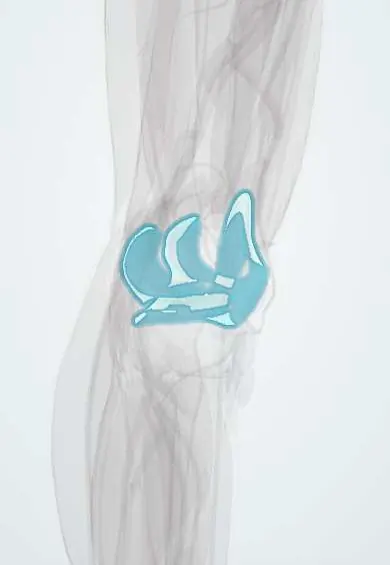
Structures involved
Tap one to see what it is and open it in 3D.
Why it happens
- Chronic inflammation: causes, cells and features
- Synovial joints: capsule, synovial membrane and articular cartilage
- Cartilage: hyaline, elastic, fibrocartilage
- Ossification, growth plate and bone remodeling
What it is
An umbrella term for chronic arthritis of unknown cause that begins before age 16 and lasts at least 6 weeks, after other causes have been excluded. It includes several subtypes with different patterns, from a few large joints to many small joints or a systemic form with fever and rash.
Who gets it
The most common chronic rheumatic disease of childhood. Oligoarticular disease predominates in young girls; polyarticular rheumatoid factor–positive disease resembles adult rheumatoid arthritis in adolescent girls; enthesitis-related arthritis is more common in older boys. Access to paediatric rheumatology and eye screening is uneven across Colombia and Latin America, which delays diagnosis.
Causes
- Autoimmune and autoinflammatory mechanisms; cause unknown
- Genetic susceptibility (HLA associations, such as HLA-B27 in enthesitis-related arthritis)
- Possible environmental triggers such as infections
Risk factors
- Female sex (oligoarticular and polyarticular types)
- Early childhood onset (oligoarticular)
- Positive ANA: higher risk of uveitis
- HLA-B27 and family history of spondyloarthritis (enthesitis-related)
- Personal or family history of psoriasis (psoriatic JIA)
Pathophysiology
Immune activation causes synovial inflammation with thickening (pannus), effusion and, if uncontrolled, erosion of cartilage and bone. Inflammation near growth plates can speed or slow growth, causing leg-length difference or a small jaw. In systemic JIA innate immune cytokines (IL-1, IL-6) drive fever, rash and serositis. Chronic anterior uveitis develops silently, especially in young ANA-positive girls.
Classification
- Oligoarticular (1–4 joints in the first 6 months; persistent or extended)
- Polyarticular rheumatoid factor–negative (5 or more joints)
- Polyarticular rheumatoid factor–positive
- Systemic JIA (quotidian fever, evanescent salmon rash, arthritis)
- Enthesitis-related arthritis
- Psoriatic arthritis and undifferentiated arthritis (ILAR classification)
Symptoms and signs
- Joint swelling, warmth and reduced movement, often of the knee, ankle or wrist
- Morning stiffness, limp or reluctance to walk after rest, rather than severe pain
- Fever spiking once or twice a day with a salmon-pink rash that comes and goes (systemic form)
- Enlarged lymph nodes, liver or spleen, or chest pain from serositis (systemic form)
- Heel pain or low back pain from enthesitis (enthesitis-related)
- Usually no eye symptoms despite uveitis; sometimes red eye or blurred vision
Diagnosis
- Clinical
- Diagnosis of exclusion: arthritis lasting at least 6 weeks with onset before 16 years and no other cause. The pattern and number of joints in the first 6 months define the subtype.
- Tests
- No single test confirms it. CBC, ESR/CRP, ANA (uveitis risk), rheumatoid factor and anti-CCP (prognosis), HLA-B27 when relevant; ferritin and clotting tests in systemic JIA. Joint fluid analysis when infection is suspected. Regular slit-lamp eye examinations screen for uveitis.
- Imaging
- Ultrasound and MRI show synovitis and effusion; plain radiographs exclude fractures and tumours and follow joint damage.
Differential diagnosis
- Septic arthritis and osteomyelitis
- Reactive arthritis and post-viral arthritis; Lyme disease where it occurs
- Acute leukaemia and bone tumours
- Systemic lupus erythematosus and other connective tissue diseases
- Kawasaki disease and other causes of prolonged fever in children (for systemic JIA)
- Trauma and orthopaedic conditions
Goal of treatment
Achieve inactive disease, protect joints and growth, prevent eye damage from uveitis, and allow normal school, play and development.
Treatment
- Medical
- NSAIDs for symptoms and intra-articular glucocorticoid injections for affected joints, especially in oligoarticular disease.
- Medical
- Methotrexate as the main conventional disease-modifying drug for persistent or polyarticular disease.
- Medical
- Biologics for disease not controlled or severe forms: TNF inhibitors, or IL-1 and IL-6 blockers for systemic JIA; systemic glucocorticoids short-term for severe systemic features.
- Rehabilitation
- Physiotherapy and occupational therapy to keep range of motion, strength and function; splints when needed; school and psychosocial support.
- Follow-up
- Ophthalmological screening with slit-lamp examination at intervals set by subtype and ANA status; monitoring of growth, blood counts, liver tests and infection risk on treatment; vaccinations updated before immunosuppression.
Drugs for this condition
Complications
- Chronic anterior uveitis leading to cataract, glaucoma, band keratopathy and vision loss
- Joint damage, contractures and disability
- Growth disturbance: leg-length difference, small jaw (micrognathia), short stature
- Macrophage activation syndrome in systemic JIA
- Osteoporosis and infections related to treatment
Prognosis
Modern treatment allows most children to reach inactive disease, though many still have active arthritis into adulthood. Oligoarticular persistent disease has the best outlook; rheumatoid factor–positive polyarticular and systemic forms carry more risk of damage.
Test yourself
Think of the answer, then tap the question to see it.
What defines juvenile idiopathic arthritis?
Arthritis of unknown cause beginning before age 16 and lasting at least 6 weeks, after excluding other causes.
Which JIA patients have the highest risk of uveitis?
Young girls with oligoarticular disease and positive ANA.
Why do children with JIA need regular slit-lamp eye examinations?
Because chronic anterior uveitis is often painless and silent but can cause blindness if not detected.
What are the classic features of systemic JIA?
Daily spiking fever, an evanescent salmon-pink rash, arthritis, lymphadenopathy, organomegaly and serositis.
Which life-threatening complication can occur in systemic JIA?
Macrophage activation syndrome.
Related conditions
- Uveitis
- Cataract
- Septic Arthritis of the Knee
- Reactive arthritis
- Lyme disease
- Acute leukaemia (AML and ALL)
- Systemic lupus erythematosus
- Kawasaki disease
- Rheumatoid arthritis
- Psoriatic arthritis
- Ankylosing spondylitis
- Osteoporosis
Educational information, not medical advice. For any symptom, see a health professional.
Sources: Juvenile idiopathic arthritis (MedlinePlus (U.S. National Library of Medicine), 2025).
Spotted a mistake?We are always improving for the community. Tell us what is wrong and our team will review it.Report a mistake
Representative model, for educational purposes only.