Conditions · Gastroenterology and hepatology
Whipple disease !
A rare chronic bacterial infection of the small bowel causing diarrhoea, weight loss and joint pain. It can also affect the brain and heart.
Updated 2026-11-01
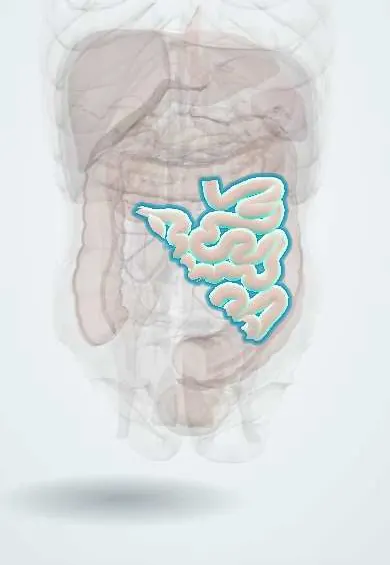
Structures involved
Tap one to see what it is and open it in 3D.
Microorganisms that cause it
Why it happens
- Chronic inflammation: causes, cells and features
- Special stains in diagnosis: Congo red, Prussian blue, PAS, Ziehl–Neelsen, Gram
- Patterns of malabsorption
- Fat digestion and absorption
- How the lymphatic system works
- Small intestine: villi, crypts, enterocytes, Paneth cells; duodenum vs jejunum vs ileum
What it is
A rare chronic systemic infection caused by the bacterium Tropheryma whipplei. It infiltrates the small bowel wall and its lymphatics, causing malabsorption, and can also involve the joints, heart, eyes and central nervous system. It is fatal without treatment.
Who gets it
Very rare. Classically affects middle-aged white men, often with occupational soil or animal contact such as farmers. The bacterium is common in the environment and many carriers never develop disease, which suggests a host immune defect. Cases are reported sporadically in Latin America.
Causes
- Infection with Tropheryma whipplei, a Gram-positive actinomycete
- Subtle defects in host cell-mediated immunity allow chronic infection
Risk factors
- Male sex, middle age
- Contact with soil, sewage or farm animals
- Immune defects in macrophage function (often subtle)
- Immunosuppressive treatment, which can unmask or worsen the disease
Pathophysiology
Macrophages ingest the bacteria but cannot destroy them, so foamy macrophages full of bacterial material fill the lamina propria of the small bowel. The villi become flattened and swollen, and the lymphatics and mesenteric lymph nodes become blocked, impairing absorption of fat and other nutrients (malabsorption with steatorrhoea and protein loss). Spread through the blood and lymph reaches the joints, heart valves, eyes and brain.
Symptoms and signs
- Migratory arthralgia or non-deforming arthritis of large joints, often years before gut symptoms
- Chronic diarrhoea with fatty stools
- Weight loss and abdominal pain
- Fever and generalised lymph node enlargement
- Skin hyperpigmentation
- Neurological signs: memory loss, dementia, eye movement disorders (oculomasticatory myorhythmia is characteristic)
- Culture-negative endocarditis
Diagnosis
- Clinical
- Consider in a middle-aged man with arthralgia, diarrhoea, weight loss and lymphadenopathy, especially if arthritis did not respond to or worsened with immunosuppression.
- Tests
- Upper endoscopy with biopsies of the duodenum or jejunum: the classic finding is foamy macrophages in the lamina propria that stain with periodic acid-Schiff (PAS-positive) and contain rod-shaped bacilli. PCR and immunohistochemistry for T. whipplei confirm the diagnosis. Cerebrospinal fluid PCR is recommended to look for central nervous system involvement. Blood tests show anaemia, low albumin and raised inflammatory markers.
- Imaging
- CT may show enlarged mesenteric and retroperitoneal lymph nodes and a thickened small bowel wall; echocardiography if endocarditis is suspected; brain MRI for neurological symptoms.
Differential diagnosis
- Celiac disease
- Intestinal lymphoma
- Seronegative or rheumatoid arthritis
- Sarcoidosis
- Mycobacterium avium complex infection of the bowel in advanced HIV (also PAS-positive but acid-fast)
- Giardiasis and other causes of malabsorption
Goal of treatment
Eradicate the infection, including from the central nervous system, restore nutrition and prevent relapse.
Treatment
- Medical
- Initial intravenous antibiotic that crosses the blood-brain barrier (ceftriaxone or penicillin) for a few weeks, followed by prolonged oral therapy, usually trimethoprim-sulfamethoxazole for about a year, or doxycycline with hydroxychloroquine.
- Medical
- Nutritional support with replacement of fluids, electrolytes, vitamins and protein.
- Follow-up
- Follow-up biopsies and PCR, weight, symptoms and neurological status; watch for immune reconstitution inflammatory syndrome after starting antibiotics and for relapse years later.
Complications
- Severe malnutrition and wasting
- Central nervous system disease with dementia and movement disorders
- Culture-negative endocarditis with valve damage
- Uveitis
- Relapse, often neurological, years after treatment
- Immune reconstitution inflammatory syndrome
Prognosis
Fatal if untreated. With long-term antibiotics most patients improve quickly (diarrhoea and fever within weeks), but relapses occur and neurological damage may be permanent.
Test yourself
Think of the answer, then tap the question to see it.
Which organism causes Whipple disease?
Tropheryma whipplei, a Gram-positive actinomycete.
What is the classic biopsy finding?
PAS-positive foamy macrophages in the lamina propria of the small bowel.
Which symptom often precedes the gut symptoms by years?
Migratory arthralgia or arthritis.
Why is the initial antibiotic chosen to cross the blood-brain barrier?
To treat or prevent central nervous system infection, which causes relapses and permanent damage.
What eye-jaw movement sign is considered characteristic?
Oculomasticatory myorhythmia.
Related conditions
- Coeliac disease
- Small intestinal bacterial overgrowth (SIBO)
- Infective endocarditis
- Rheumatoid arthritis
- Sarcoidosis
- Reactive arthritis
- Giardiasis
Educational information, not medical advice. For any symptom, see a health professional.
Sources: Whipple Disease - Gastroenterology - MSD Manual Professional Edition (MSD Manual Professional Edition, 2024).
Spotted a mistake?We are always improving for the community. Tell us what is wrong and our team will review it.Report a mistake
Representative model, for educational purposes only.