Conditions · Gastroenterology and hepatology
Small intestinal bacterial overgrowth (SIBO) !
Too many bacteria growing in the small bowel, usually because food moves slowly or the anatomy is altered. It causes bloating, diarrhoea and poor absorption.
Updated 2026-11-01
Structures involved
Tap one to see what it is and open it in 3D.
Why it happens
- Patterns of malabsorption
- Bile and the enterohepatic circulation
- Small bowel and colon motility
- Absorption of iron, calcium and vitamin B12
- Small intestine: villi, crypts, enterocytes, Paneth cells; duodenum vs jejunum vs ileum
What it is
A condition in which the number or type of bacteria in the small intestine is abnormally high, usually because normal protective mechanisms fail. The bacteria ferment food and interfere with digestion and absorption, causing bloating, diarrhoea and nutrient deficiencies.
Who gets it
Frequency is uncertain because testing is imperfect. It is more common in older adults, after abdominal surgery and in people with motility disorders such as diabetes or systemic sclerosis. In Latin America it is frequently considered in patients with chronic diarrhoea and malnutrition.
Causes
- Slow transit (motility disorders): diabetic neuropathy, systemic sclerosis, amyloidosis, hypothyroidism, opioid use
- Structural changes: surgical blind loops, small bowel diverticula, strictures, fistulas, partial obstruction
- Low stomach acid: atrophic gastritis, long-term proton pump inhibitors, gastric surgery
- Loss of the ileocaecal valve after resection
- Reduced immunity or pancreatic insufficiency; cirrhosis
Risk factors
- Older age
- Previous gastric or bowel surgery (Billroth II, ileocaecal resection)
- Diabetes mellitus with autonomic neuropathy
- Systemic sclerosis
- Crohn disease with strictures
- Long-term acid suppression or opioids
Pathophysiology
Gastric acid, peristalsis (migrating motor complex), the ileocaecal valve and immunity normally keep bacterial counts low in the small bowel. When these fail, colonic-type bacteria multiply. They deconjugate bile acids, causing fat malabsorption and fatty stools; consume vitamin B12, causing deficiency; ferment carbohydrates to gas, causing bloating; and damage the brush border. Bacteria also produce folate, so serum folate is often normal or high.
Symptoms and signs
- Bloating and abdominal distension (most common)
- Excess gas and flatulence
- Diarrhoea, sometimes fatty (steatorrhoea)
- Abdominal discomfort
- Weight loss and fatigue
- Neuropathy or anaemia from vitamin B12 deficiency in long-standing cases
Diagnosis
- Clinical
- Suspected in a person with bloating and diarrhoea who has a predisposing condition such as prior surgery, diabetes, systemic sclerosis or acid suppression.
- Tests
- Glucose or lactulose hydrogen breath test is the usual non-invasive test. Culture of small bowel aspirate obtained at endoscopy is the reference standard. Blood tests: low vitamin B12 with normal or high folate, deficiencies of fat-soluble vitamins, low albumin. A response to antibiotics alone should not be used as the main test.
- Imaging
- Contrast studies, CT or MR enterography look for an anatomical cause (diverticula, strictures, blind loop).
Differential diagnosis
- Irritable bowel syndrome
- Celiac disease
- Lactose intolerance
- Chronic pancreatitis with exocrine insufficiency
- Giardiasis
- Crohn disease
Goal of treatment
Reduce bacterial overgrowth, correct the underlying cause and replace nutritional deficiencies.
Treatment
- Medical
- A course of oral antibiotics covering aerobic and anaerobic bacteria (for example rifaximin, metronidazole or amoxicillin-clavulanate); courses may be repeated or rotated if symptoms recur.
- Medical
- Replace vitamin B12, fat-soluble vitamins and other deficiencies; prokinetic drugs may help in motility disorders.
- Lifestyle
- Diet lower in fermentable carbohydrates and fibre, with fat providing more of the energy, to reduce gas and improve nutrition.
- Surgical
- Correct an anatomical cause when possible (revision of a blind loop, stricture repair).
- Follow-up
- Follow weight, stool pattern and vitamin levels; review whether acid suppression or opioids can be stopped.
Complications
- Vitamin B12 deficiency (megaloblastic anaemia, neuropathy)
- Deficiency of vitamins A, D, E and K (night blindness, bone loss, bleeding)
- Malnutrition and weight loss
- D-lactic acidosis in short bowel syndrome (confusion, slurred speech)
Prognosis
Symptoms usually improve with antibiotics, but relapse is common when the underlying cause cannot be corrected, and some patients need repeated courses.
Prevention
- Avoiding unnecessary long-term acid suppression
- Good glycaemic control in diabetes
- Avoiding blind loops when planning bowel surgery
Test yourself
Think of the answer, then tap the question to see it.
Which vitamin pattern is classic in SIBO?
Low vitamin B12 with normal or high folate (bacteria use B12 and make folate).
What is the usual non-invasive diagnostic test?
Glucose or lactulose hydrogen breath test.
Why do patients get fatty stools?
Bacteria deconjugate bile acids, so micelle formation and fat absorption fail.
What are three predisposing conditions?
Blind loop after surgery, diabetes or systemic sclerosis with poor motility, and low gastric acid (atrophic gastritis or proton pump inhibitors).
Related conditions
- Short bowel syndrome
- Systemic sclerosis (scleroderma, including CREST)
- Type 2 diabetes mellitus
- Crohn disease
- Irritable bowel syndrome
- Pernicious anaemia
- Megaloblastic anaemia (B12 or folate deficiency)
- Chronic pancreatitis
- Hypothyroidism
- Cirrhosis
Educational information, not medical advice. For any symptom, see a health professional.
Sources: Small Intestinal Bacterial Overgrowth (SIBO) - Gastroenterology - MSD Manual Professional Edition (MSD Manual Professional Edition, 2024).
Spotted a mistake?We are always improving for the community. Tell us what is wrong and our team will review it.Report a mistake
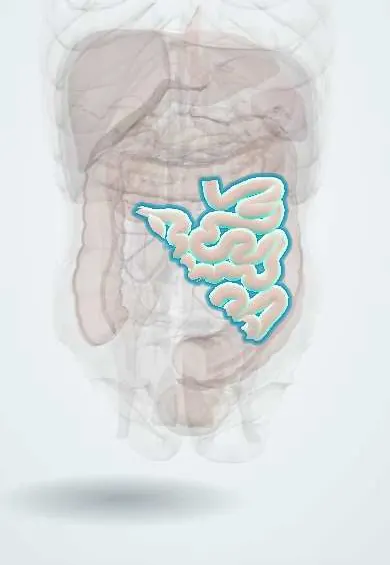
Representative model, for educational purposes only.