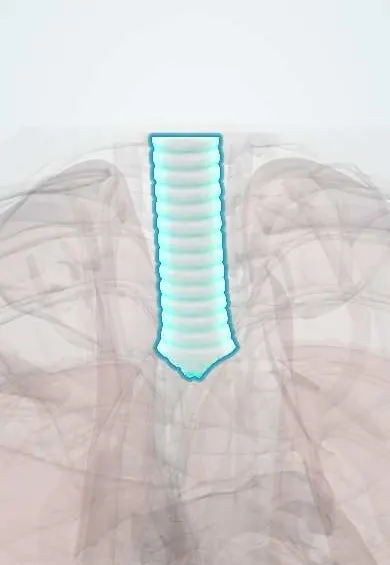
Acute bronchitis !
Acute bronchitis, or chest cold, is inflammation of the large airways, usually from a virus. The cough can last weeks; antibiotics rarely help.
Updated 2026-11-01
Structures involved
Tap one to see what it is and open it in 3D.
In the clinical exam
Why it happens
- Airway defenses, cough and mucociliary clearance
- The airway: from nose to bronchioles
- Cilia, microvilli and stereocilia
What it is
A self-limited inflammation of the trachea and large bronchi that causes a cough lasting up to about three weeks, with or without sputum, in a person without pneumonia or chronic lung disease.
Who gets it
One of the most common reasons for primary-care visits and one of the main causes of unnecessary antibiotic prescription worldwide. In Colombia it peaks during the rainy seasons, when respiratory viruses circulate most.
Causes
- Respiratory viruses in about 90% of cases: influenza, rhinovirus, coronaviruses (including SARS-CoV-2), RSV, parainfluenza, adenovirus
- Bacteria in a minority: Bordetella pertussis, Mycoplasma pneumoniae, Chlamydia pneumoniae
- Irritants: smoke, dust and air pollution
Risk factors
- Active or passive smoking
- Exposure to wood smoke or air pollution
- Close contact with people who have respiratory infections
- Asthma or allergies
- Weakened immunity
Pathophysiology
Infection of the bronchial epithelium causes inflammation, mucus hypersecretion and damage to the cilia. The airways become hyper-responsive for weeks, which explains the persistent cough and sometimes wheeze after the infection has cleared. Coloured sputum reflects inflammatory cells, not bacterial infection.
Symptoms and signs
- Cough, dry or productive, lasting 1–3 weeks (the main symptom)
- Clear, yellow or green sputum
- Chest discomfort or burning when coughing
- Mild fever, sore throat, runny nose and fatigue at onset
- Mild wheeze or rhonchi on examination
Diagnosis
- Clinical
- A clinical diagnosis: acute cough with normal vital signs and no signs of consolidation. The main task is to exclude pneumonia, asthma, a COPD exacerbation and pertussis.
- Tests
- Usually none. Influenza or SARS-CoV-2 testing when it changes management; pertussis testing if suspected; procalcitonin is sometimes used to support withholding antibiotics.
- Imaging
- Chest X-ray only when pneumonia is suspected (abnormal vital signs, focal chest signs, older adults).
Differential diagnosis
- Community-acquired pneumonia
- Asthma or COPD exacerbation
- Pertussis
- Postnasal drip from rhinosinusitis
- Gastro-oesophageal reflux
- Heart failure
Goal of treatment
Relieve symptoms while the illness resolves on its own, avoid unnecessary antibiotics and recognise pneumonia or other serious illness early.
Treatment
- Conservative
- Rest, fluids, warm drinks and honey in children over one year; avoidance of smoke; explanation that the cough often lasts two to three weeks.
- Medical
- Antipyretics and analgesics for fever and discomfort; inhaled bronchodilators only when there is wheeze.
- Medical
- Antibiotics are not indicated in uncomplicated acute bronchitis; macrolides only for confirmed or suspected pertussis; antivirals for influenza in high-risk patients.
- Lifestyle
- Stopping smoking and reducing exposure to wood smoke and pollution.
Complications
- Pneumonia
- Post-infectious cough and transient bronchial hyper-responsiveness
- Exacerbation of asthma or COPD
Prognosis
Excellent: symptoms usually resolve within three weeks without sequelae. Repeated episodes suggest asthma or chronic bronchitis.
Prevention
- Hand hygiene and covering coughs and sneezes
- Influenza, COVID-19 and pertussis vaccination
- Avoiding tobacco smoke
Test yourself
Think of the answer, then tap the question to see it.
What causes most cases of acute bronchitis?
Respiratory viruses, in about 90% of cases.
Does green or yellow sputum in acute bronchitis mean antibiotics are needed?
No; sputum colour reflects inflammatory cells, and antibiotics do not shorten uncomplicated acute bronchitis.
Which findings suggest pneumonia rather than acute bronchitis?
Fast heart rate, fast breathing, high fever, low saturation or focal chest signs such as crackles or dullness.
Which bacterial cause of persistent cough should be suspected with paroxysms and post-cough vomiting?
Bordetella pertussis (whooping cough), which is treated with a macrolide.
Related conditions
- Community-acquired pneumonia
- Influenza (flu)
- COVID-19
- Pertussis (whooping cough)
- Asthma
- Chronic obstructive pulmonary disease (COPD)
- Bronchiolitis (RSV)
- Acute rhinosinusitis
- Gastro-oesophageal reflux disease (GERD)
Educational information, not medical advice. For any symptom, see a health professional.
Sources: Acute Bronchitis (MedlinePlus (U.S. National Library of Medicine), 2024); Chest Cold (Acute Bronchitis) Basics (Centers for Disease Control and Prevention (CDC), 2024).
Spotted a mistake?We are always improving for the community. Tell us what is wrong and our team will review it.Report a mistake
Representative model, for educational purposes only.