Autoimmune polyendocrine syndromes (APS-1, APS-2) and IPEX !
Conditions in which the immune system attacks several hormone glands, for example adrenal, thyroid and pancreas, often one after another over years.
Updated 2026-11-01
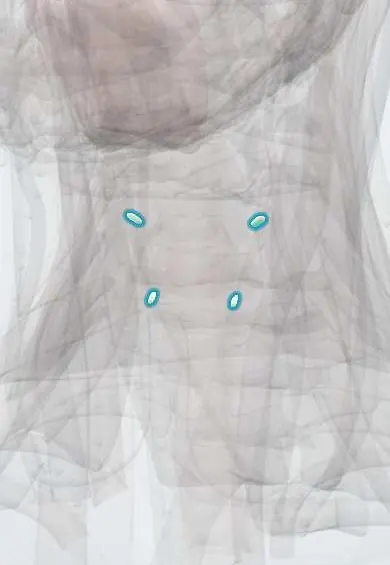
Structures involved
Tap one to see what it is and open it in 3D.
Why it happens
What it is
Syndromes in which autoimmunity damages two or more endocrine glands, often together with non-endocrine autoimmune diseases. APS-1 is a rare monogenic disease of childhood; APS-2 is the common adult form; IPEX is a rare, severe X-linked disease of infant boys.
Who gets it
APS-2 is the most common, with peak onset around age 30 and about three women affected for every man. APS-1 affects roughly 1 in 100,000 overall but is more frequent among Finns, Sardinians and Iranian Jews. IPEX is very rare and presents in the first months of life. Latin American series report the same patterns, with type 1 diabetes and autoimmune thyroid disease the most frequent pairing seen in clinics.
Causes
- APS-1 (APECED): autosomal recessive AIRE mutations, which impair thymic deletion of self-reactive T cells
- APS-2: polygenic, linked to HLA-DR3 and HLA-DR4 and other immune genes; familial clustering
- IPEX: X-linked FOXP3 mutations causing absent regulatory T cells
- Immune checkpoint inhibitor therapy can cause a similar acquired multi-gland autoimmunity
Risk factors
- Existing autoimmune endocrine disease (Addison disease, type 1 diabetes, autoimmune thyroid disease)
- Female sex and a family history of autoimmunity (APS-2)
- Affected sibling (APS-1) or maternal male relatives (IPEX)
Pathophysiology
Loss of immune tolerance lets T cells and autoantibodies destroy hormone-producing cells, usually causing deficiency rather than excess (Graves disease is the exception). In APS-1, AIRE failure lets self-reactive T cells leave the thymus, and autoantibodies against IL-17 and IL-22 explain the chronic Candida infection. In IPEX, missing regulatory T cells allow unchecked autoimmunity against gut, pancreas, skin and thyroid. Autoantibodies often appear years before a gland fails, so they predict which disease will come next.
Classification
- APS-1: at least two of chronic mucocutaneous candidiasis, hypoparathyroidism and Addison disease; childhood onset
- APS-2: Addison disease with autoimmune thyroid disease and/or type 1 diabetes; adult onset
- APS-3 (in some schemes): autoimmune thyroid disease with another autoimmune disease, without Addison disease
- IPEX: enteropathy, early type 1 diabetes and eczema in infant boys
Symptoms and signs
- Fatigue, weight loss, hyperpigmentation, salt craving and low blood pressure (adrenal insufficiency)
- Tetany, cramps and seizures (hypoparathyroidism)
- Recurrent oral thrush and nail candidiasis from early childhood (APS-1)
- Polyuria and polydipsia (type 1 diabetes); features of hypo- or hyperthyroidism
- Associated vitiligo, alopecia, pernicious anaemia, coeliac disease, premature ovarian failure; severe diarrhoea and eczema in infants with IPEX
Diagnosis
- Clinical
- One autoimmune endocrine disease should prompt questions and examination for others, plus family history; a child with candidiasis and tetany suggests APS-1.
- Tests
- Hormone tests for each gland: morning cortisol with ACTH and ACTH stimulation test, renin; TSH and free T4; glucose and HbA1c; calcium, phosphate, magnesium and PTH; B12 and coeliac serology. Autoantibodies (21-hydroxylase, TPO, GAD, interferon-omega in APS-1) to predict risk. AIRE or FOXP3 genetic testing for suspected APS-1 or IPEX.
- Imaging
- Usually not needed; adrenal CT may help exclude tuberculosis or other non-autoimmune causes of adrenal failure.
Differential diagnosis
- Tuberculous or fungal adrenalitis (important in Colombia)
- Hypopituitarism causing several hormone deficiencies
- Sarcoidosis or haemochromatosis affecting several glands
- Isolated single-gland autoimmune disease
- Immune checkpoint inhibitor endocrinopathies
Goal of treatment
Replace every missing hormone in the safe order, prevent adrenal crises, treat candidiasis and associated diseases, and screen the patient and relatives for the next disease before it causes harm.
Treatment
- Medical
- Hormone replacement for each deficiency: glucocorticoid with mineralocorticoid, levothyroxine, insulin, and calcium with active vitamin D; glucocorticoids are started before thyroid hormone when both are needed.
- Medical
- Long-term antifungal therapy for chronic mucocutaneous candidiasis in APS-1.
- Procedure
- Haematopoietic stem cell transplantation for IPEX, with immunosuppression as a bridge.
- Conservative
- Education on stress dosing of glucocorticoids, emergency injection and a medical alert card.
- Follow-up
- Periodic screening of hormone levels and autoantibodies in patients and at-risk relatives.
Complications
- Adrenal crisis
- Hypocalcaemic seizures
- Oral and oesophageal squamous cell carcinoma with chronic candidiasis (APS-1)
- Diabetic ketoacidosis and hypoglycaemia
- Infertility from autoimmune gonadal failure
Prognosis
With timely recognition and hormone replacement, people with APS-2 usually have near-normal life expectancy. APS-1 carries higher risk from adrenal crisis, hypocalcaemia, hepatitis and cancer. IPEX is life-threatening in infancy without transplantation.
Prevention
- Screening of relatives with autoantibodies and hormone tests
- Periodic screening for new gland failure in anyone with one autoimmune endocrine disease
Test yourself
Think of the answer, then tap the question to see it.
What are the three classic components of APS-1, and which gene is mutated?
Chronic mucocutaneous candidiasis, hypoparathyroidism and Addison disease; AIRE (autosomal recessive).
What defines APS-2?
Autoimmune Addison disease with autoimmune thyroid disease and/or type 1 diabetes, usually in adult women.
A patient has both untreated adrenal insufficiency and hypothyroidism. Which hormone is replaced first and why?
Glucocorticoid first; thyroid hormone alone speeds cortisol clearance and can trigger adrenal crisis.
Which gene and cell type are affected in IPEX?
FOXP3, leading to absent or dysfunctional regulatory T cells.
In type 1 diabetes, what may falling insulin requirements with hypoglycaemia signal?
New adrenal insufficiency (or coeliac disease) as part of a polyendocrine syndrome.
Related conditions
- Adrenal insufficiency
- Adrenal crisis
- Hypoparathyroidism (incl. post-thyroidectomy hypocalcaemia)
- Type 1 diabetes mellitus
- Hypothyroidism
- Graves disease (hyperthyroidism)
- Thyroiditis (subacute, painless and postpartum)
- Pernicious anaemia
- Coeliac disease
- Vitiligo
- Alopecia areata
- Cutaneous and mucocutaneous candidiasis
- Primary ovarian insufficiency
- Autoimmune hepatitis
- Hypocalcaemia
- Myasthenia gravis
Educational information, not medical advice. For any symptom, see a health professional.
Sources: Polyglandular Deficiency Syndromes - Endocrinology - MSD Manual Professional Edition (MSD Manual Professional Edition, 2025); Autoimmune polyendocrinopathy-candidiasis-ectodermal dystrophy: MedlinePlus Genetics (MedlinePlus Genetics (U.S. National Library of Medicine), 2025); Immune dysregulation, polyendocrinopathy, enteropathy, X-linked syndrome (MedlinePlus Genetics (U.S. National Library of Medicine), 2025).
Spotted a mistake?We are always improving for the community. Tell us what is wrong and our team will review it.Report a mistake
Representative model, for educational purposes only.