Behçet disease !
A rare inflammation of blood vessels of any size that causes repeated mouth and genital sores, skin lesions and eye inflammation.
Updated 2026-11-01
Structures involved
Tap one to see what it is and open it in 3D.
Why it happens
What it is
A chronic, relapsing variable-vessel vasculitis that can involve arteries and veins of any size. Its hallmark is recurrent painful oral aphthous ulcers, together with genital ulcers, skin lesions and uveitis; it can also affect joints, veins, the gut and the brain.
Who gets it
Most common along the old Silk Road, from the Mediterranean and Middle East to East Asia (highest prevalence in Turkey). It is rare in Colombia and the rest of Latin America, mostly seen in people of Middle Eastern or Asian ancestry. It usually starts in the 20s or 30s; disease tends to be more severe in young men.
Causes
- Cause unknown; immune-mediated inflammation with prominent neutrophil activation
- Genetic susceptibility, especially the HLA-B51 allele
- Environmental or infectious triggers (for example oral streptococci) are suspected but unproven
Risk factors
- Ancestry from the Mediterranean, Middle East or East Asia
- HLA-B51 carriage
- Age 20 to 40 years at onset
- Male sex for severe eye and vascular disease
- Smoking cessation has been linked to more oral ulcers in some people
Pathophysiology
Overactive innate immunity drives neutrophils and Th1/Th17 lymphocytes into vessel walls, producing a vasculitis of small and large arteries and veins. Exaggerated tissue reaction to minor injury explains the pathergy phenomenon. Venous inflammation makes clots adhere to the vessel wall, so thrombosis is common but embolism is rare.
Classification
- Mucocutaneous Behçet disease (mouth, genitals, skin)
- Ocular Behçet disease (anterior, posterior or panuveitis)
- Vascular Behçet disease (venous thrombosis, arterial aneurysms)
- Neuro-Behçet (parenchymal brain involvement or cerebral venous thrombosis)
- Intestinal Behçet disease (ulcers, often in the ileocaecal region)
Symptoms and signs
- Recurrent painful oral aphthous ulcers (at least three times a year), usually the first sign
- Painful genital ulcers on the scrotum or vulva that may leave scars
- Skin lesions: erythema nodosum-like nodules, papulopustular (acne-like) lesions
- Eye inflammation: red painful eye, blurred vision, floaters (uveitis, retinal vasculitis)
- Non-erosive arthritis of large joints such as knees and ankles
- Leg swelling from deep vein thrombosis or superficial thrombophlebitis
Diagnosis
- Clinical
- There is no single diagnostic test; the diagnosis is clinical, based on recurrent oral ulcers plus other features such as genital ulcers, eye lesions, skin lesions and a positive pathergy test, using criteria such as the International Study Group or ICBD criteria, after excluding mimics.
- Tests
- Pathergy test (a sterile needle prick that produces a papule or pustule within 48 hours) supports but does not confirm the diagnosis. ESR and CRP may rise in flares. HLA-B51 testing is supportive only. Tests to exclude herpes, syphilis, HIV and inflammatory bowel disease.
- Imaging
- Slit-lamp and fundus examination with fluorescein angiography for the eye; Doppler ultrasound for venous thrombosis; CT angiography for arterial or pulmonary aneurysms; brain MRI for neurological symptoms.
Differential diagnosis
- Recurrent aphthous stomatitis without systemic disease
- Herpes simplex infection and syphilis (genital ulcers)
- Crohn disease and ulcerative colitis
- Reactive arthritis
- Systemic lupus erythematosus
- Sarcoidosis or multiple sclerosis (eye and brain involvement)
Goal of treatment
Control flares quickly, suppress inflammation to prevent irreversible damage to the eyes, brain and vessels, and relieve mucocutaneous symptoms.
Treatment
- Medical
- Mucocutaneous disease: topical corticosteroids for ulcers, colchicine (especially for erythema nodosum and genital ulcers) and apremilast for oral ulcers.
- Medical
- Eye, vascular, neurological or intestinal disease: systemic corticosteroids together with immunosuppressants such as azathioprine, or anti-TNF agents (infliximab, adalimumab) in severe cases; cyclophosphamide for arterial aneurysms.
- Medical
- Venous thrombosis is treated mainly with immunosuppression; anticoagulation is added selectively once pulmonary aneurysm has been ruled out because of bleeding risk.
- Follow-up
- Regular ophthalmology review; screening for tuberculosis and hepatitis B before biologics; monitoring of blood counts on immunosuppressants and teaching patients to report visual change urgently.
Complications
- Blindness from recurrent posterior uveitis
- Pulmonary artery aneurysm with massive haemoptysis
- Budd-Chiari syndrome and other large-vein thromboses
- Neurological disability from neuro-Behçet
- Intestinal perforation
Prognosis
The course is relapsing and remitting and often becomes milder with age. Mucocutaneous disease is troublesome but not dangerous; outcome depends on eye, vascular and neurological involvement, which carry most of the risk of disability and death, especially in young men.
Test yourself
Think of the answer, then tap the question to see it.
What is the most frequent and usually earliest manifestation of Behçet disease?
Recurrent painful oral aphthous ulcers.
Which HLA allele is associated with Behçet disease?
HLA-B51.
What is the pathergy test?
A sterile needle prick of the skin that produces a papule or pustule within 24–48 hours; it supports the diagnosis of Behçet disease.
Why is anticoagulation used with caution in vascular Behçet disease?
Because pulmonary artery aneurysms may coexist and can bleed massively; venous thrombosis is driven by wall inflammation and is treated mainly with immunosuppression.
Related conditions
- Uveitis
- Genital herpes (herpes simplex infection)
- Crohn disease
- Deep vein thrombosis
- Cerebral venous sinus thrombosis
- Erythema nodosum
- Reactive arthritis
- Systemic lupus erythematosus
- Syphilis
- HIV infection and AIDS
Educational information, not medical advice. For any symptom, see a health professional.
Sources: Behcet's Syndrome (MedlinePlus (U.S. National Library of Medicine), 2026); Behcet's Disease (Johns Hopkins Vasculitis Center, 2026).
Spotted a mistake?We are always improving for the community. Tell us what is wrong and our team will review it.Report a mistake
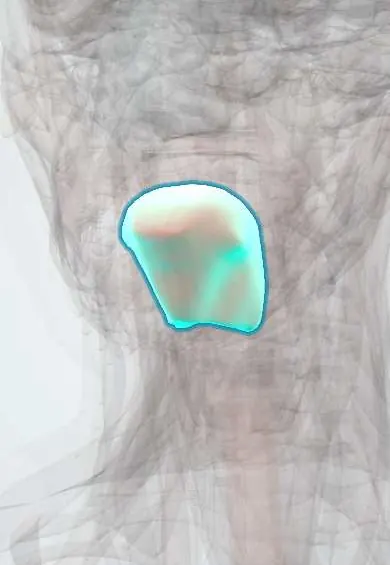
Representative model, for educational purposes only.