
Choanal atresia
A birth defect in which the back of the nose is closed. When both sides are blocked, a newborn cannot breathe well and needs an emergency airway.
Quick facts
- Key signs
- Bilateral · Bilateral · Unilateral
- Diagnosis
- Flexible nasal endoscopy
Red flags ↓
No doses: the clinician sets them by the current guideline.
What it is
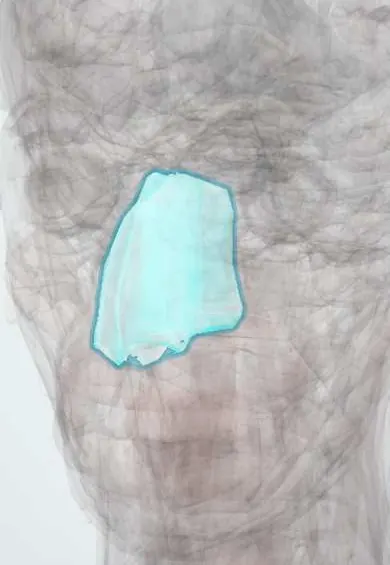
Choanal atresia is a congenital failure of the posterior nasal openings (choanae) to open into the nasopharynx. It may be unilateral or bilateral, and complete (atresia) or partial (stenosis). Because newborns breathe mainly through the nose, bilateral atresia is a neonatal airway emergency.
Who gets it
Rare, roughly 1 in 5000 to 8000 live births, more common in girls. Unilateral atresia is more frequent than bilateral and favours the right side. About half of affected children, especially with bilateral disease, have other anomalies; CHARGE syndrome is the most common association.
Causes
- Persistence of the oronasal (buccopharyngeal) membrane during embryonic development
- Abnormal migration of neural crest cells
- Genetic syndromes: CHARGE syndrome (CHD7), Treacher Collins, Crouzon and others
- Possible association with prenatal exposure to some antithyroid drugs
Risk factors
- CHARGE syndrome and other craniofacial syndromes
- Female sex
- Family history of choanal atresia
Pathophysiology
The obstruction is usually a mix of bone and membrane (most cases), less often purely bony or purely membranous. It is formed by a thickened vomer, medial bowing of the lateral nasal wall and a narrowed nasal cavity. Newborns are preferential nose breathers for the first weeks, so with both choanae closed they can breathe only while crying, when the mouth opens.
Classification
- Unilateral or bilateral
- Complete (atresia) or partial (stenosis)
- Mixed bony-membranous (most common), purely bony or purely membranous
- Isolated or syndromic (CHARGE and others)
Symptoms and signs
- Bilateral: cyclic cyanosis at birth that improves with crying and worsens at rest or when feeding
- Bilateral: respiratory distress and choking or desaturation during feeds
- Unilateral: persistent one-sided thick nasal discharge and nasal obstruction, often noticed later in childhood
- Inability to pass a suction catheter through the nose
- No misting on a cold mirror or no movement of a wisp of cotton under the nostril
Diagnosis
- Clinical
- Suspected when a catheter cannot be passed through the nose into the pharynx (usually stopping about 3 cm from the nostril), with cyclic cyanosis in bilateral cases. Flexible nasal endoscopy confirms the obstruction.
- Tests
- Search for associated anomalies: echocardiography, eye, hearing and genetic evaluation (CHD7 testing for CHARGE).
- Imaging
- CT of the nose and skull base after suctioning and decongestion is the study of choice: it shows the site, the bony or membranous nature, the vomer thickness and helps plan surgery.
Differential diagnosis
- Nasal congestion and secretions in the newborn
- Pyriform aperture stenosis
- Nasal masses: encephalocele, glioma or dermoid
- Septal deviation or turbinate hypertrophy
- In older children: nasal foreign body or adenoid hypertrophy
Goal of treatment
Keep the newborn's airway open, allow safe feeding, open the choanae surgically and keep them open, and find and treat associated anomalies.
Treatment
- Acute
- Bilateral atresia at birth: an oral airway or a modified feeding nipple with an enlarged opening keeps the mouth open; orotracheal intubation if this fails; feeding by orogastric tube and urgent transfer to paediatric ENT.
- Surgical
- Surgical repair, usually by transnasal endoscopic approach, removing the atretic plate and the posterior vomer; done in the first days or weeks for bilateral cases.
- Surgical
- Unilateral atresia is usually repaired electively later in childhood, before school age, or when symptoms are troublesome.
- Follow-up
- Follow-up endoscopy to detect restenosis, with repeat dilation or revision when needed; stents are used selectively; nasal saline and suction care.
Complications
- Neonatal hypoxia and death if bilateral atresia is not recognised
- Aspiration and feeding difficulty
- Restenosis after surgery (the most common long-term problem)
- Chronic rhinosinusitis and nasal discharge
- Complications of associated syndromes, such as hearing loss and heart disease
Prognosis
Prognosis is very good for isolated atresia once the airway is secured and the choanae are opened, though some children need more than one procedure for restenosis. Outcome in syndromic cases depends on the associated anomalies.
Test yourself
Think of the answer, then tap the question to see it.
Why is bilateral choanal atresia an emergency in newborns?
Newborns are preferential nose breathers, so with both choanae blocked they cannot breathe effectively except while crying.
What is cyclic or paradoxical cyanosis?
Cyanosis that improves when the baby cries (breathing through the mouth) and worsens at rest or while feeding.
Which syndrome is most commonly associated with choanal atresia?
CHARGE syndrome.
What is the imaging study of choice?
CT of the nose and nasopharynx after suctioning and decongestion.
Connections
Educational information, not medical advice. For any symptom, see a health professional.
Sources: Choanal Atresia (StatPearls (NCBI Bookshelf), 2025).
Spotted a mistake?We are always improving for the community. Tell us what is wrong and our team will review it.Report a mistake
Representative model, for educational purposes only.