Conditions · Pediatrics and neonatology
Failure to thrive (faltering growth) !
Failure to thrive, now often called faltering growth, means a child gains weight much more slowly than expected for age and sex.
Updated 2026-11-01
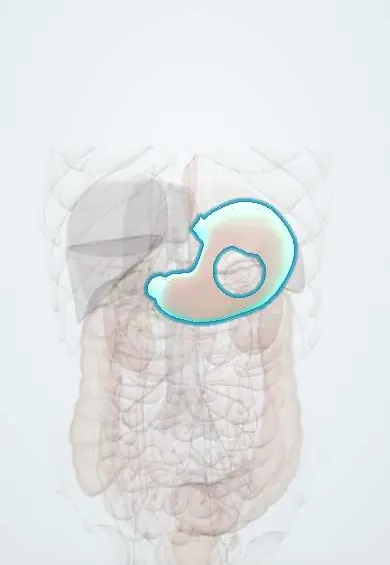
Structures involved
Tap one to see what it is and open it in 3D.
Why it happens
- Severe acute malnutrition: marasmus and kwashiorkor
- Prolonged fasting and starvation
- Patterns of malabsorption
What it is
A sign, not a diagnosis: a child's weight, or rate of weight gain, falls well below that expected for age and sex, sometimes followed by slowing of length and head growth. The usual underlying problem is too few calories taken in, absorbed or retained for the child's needs.
Who gets it
Common in primary care and in children admitted to hospital, especially in the first two years of life. In Colombia and Latin America it overlaps with acute and chronic undernutrition, linked to poverty, food insecurity, early weaning, diarrhoeal disease and intestinal parasites.
Causes
- Inadequate intake (most common): feeding difficulties, poor technique, insufficient or inappropriate food, food insecurity, neglect
- Inadequate absorption: coeliac disease, cystic fibrosis, cow's milk protein allergy, chronic diarrhoea, parasites
- Excessive losses: persistent vomiting from severe reflux or pyloric stenosis
- Increased needs: congenital heart disease, chronic lung disease, hyperthyroidism, chronic infection (HIV, tuberculosis)
- Defective use: metabolic, genetic and endocrine disorders
- Often several causes together; frequently no organic cause is found
Risk factors
- Prematurity and low birth weight, or intrauterine growth restriction
- Poverty, food insecurity and low caregiver education
- Caregiver depression, substance use or disturbed parent–child interaction
- Recurrent infections and diarrhoea
- Neurological disorders with swallowing problems, such as cerebral palsy
- Chronic disease of the heart, lungs, gut or kidneys
Pathophysiology
When energy intake does not cover needs, the body first slows weight gain and uses fat and muscle stores, so weight drops across percentiles. If the deficit persists, linear growth and then head growth slow. Prolonged undernutrition in early childhood, when the brain grows fastest, can impair cognitive development and immune function.
Classification
- Inadequate intake, inadequate absorption, excessive loss or increased needs (by mechanism)
- Organic (medical cause) versus non-organic (psychosocial); often mixed
- Severity by anthropometric z-scores (weight-for-length or BMI-for-age)
Symptoms and signs
- Weight below the expected range or crossing down two or more major percentile lines
- Later slowing of length or height and head circumference
- Delayed motor, language or social milestones
- Irritability, apathy, excessive sleepiness or crying
- Signs of an underlying cause: vomiting, chronic diarrhoea, cough, heart murmur, breathlessness when feeding
- Thin limbs and loss of subcutaneous fat
Diagnosis
- Clinical
- Accurate weight, length and head circumference plotted on WHO growth charts over time; detailed feeding and dietary history (ideally observing a feed), pregnancy and birth history, development, psychosocial situation, and a full examination for signs of disease or maltreatment.
- Tests
- Guided by history and examination rather than broad screening: complete blood count, electrolytes, kidney and liver function, urinalysis and urine culture, stool tests for parasites; thyroid function, coeliac serology, sweat chloride test, HIV testing or genetic studies when suspected.
- Imaging
- Not routine. Chest X-ray or echocardiography if heart or lung disease is suspected; abdominal ultrasound for pyloric stenosis; bone age X-ray to assess growth.
Differential diagnosis
- Constitutional (familial) small size with normal growth velocity
- Constitutional delay of growth
- Small for gestational age infant following its own curve
- Normal percentile shift (catch-down) in the first two years
- Measurement or plotting errors
Goal of treatment
Achieve catch-up growth by providing enough energy and nutrients, treat any underlying disease, and support the family and feeding environment so growth and development continue.
Treatment
- Lifestyle
- Nutritional plan: more energy-dense meals and snacks, adequate breastfeeding or formula technique, structured mealtimes and nutrition counselling for caregivers.
- Medical
- Treatment of the underlying cause (for example a gluten-free diet in coeliac disease, enzyme replacement in cystic fibrosis, repair of heart disease) and correction of micronutrient deficiencies.
- Rehabilitation
- Feeding therapy with speech or occupational therapists for oral-motor problems; social work and psychological support for the family.
- Acute
- Hospital admission for severe malnutrition, dehydration, suspected maltreatment or failure of outpatient management; cautious refeeding to avoid refeeding syndrome.
- Follow-up
- Frequent weight, length and head circumference checks, development follow-up and multidisciplinary review.
Complications
- Short stature and stunting
- Cognitive, language and behavioural delays
- Increased infections due to impaired immunity
- Micronutrient deficiencies such as iron deficiency anaemia
- Refeeding syndrome when severe malnutrition is treated too quickly
Prognosis
Depends on the cause, age at onset and how long the deficit lasts. Short episodes that are recognised and treated early often have no lasting effect; prolonged undernutrition in the first years can leave lasting growth and developmental deficits.
Prevention
- Regular well-child visits with growth monitoring on WHO charts
- Support for exclusive breastfeeding in the first 6 months and timely complementary feeding
- Prevention of diarrhoea and parasitic infection: safe water, sanitation, hand hygiene and vaccination
- Early detection of family and social risk
Test yourself
Think of the answer, then tap the question to see it.
What is the most common mechanism of failure to thrive?
Inadequate caloric intake, often from feeding difficulties or psychosocial factors rather than a specific organic disease.
Which growth parameter usually falls first in failure to thrive caused by undernutrition?
Weight; length or height slows later, and head circumference is affected last.
What is the most important tool to diagnose faltering growth?
Serial accurate measurements plotted on growth charts, together with a detailed feeding history.
Should a child with failure to thrive have broad laboratory screening?
No; tests are guided by the history and examination, since untargeted screening rarely finds the cause.
What risk must be watched for when severe malnutrition is treated in hospital?
Refeeding syndrome, with dangerous drops in phosphate, potassium and magnesium if feeding is advanced too fast.
Related conditions
- Coeliac disease
- Cystic fibrosis
- Gastro-oesophageal reflux disease (GERD)
- Child maltreatment (physical abuse, abusive head trauma, neglect)
- Congenital hypothyroidism
- HIV infection and AIDS
- Iron deficiency anaemia
- Ventricular septal defect
- Lactose intolerance
Educational information, not medical advice. For any symptom, see a health professional.
Sources: Faltering weight (MedlinePlus (U.S. National Library of Medicine), 2024).
Spotted a mistake?We are always improving for the community. Tell us what is wrong and our team will review it.Report a mistake
Representative model, for educational purposes only.