Hallucinogen and dissociative drug intoxication (LSD, PCP, ketamine) !
Acute poisoning with drugs such as LSD, mushrooms, PCP or ketamine that distort perception and can cause panic, psychosis or violence.
Updated 2026-11-01
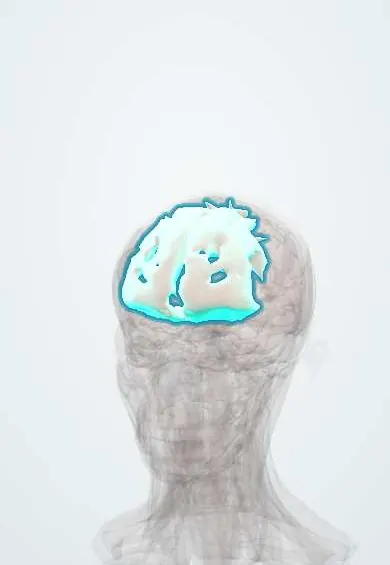
Structures involved
Tap one to see what it is and open it in 3D.
Why it happens
- Drugs of abuse: cocaine, opioids, amphetamines, cannabis
- The main neurotransmitters
- Glutamate (glutamic acid)
What it is
An acute syndrome of altered perception, mood and thinking after use of a psychedelic (LSD, psilocybin mushrooms, mescaline, ayahuasca/DMT) or a dissociative drug (phencyclidine [PCP], ketamine, dextromethorphan). Psychedelics mainly cause visual distortions with preserved awareness; dissociatives cause detachment from the body, nystagmus, agitation and sometimes violence or coma.
Who gets it
Hallucinogen use is most common among adolescents and young adults, at parties and festivals. In Colombia, national surveys report use of LSD, mushrooms and «tusi» (a pink powder sold as 2C-B that often contains ketamine, MDMA and other substances), and traditional use of yagé (ayahuasca) in some communities. Mixtures of unknown content increase the risk.
Causes
- Serotonergic psychedelics: LSD, psilocybin, mescaline, DMT (ayahuasca), 2C-B
- Dissociatives: phencyclidine (PCP), ketamine, dextromethorphan in high amounts
- Adulterated or mixed products such as «tusi»
- Combination with alcohol, cannabis, stimulants or other drugs
Risk factors
- Adolescence and young adulthood
- Use in unsafe settings or alone
- Personal or family history of psychosis or bipolar disorder
- Combination with other substances
- Use of unknown or adulterated products
Pathophysiology
Psychedelics act as agonists at serotonin 5-HT2A receptors, mainly in the cortex, altering sensory filtering through the thalamus and cortical networks; this causes visual illusions, synaesthesia and changes in the sense of self, with sympathetic activation (mydriasis, tachycardia). Dissociatives block NMDA glutamate receptors, separating perception from awareness and producing analgesia, amnesia, nystagmus and, in high amounts, catatonia-like states, seizures and coma.
Classification
- Psychedelic (serotonergic) intoxication: LSD, psilocybin, mescaline, DMT
- Dissociative intoxication: PCP, ketamine, dextromethorphan
- Hallucinogen persisting perception disorder (flashbacks) after use
Symptoms and signs
- Visual illusions and hallucinations, synaesthesia, distorted time
- Anxiety or panic («bad trip»), paranoia
- Dilated pupils, tachycardia, sweating, tremor (psychedelics)
- Vertical and horizontal nystagmus, ataxia and slurred speech (PCP, ketamine)
- Agitation, violent behaviour and insensitivity to pain (PCP)
- Feeling detached from body or surroundings, amnesia (dissociatives)
Diagnosis
- Clinical
- Clinical diagnosis from history (from the patient or companions) and examination. Key exam clues: mydriasis with preserved orientation suggests a psychedelic; nystagmus (especially vertical), hypertension and agitation suggest PCP; dissociation and sedation suggest ketamine. Look for injuries and for signs of anticholinergic or sympathomimetic toxicity.
- Tests
- Glucose, electrolytes, creatine kinase, kidney function and ECG. Standard urine drug screens do not detect LSD or ketamine; PCP may be detected, and false positives occur (for example with dextromethorphan). Screen for co-ingestion such as alcohol, paracetamol and salicylates when the history is unclear.
- Imaging
- Head CT if there is head injury, focal signs or reduced consciousness not explained by the drug.
Differential diagnosis
- Anticholinergic toxicity (dry, hot skin, urinary retention)
- Stimulant toxicity (cocaine, amphetamines) and serotonin syndrome
- Cannabis toxicity
- Primary psychotic disorder or mania
- Delirium from infection, hypoglycaemia or head injury
- Alcohol or sedative withdrawal
Goal of treatment
Keep the patient and staff safe, calm the patient, treat agitation, hyperthermia and complications, and screen for co-ingestion and persistent psychosis.
Treatment
- Acute
- Quiet, low-stimulation environment with reassurance and frequent orientation («talking down»); avoid restraints where possible
- Acute
- Airway, breathing, circulation and active cooling if hyperthermic
- Medical
- Benzodiazepines are the first-line medicines for agitation, anxiety and seizures; antipsychotics only for persistent severe psychosis
- Acute
- Intravenous fluids for rhabdomyolysis and dehydration
- Follow-up
- Nursing monitoring: vital signs, temperature, level of consciousness, injury prevention and observation until the effects resolve
- Conservative
- Brief intervention about substance use and referral when there is a use disorder
Complications
- Injury, trauma or accidental death from dangerous behaviour
- Rhabdomyolysis and acute kidney injury
- Seizures and hyperthermia
- Persistent psychosis or hallucinogen persisting perception disorder
- Ketamine-induced bladder damage (ulcerative cystitis) with chronic use
Prognosis
Most psychedelic intoxications resolve within hours with supportive care. PCP intoxication can last longer and is more dangerous. Persistent psychosis is uncommon and is more likely in people predisposed to psychotic disorders.
Prevention
- Education for adolescents and young adults about the risks of unknown mixtures
- Avoiding combination with other drugs and alcohol
- Early care for people with a history of psychosis who use these drugs
Test yourself
Think of the answer, then tap the question to see it.
Which examination finding strongly suggests phencyclidine (PCP) intoxication?
Vertical (and horizontal) nystagmus with agitation, hypertension and violent behaviour.
What is the first-line medicine class for severe agitation in hallucinogen intoxication?
Benzodiazepines.
Which receptor do LSD and psilocybin mainly act on?
The serotonin 5-HT2A receptor, as agonists.
Which receptor do PCP and ketamine block?
The NMDA glutamate receptor.
Does a negative standard urine drug screen rule out LSD or ketamine use?
No; standard screens usually do not detect them.
Related conditions
- Cannabis toxicity and cannabinoid hyperemesis syndrome
- Anticholinergic toxicity (incl. scopolamine «burundanga»)
- Serotonin syndrome
- Cocaine and sympathomimetic toxicity
- Delirium
- Schizophrenia
- Schizoaffective, schizophreniform, brief psychotic and delusional disorders
- Rhabdomyolysis
- Acute kidney injury
- Traumatic brain injury
- Urinary tract infection (acute cystitis)
Educational information, not medical advice. For any symptom, see a health professional.
Sources: Psychedelic and Dissociative Drugs (National Institute on Drug Abuse (NIDA), 2025).
Spotted a mistake?We are always improving for the community. Tell us what is wrong and our team will review it.Report a mistake
Representative model, for educational purposes only.