Conditions · Infectious and tropical diseases
Histoplasmosis !
Histoplasmosis is a lung infection from inhaling a fungus in bat and bird droppings; it can spread through the body in people with HIV.
Updated 2026-11-01
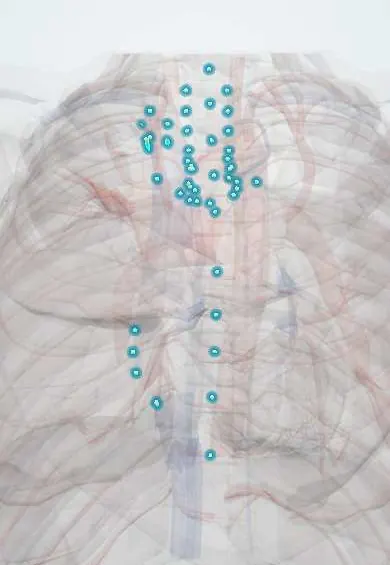
Structures involved
Tap one to see what it is and open it in 3D.
Microorganisms that cause it
Why it happens
- Pathologic calcification: dystrophic vs metastatic
- Fibrosis in organs: TGF-β and the myofibroblast
- Granulomatous inflammation: caseating vs non-caseating, the causes to know
- Special stains in diagnosis: Congo red, Prussian blue, PAS, Ziehl–Neelsen, Gram
- Patterns of necrosis: coagulative, liquefactive, caseous, fat, fibrinoid, gangrenous
- The alveolus: type I and II pneumocytes, surfactant, the blood–air barrier
Show 1 more
What it is
Infection by the dimorphic fungus Histoplasma capsulatum, acquired by inhaling spores from soil rich in bird or bat droppings. Most infections are silent or self-limited, but the disease can cause acute or chronic pneumonia and life-threatening disseminated infection in the immunosuppressed.
Who gets it
Endemic across the Americas. In Colombia, outbreaks have followed visits to caves, tunnels, old buildings and chicken coops, and disseminated histoplasmosis is a major AIDS-defining illness and cause of death in people with advanced HIV in Latin America, often mistaken for tuberculosis.
Causes
- Histoplasma capsulatum, a mould in soil at ambient temperature and a yeast in tissue
- Inhalation of spores from soil contaminated by bat or bird droppings
- Reactivation of latent infection in immunosuppression; no person-to-person spread
Risk factors
- Exposure in caves, mines, old buildings, chicken coops, cleaning or demolition work
- Advanced HIV (CD4 below 150 cells/µL)
- Transplant, corticosteroids and TNF inhibitors
- Infants and older adults; underlying lung disease (emphysema) for chronic pulmonary disease
Pathophysiology
Inhaled spores convert into small yeasts that are swallowed by alveolar macrophages and survive inside them, travelling to hilar and mediastinal lymph nodes and then through the blood to the liver, spleen and bone marrow. Cellular immunity forms granulomas that usually contain the infection, often leaving calcified nodules in the lung and spleen. Heavy exposure produces diffuse pneumonia; poor cellular immunity allows progressive dissemination; healed nodes may cause mediastinal granuloma or fibrosis.
Classification
- Acute pulmonary (after heavy exposure)
- Chronic cavitary pulmonary (resembles tuberculosis)
- Progressive disseminated
- Mediastinal granuloma or fibrosing mediastinitis
Symptoms and signs
- Often none; or a flu-like illness with fever, dry cough, chest pain and fatigue 3–17 days after exposure
- Chronic cough, weight loss and night sweats in the cavitary form
- Disseminated: prolonged fever, weight loss, hepatosplenomegaly, lymph node enlargement
- Oral or skin ulcers and pancytopenia in disseminated disease
- Arthralgia, erythema nodosum or pericarditis after acute infection
Diagnosis
- Clinical
- Suspected in fever with pneumonia after cave or bird-dropping exposure, or prolonged fever with pancytopenia and hepatosplenomegaly in a person with HIV.
- Tests
- Histoplasma antigen in urine or serum (most sensitive in disseminated disease; also in BAL or CSF); culture of blood, bone marrow or BAL (slow); histopathology showing small intracellular yeasts in macrophages; serology (immunodiffusion, complement fixation) in subacute and chronic forms.
- Imaging
- Chest X-ray or CT: patchy or diffuse nodular infiltrates with hilar/mediastinal lymphadenopathy; upper-lobe cavities in the chronic form; calcified granulomas in lung and spleen after healing.
Differential diagnosis
- Pulmonary tuberculosis
- Community-acquired pneumonia
- Sarcoidosis
- Paracoccidioidomycosis and other endemic mycoses
- Lymphoma
Goal of treatment
Treat only symptomatic or progressive disease, act fast in disseminated disease, and prevent relapse in the immunosuppressed.
Treatment
- Conservative
- Mild acute pulmonary infection in a healthy person usually resolves without antifungals; observation and symptom relief.
- Medical
- Itraconazole for mild to moderate, prolonged or chronic disease and as step-down therapy, for months to a year; drug-level monitoring is advised. Antibacterial drugs do not work.
- Acute
- Liposomal or lipid amphotericin B for moderately severe to severe or disseminated disease, with supportive care in intensive care when needed.
- Medical
- In HIV, antiretroviral therapy and maintenance itraconazole until immune recovery; reduction of immunosuppression where possible.
- Follow-up
- Urinary antigen levels to follow response and detect relapse; liver function, kidney function and electrolytes during therapy.
Drugs for this condition
Complications
- Acute respiratory distress syndrome
- Progressive dissemination with sepsis-like shock and death
- Adrenal insufficiency
- Fibrosing mediastinitis with compression of airways, vessels or the oesophagus
- Broncholithiasis
- Endocarditis and meningitis (rare)
Prognosis
Most infections resolve completely. Disseminated disease is fatal without treatment and remains deadly in advanced HIV, especially when diagnosed late.
Prevention
- Masks and wetting of soil when working in caves or areas with droppings
- Antiretroviral therapy; azole prophylaxis in selected high-risk settings
Test yourself
Think of the answer, then tap the question to see it.
Where does Histoplasma capsulatum live in the environment?
In soil enriched with bird or bat droppings (caves, chicken coops, old buildings).
What is the most sensitive rapid test in disseminated histoplasmosis?
Histoplasma antigen in urine (or serum).
Which cell harbours the yeast in tissue?
The macrophage; small yeasts are seen inside macrophages.
Which drug is used for severe disseminated disease?
Liposomal amphotericin B, followed by itraconazole.
Related conditions
- Pulmonary tuberculosis
- Community-acquired pneumonia
- Sarcoidosis
- HIV infection and AIDS
- Adrenal insufficiency
- Paracoccidioidomycosis
- Endemic mycoses: blastomycosis and coccidioidomycosis
- Lung cancer
- Non-Hodgkin lymphoma
Educational information, not medical advice. For any symptom, see a health professional.
Sources: About Histoplasmosis | Histoplasmosis | CDC (Centers for Disease Control and Prevention, 2024); Clinical Overview of Histoplasmosis | Histoplasmosis | CDC (Centers for Disease Control and Prevention, 2024).
Spotted a mistake?We are always improving for the community. Tell us what is wrong and our team will review it.Report a mistake
Representative model, for educational purposes only.