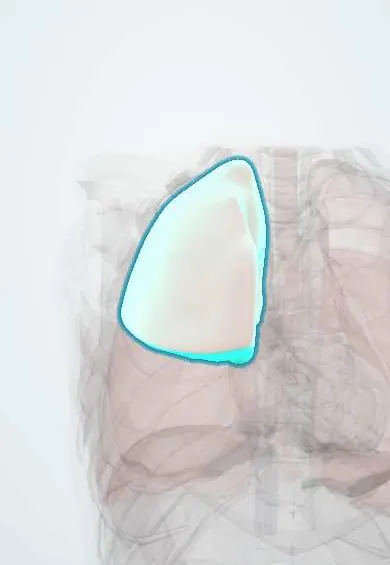
Pulmonary tuberculosis !
Pulmonary tuberculosis is a lung infection by the bacterium Mycobacterium tuberculosis, spread through the air by people with active disease.
Updated 2026-10-30
Structures involved
Tap one to see what it is and open it in 3D.
Microorganisms that cause it
In immunology
- Monocyte and macrophage
- Type IV hypersensitivity (delayed, T cells)
- Interferon-γ
- Tuberculin skin test and IGRA
In histology
- Microscopy and stains: H&E, PAS, trichrome, silver, immunohistochemistry
- Cell injury, apoptosis and necrosis
In the clinical exam
- Cardiac tamponade: Beck triad and pulsus paradoxus
- Review of systems
- Respiratory symptoms: cough, sputum, hemoptysis and dyspnea
- Consolidation syndrome
- Pleural effusion syndrome
- Cavitation syndrome
In physiology
- Ventilation–perfusion matching and West zones
- Pleural fluid: formation and drainage
- Airway defenses, cough and mucociliary clearance
- The bronchial circulation
Why it happens
- Patterns of necrosis: coagulative, liquefactive, caseous, fat, fibrinoid, gangrenous
- Granulomatous inflammation: caseating vs non-caseating, the causes to know
- Special stains in diagnosis: Congo red, Prussian blue, PAS, Ziehl–Neelsen, Gram
- Air pollution and occupational exposures
- Innate and adaptive immunity: overview
- The alveolus: type I and II pneumocytes, surfactant, the blood–air barrier
What it is
Infection of the lungs by Mycobacterium tuberculosis, spread through the air by people with active disease. It is the most common and the contagious form of tuberculosis.
Who gets it
Still a public-health priority in Colombia and Latin America, concentrated in prisons, poor urban areas, Indigenous communities and people with HIV or diabetes, with case finding and supervised treatment. In northern Lima, Peru (2010–2011), 8% of adults with a first culture-positive episode had isoniazid and 2% rifampicin mono-resistance.
Causes
- Mycobacterium tuberculosis complex
- Inhalation of droplet nuclei from a person with active pulmonary TB
- Reactivation of latent infection
- Primary progressive disease in young children and the immunosuppressed
Risk factors
- HIV infection
- Close contact with an infectious case
- Diabetes, malnutrition, smoking, alcohol use
- Imprisonment, overcrowding, homelessness
- Immunosuppressive drugs (corticosteroids, TNF inhibitors)
- Silicosis and chronic kidney disease
Pathophysiology
Inhaled bacilli are engulfed by alveolar macrophages and survive inside them. Cell-mediated immunity walls them off in caseating granulomas (latent infection). Reactivation favours the well-oxygenated upper lobes, where caseous necrosis forms cavities that release bacilli into the airways and make the patient infectious.
Classification
- Latent TB infection
- Primary TB (Ghon complex)
- Post-primary (reactivation) TB with cavities
- Miliary TB
- Drug-sensitive vs drug-resistant (MDR, XDR)
Symptoms and signs
- Cough for more than two weeks
- Sputum, sometimes with blood (haemoptysis)
- Fever and night sweats
- Weight loss and loss of appetite
- Fatigue
- Chest pain or breathlessness with pleural involvement
Diagnosis
- Clinical
- Any person with cough for more than two weeks is a presumptive TB case (a respiratory symptomatic) and has sputum tested, especially with weight loss, night sweats, HIV or TB contact.
- Tests
- Sputum smear microscopy for acid-fast bacilli, culture (the reference standard, which also allows drug-susceptibility testing) and rapid molecular tests that detect M. tuberculosis and rifampicin resistance. HIV test for everyone with TB.
- Imaging
- Chest X-ray: upper-lobe infiltrates, cavities, hilar nodes, effusion or a miliary pattern. CT for unclear cases.
Differential diagnosis
- Community-acquired pneumonia or lung abscess
- Lung cancer
- Fungal infections (histoplasmosis, paracoccidioidomycosis)
- Non-tuberculous mycobacterial infection
- Sarcoidosis
- Bronchiectasis
Goal of treatment
Cure the patient with a complete multidrug regimen, stop transmission and prevent drug resistance.
Treatment
- Medical
- Drug-sensitive TB: a combined regimen of first-line antituberculosis drugs (rifamycin, isoniazid, pyrazinamide, ethambutol) for several months, per the national guideline.
- Follow-up
- Directly observed therapy (DOT): a health worker supervises doses, which improves adherence and cure; follow-up smears and monitoring for liver toxicity.
- Medical
- Drug-resistant TB: regimens with second-line drugs guided by susceptibility testing, under specialist care.
- Lifestyle
- Contact tracing, cough hygiene and ventilation; screening and preventive treatment of contacts with latent infection.
Drugs for this condition
Complications
- Massive haemoptysis
- Drug-resistant TB
- Destroyed lung, bronchiectasis and fibrosis
- Pleural effusion and empyema
- Pneumothorax
- Spread to other organs (see tuberculosis)
Prognosis
Drug-sensitive pulmonary TB is curable in most patients who complete treatment. Outcomes worsen with resistance, HIV, diabetes, delayed diagnosis and interrupted treatment.
Prevention
- Early diagnosis and complete treatment of active cases
- BCG vaccination at birth (protects young children from severe forms)
- Contact tracing and preventive therapy
- Infection control in health facilities and crowded settings
- HIV testing and antiretroviral therapy
Test yourself
Think of the answer, then tap the question to see it.
What symptom defines a respiratory symptomatic who should be tested for TB?
Cough lasting more than two weeks; sputum is then tested for M. tuberculosis.
Why does reactivation TB favour the upper lobes?
The apices have high oxygen tension, which favours growth of the aerobic bacillus, and relatively poor lymphatic clearance.
What is directly observed therapy (DOT) in TB?
A health worker watches the patient take each dose, ensuring adherence, improving cure and preventing drug resistance.
What is the advantage of rapid molecular tests over smear microscopy?
They are more sensitive and give results in hours, also detecting rifampicin resistance.
Related conditions
- Pleural effusion
- Community-acquired pneumonia
- Tuberculosis
- HIV infection and AIDS
- Lung cancer
- Bronchiectasis
- Spinal tuberculosis (Pott disease)
- Chronic obstructive pulmonary disease (COPD)
Educational information, not medical advice. For any symptom, see a health professional.
Sources: Tuberculosis Overview (StatPearls (NCBI Bookshelf), 2024); Prevalence, Risk Factors, and Treatment Outcomes of Isoniazid- and Rifampicin-Mono-Resistant Pulmonary Tuberculosis in Lima, Peru (PloS one, 2016) · adapted, CC BY 4.0.
Spotted a mistake?We are always improving for the community. Tell us what is wrong and our team will review it.Report a mistake
Representative model, for educational purposes only.