Conditions · Hematology and oncology
Non-Hodgkin lymphoma !
Non-Hodgkin lymphoma is a group of cancers of lymphocytes, usually B cells. Some grow slowly for years; others grow fast but can often be cured.
Updated 2026-11-01
Structures involved
Tap one to see what it is and open it in 3D.
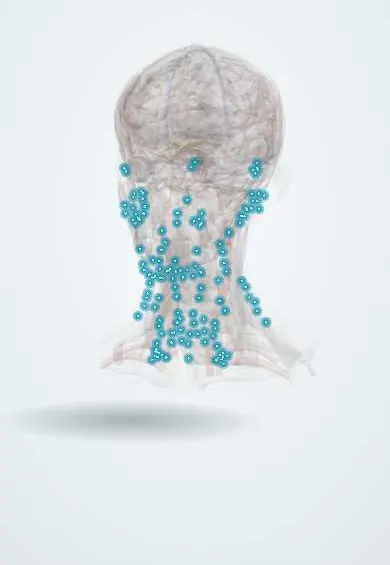
- Neck lymph nodes
- Mesenteric lymph nodes
- Spleen
- Para-aortic lymph nodes
- Celiac and gastric lymph nodes
- Stomach
- Ileum
- Liver
- Palatine tonsils
Microorganisms that cause it
In the clinical exam
Why it happens
- Oncogenes: RAS, MYC, HER2, BCR-ABL and the table to know
- Apoptosis: the intrinsic and extrinsic pathways
- Evading cell death and replicating without limit: BCL2 and telomerase
- Translocations, amplifications and epigenetic changes in cancer
- Immunohistochemistry: the principle and the markers to know
- Naming tumours: -oma, carcinoma, sarcoma, and the misleading names
Show 7 more
- The cell cycle in cancer: cyclins, CDKs and checkpoints
- Apoptosis vs necrosis: the comparison table
- Biopsy: excisional, incisional, core needle, punch and fine-needle aspiration
- The hallmarks of cancer
- Molecular pathology: PCR, FISH, sequencing and liquid biopsy
- Oncogenic viruses and H. pylori: the table to know
- Lymph node and spleen under the microscope
What it is
A diverse group of cancers of B, T or NK lymphocytes that form masses in lymph nodes or outside them (stomach, gut, skin, brain). They range from indolent lymphomas that progress over years to aggressive ones that grow within weeks.
Who gets it
More common than Hodgkin lymphoma and increasing with age; diffuse large B-cell lymphoma (DLBCL) is the most frequent type worldwide. HIV raises the risk of aggressive types. Adult T-cell leukaemia/lymphoma caused by HTLV-1 is seen in endemic areas of South America and the Caribbean, including the Colombian Pacific coast.
Causes
- Genetic changes in lymphocytes, such as t(14;18) BCL2 in follicular lymphoma, t(8;14) MYC in Burkitt lymphoma and t(11;14) cyclin D1 in mantle cell lymphoma
- Viruses: Epstein-Barr virus (Burkitt, HIV-related and primary CNS lymphoma), HTLV-1 (adult T-cell lymphoma), hepatitis C
- Chronic antigen stimulation: Helicobacter pylori (gastric MALT lymphoma), coeliac disease (enteropathy-associated T-cell lymphoma), autoimmune disease
Risk factors
- HIV infection and transplant immunosuppression
- Autoimmune diseases such as Sjögren syndrome, rheumatoid arthritis and lupus
- Chronic H. pylori gastritis
- Older age
- Previous chemotherapy or radiotherapy
Pathophysiology
A lymphocyte acquires mutations that block apoptosis (BCL2) or drive proliferation (MYC) and expands as a clone. Indolent lymphomas accumulate slowly; aggressive ones divide fast, which also makes them sensitive to chemotherapy and prone to tumour lysis. Spread is often non-contiguous, with extranodal and marrow involvement more common than in Hodgkin lymphoma.
Classification
- Aggressive B-cell: diffuse large B-cell lymphoma (most common)
- Highly aggressive: Burkitt lymphoma (endemic jaw form linked to EBV and malaria; sporadic ileocaecal form; HIV-associated)
- Indolent B-cell: follicular lymphoma, marginal zone/MALT lymphoma, small lymphocytic lymphoma
- Mantle cell lymphoma (older men, often advanced)
- T-cell lymphomas, including adult T-cell leukaemia/lymphoma (HTLV-1) and mycosis fungoides of the skin
Symptoms and signs
- Painless enlarged lymph nodes in the neck, armpit or groin, often in several regions
- B symptoms: fever, night sweats, weight loss
- Abdominal mass, pain or bowel obstruction (Burkitt, intestinal lymphoma)
- Dyspepsia or gastric bleeding (gastric MALT or DLBCL)
- Enlarged spleen or liver
- Hypercalcaemia, skin lesions and lytic bone lesions in adult T-cell lymphoma
Diagnosis
- Clinical
- Examination of all node regions, Waldeyer ring (tonsils), liver and spleen; history of B symptoms, HIV and autoimmune disease.
- Tests
- Excisional or core biopsy with immunohistochemistry (e.g. CD20 for B cells), flow cytometry and genetic studies; gastric biopsies with H. pylori testing for MALT lymphoma. Complete blood count, LDH, uric acid, kidney and liver function, calcium, HIV and hepatitis B and C (hepatitis B can reactivate with anti-CD20 therapy), HTLV-1 serology in endemic areas. Bone marrow biopsy and lumbar puncture in selected cases.
- Imaging
- PET-CT (or CT) for staging and response; endoscopy for gastrointestinal lymphoma; brain MRI when CNS involvement is suspected.
Differential diagnosis
- Hodgkin lymphoma
- Tuberculosis and other infectious lymphadenitis
- Reactive lymphadenopathy (viral infection, autoimmune disease)
- Chronic lymphocytic leukaemia
- Metastatic carcinoma
- Sarcoidosis
Goal of treatment
For aggressive lymphomas, cure with combination chemoimmunotherapy; for indolent lymphomas, control disease and symptoms over many years, treating only when needed.
Treatment
- Medical
- DLBCL: chemoimmunotherapy combining the anti-CD20 antibody rituximab with CHOP chemotherapy (cyclophosphamide, doxorubicin, vincristine, prednisone) or similar regimens.
- Follow-up
- Indolent lymphoma without symptoms or bulky disease: active surveillance ('watch and wait').
- Medical
- Gastric MALT lymphoma: eradication of H. pylori can produce remission in early-stage disease.
- Acute
- Burkitt and other high-burden lymphomas: intensive chemotherapy with CNS prophylaxis and aggressive prevention of tumour lysis (hydration, uric acid-lowering drugs, electrolyte monitoring).
- Procedure
- Radiotherapy for localised disease; autologous stem cell transplantation and CAR-T cell therapy for relapsed aggressive lymphoma.
Complications
- Tumour lysis syndrome
- Febrile neutropenia and opportunistic infections
- Hepatitis B reactivation with anti-CD20 therapy
- Superior vena cava syndrome and spinal cord compression
- Bowel perforation or obstruction in intestinal lymphoma
- Transformation of an indolent lymphoma into an aggressive one
Prognosis
Depends on type and risk factors (e.g. the International Prognostic Index: age, LDH, stage, performance status, extranodal sites). Many patients with DLBCL and Burkitt lymphoma are cured; indolent lymphomas are usually not curable but can be controlled for many years.
Test yourself
Think of the answer, then tap the question to see it.
What is the most common type of non-Hodgkin lymphoma?
Diffuse large B-cell lymphoma, an aggressive but often curable lymphoma.
Which translocation characterises follicular lymphoma?
t(14;18), which overexpresses the anti-apoptotic gene BCL2.
Which lymphoma shows a 'starry sky' pattern and t(8;14)?
Burkitt lymphoma, driven by MYC; it grows very fast and carries a high risk of tumour lysis syndrome.
Which infection is linked to gastric MALT lymphoma, and why does it matter?
Helicobacter pylori; eradicating it can lead to remission of early gastric MALT lymphoma.
Which virus causes adult T-cell leukaemia/lymphoma, and what metabolic finding is typical?
HTLV-1, endemic in parts of Latin America including the Colombian Pacific coast; hypercalcaemia is typical.
Related conditions
- Hodgkin lymphoma
- HIV infection and AIDS
- Helicobacter pylori gastritis
- Coeliac disease
- Gastric cancer
- Tumour lysis syndrome
- Febrile neutropenia
- Acute leukaemia (AML and ALL)
Educational information, not medical advice. For any symptom, see a health professional.
Sources: Non-Hodgkin lymphoma (MedlinePlus (U.S. National Library of Medicine), 2025).
Spotted a mistake?We are always improving for the community. Tell us what is wrong and our team will review it.Report a mistake
Representative model, for educational purposes only.