Conditions · Emergency medicine and toxicology
Hydrocarbon ingestion and aspiration !
Poisoning by fuels and solvents such as kerosene or gasoline. The main danger is liquid entering the lungs, causing a chemical pneumonia.
Updated 2026-11-01
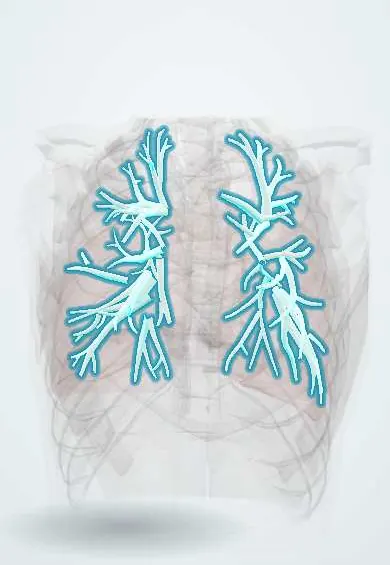
Structures involved
Tap one to see what it is and open it in 3D.
Why it happens
- Chemical (toxic) cell injury: direct and after metabolism
- Surface tension, surfactant and Laplace's law
- Ventilation–perfusion matching and West zones
- The alveolus: type I and II pneumocytes, surfactant, the blood–air barrier
What it is
Poisoning from swallowing, inhaling or aspirating petroleum products and solvents (kerosene, gasoline, diesel, mineral spirits, lamp oil, furniture polish, lighter fluid). The gut absorbs little of most fuels; the real harm comes when even a small amount slips into the airway during swallowing or vomiting and spreads over the lung surface, producing a chemical pneumonitis.
Who gets it
A classic accidental poisoning of children under 5, often because fuel or solvent is stored in soda or water bottles at home. In Colombia, kerosene, gasoline, diesel and mineral spirits used for cooking, cleaning and work are common household products, and chemical poisonings are reported to the national surveillance system (INS, SIVIGILA). Deliberate inhalation of solvents (glue, thinner) affects adolescents and street-connected youth.
Causes
- Accidental ingestion of kerosene, gasoline, diesel or mineral spirits by a child
- Siphoning fuel by mouth
- Low-viscosity products such as lamp oil and furniture polish (highest aspiration risk)
- Intentional inhalation of solvents and aerosols (sniffing, huffing, bagging)
- Ingestion in a suicide attempt, sometimes mixed with pesticides
Risk factors
- Age 1 to 5 years and exploratory behaviour
- Storing fuels or solvents in drink containers or within reach
- Vomiting after ingestion, spontaneous or induced
- Low viscosity and high volatility of the product
- Adolescence and solvent misuse
Pathophysiology
Low-viscosity, low-surface-tension hydrocarbons spread quickly across the airway and alveoli. They dissolve surfactant, injure the alveolar lining and capillaries and cause inflammation, oedema, haemorrhage and alveolar collapse, leading to ventilation-perfusion mismatch and hypoxaemia; in severe cases this becomes ARDS. Absorbed or inhaled hydrocarbons depress the central nervous system, and halogenated or aromatic solvents can sensitise the heart muscle to catecholamines, causing sudden arrhythmic death.
Classification
- By viscosity: low (kerosene, gasoline, lamp oil, mineral spirits; high aspiration risk) versus high (motor oil, petroleum jelly; low risk)
- By route: ingestion with aspiration, inhalation (solvent misuse) and skin contact
- Special hydrocarbons with systemic toxicity: halogenated, aromatic (benzene, toluene), camphor, and those carrying heavy metals or pesticides
Symptoms and signs
- Coughing, choking or gagging right after swallowing (suggests aspiration)
- Fast breathing, grunting, wheezing and low oxygen saturation
- Fuel odour on the breath, burning in the mouth and throat
- Vomiting and abdominal pain
- Drowsiness, dizziness, agitation or seizures
- Fever in the first day, which does not by itself mean bacterial infection
Diagnosis
- Clinical
- Identify the product (bring the container), amount, time and whether the child coughed or vomited. Examine breathing, oxygen saturation, consciousness and skin. Observe in the emergency department for about 6 hours; a child without symptoms, with normal saturation and a normal chest X-ray at that point can usually go home.
- Tests
- Pulse oximetry, arterial or venous gas in distress; blood count, electrolytes and liver and kidney tests in severe cases; ECG in solvent inhalation or special hydrocarbons; carboxyhaemoglobin in methylene chloride exposure.
- Imaging
- Chest X-ray, repeated around 4–6 hours if the first is normal: infiltrates usually appear at the lung bases and in dependent segments, sometimes with pneumatoceles later.
Differential diagnosis
- Bacterial aspiration pneumonia
- Foreign-body aspiration
- Caustic ingestion
- Organophosphate or other pesticide poisoning (often mixed with solvents)
- Viral bronchiolitis or asthma attack
Goal of treatment
Prevent further aspiration, support oxygenation and recognise the few children who will develop severe pneumonitis or arrhythmia.
Treatment
- Acute
- Do not induce vomiting and avoid gastric lavage and activated charcoal (they increase aspiration and charcoal does not bind fuels); remove contaminated clothing and wash the skin; protect the airway in altered consciousness.
- Follow-up
- Observe at least 6 hours with oxygen saturation and respiratory rate; admit if symptoms or X-ray changes appear. Nursing: position upright, keep the child calm, watch for growing work of breathing.
- Medical
- Supplemental oxygen and bronchodilators for wheeze; corticosteroids and prophylactic antibiotics are not routinely recommended (fever and infiltrates are usually chemical). Antibiotics only if bacterial superinfection is suspected.
- Procedure
- Non-invasive ventilation or intubation with lung-protective ventilation for severe pneumonitis or ARDS; extracorporeal support in refractory cases.
- Acute
- After solvent sniffing, avoid startling the patient and avoid catecholamines when possible because the myocardium is sensitised; beta-blockers are used for ventricular arrhythmias in this setting.
Complications
- Chemical pneumonitis and ARDS
- Pneumatoceles, pneumothorax and pleural effusion
- Bacterial superinfection
- Sudden arrhythmic death after solvent inhalation
- Chronic solvent misuse: brain, liver, kidney and bone marrow damage
Prognosis
Most children who swallow fuel never develop pneumonitis, and those with mild pneumonitis recover within a few days. Deaths are uncommon and occur from severe ARDS or arrhythmia; chronic solvent misuse leaves lasting brain damage.
Prevention
- Store fuels and solvents in their original labelled containers, locked and out of children's reach
- Never use drink bottles for them
- Teach adolescents about the risks of inhalants
Test yourself
Think of the answer, then tap the question to see it.
What is the main cause of serious harm after a child swallows kerosene?
Aspiration into the lungs, causing chemical pneumonitis; systemic absorption from the gut matters much less.
Why should vomiting not be induced after hydrocarbon ingestion?
Vomiting gives the hydrocarbon another chance to enter the airway, increasing aspiration pneumonitis.
Which product property most increases aspiration risk?
Low viscosity (and low surface tension), as in lamp oil, kerosene, gasoline and furniture polish.
How long should an asymptomatic child be observed after a hydrocarbon ingestion?
About 6 hours, with oxygen saturation and a repeat chest X-ray; if still normal, discharge is usually safe.
What causes sudden sniffing death?
Halogenated or aromatic solvents sensitise the myocardium to catecholamines, so a fright or exertion can trigger ventricular fibrillation.
Related conditions
- Aspiration pneumonia and pneumonitis
- Acute respiratory distress syndrome (ARDS)
- Caustic ingestion
- Organophosphate and carbamate poisoning
- Foreign body aspiration in children
- Community-acquired pneumonia
- Ventricular tachycardia
- Cardiac arrest (VF, pulseless VT, asystole, PEA)
Educational information, not medical advice. For any symptom, see a health professional.
Sources: Kerosene poisoning (MedlinePlus, US National Library of Medicine, 2026); Hydrocarbon pneumonia (MedlinePlus, US National Library of Medicine, 2026).
Spotted a mistake?We are always improving for the community. Tell us what is wrong and our team will review it.Report a mistake
Representative model, for educational purposes only.