Hypersensitivity pneumonitis !
Hypersensitivity pneumonitis is lung inflammation from an immune reaction to inhaled dust such as bird proteins or mould, which can scar the lungs.
Updated 2026-11-01
Structures involved
Tap one to see what it is and open it in 3D.
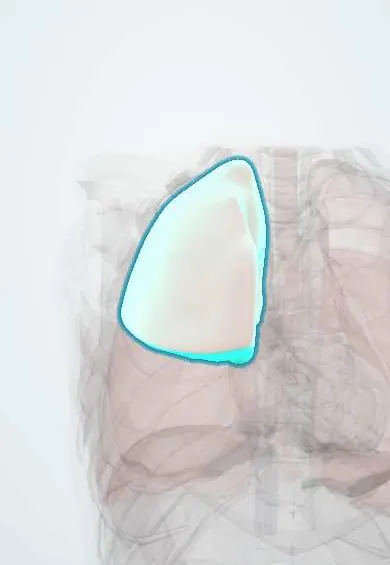
- Right upper lobe
- Left upper lobe
- Segmental bronchi
- Right middle lobe
- Mediastinal lymph nodes
- Right ventricle
Why it happens
- Granulomatous inflammation: caseating vs non-caseating, the causes to know
- Fibrosis in organs: TGF-β and the myofibroblast
- Air pollution and occupational exposures
- Innate and adaptive immunity: overview
- The alveolus: type I and II pneumocytes, surfactant, the blood–air barrier
What it is
An immune-mediated interstitial lung disease caused by repeated inhalation of organic antigens (or some chemicals) in a sensitised person. It is classified as non-fibrotic or fibrotic; the fibrotic form behaves like other progressive pulmonary fibroses.
Who gets it
One of the more common interstitial lung diseases worldwide. In Latin America, exposure to pigeons and other birds, feather bedding, mould in humid homes and agricultural dusts are frequent causes. It is less common in smokers.
Causes
- Bird fancier's lung: proteins in bird droppings and feathers (pigeons, parrots, hens), feather pillows and duvets
- Farmer's lung: thermophilic actinomycetes in mouldy hay or grain
- Mould in humid homes, air conditioning and humidifiers (hot tub lung from mycobacteria)
- Occupational: mushroom, sugar cane (bagassosis), wood, coffee and cork dusts
- Chemicals: isocyanates in paints and plastics
Risk factors
- Keeping birds or using feather bedding
- Agricultural work and handling stored crops
- Damp, mouldy living or working spaces
- Genetic susceptibility (HLA types); non-smoking
Pathophysiology
In a sensitised person, inhaled antigens reach the small airways and alveoli and provoke a combined type III (immune complex) and type IV (T-cell mediated) hypersensitivity reaction. This causes lymphocytic alveolitis, cellular bronchiolitis and poorly formed non-caseating granulomas. Continued exposure leads to fibrosis, often in the upper and mid zones.
Classification
- Non-fibrotic (previously acute or subacute)
- Fibrotic (previously chronic), with worse prognosis
Symptoms and signs
- Fever, chills, cough and breathlessness 4–8 hours after heavy exposure, resolving within days (flu-like)
- Insidious exertional dyspnoea, dry cough, fatigue and weight loss with chronic low-level exposure
- Inspiratory crackles and sometimes squeaks on auscultation
- Digital clubbing in fibrotic disease
- Symptoms improve away from home or work and recur on return
Diagnosis
- Clinical
- A detailed exposure history (birds, feathers, mould, farming, occupation) is the cornerstone, together with the relation of symptoms to exposure. Multidisciplinary discussion confirms the diagnosis.
- Tests
- Specific serum IgG antibodies (precipitins) show exposure, not disease. Spirometry and DLCO show a restrictive pattern with low diffusing capacity. Bronchoalveolar lavage lymphocytosis (often over 30%) supports the diagnosis. Lung biopsy in uncertain cases.
- Imaging
- High-resolution CT: centrilobular ground-glass nodules, mosaic attenuation with air trapping on expiration (the "three-density" or headcheese sign); fibrotic forms show reticulation and traction bronchiectasis, often in upper and middle zones.
Differential diagnosis
- Community-acquired pneumonia or influenza (acute episodes)
- Idiopathic pulmonary fibrosis and other interstitial lung diseases
- Sarcoidosis
- Asthma
- Eosinophilic pneumonia
- Pneumoconiosis
Goal of treatment
Identify and remove the antigen, suppress inflammation when needed and slow or prevent fibrosis.
Treatment
- Lifestyle
- Complete avoidance of the antigen: removing birds and feather bedding, cleaning or leaving mouldy environments, workplace changes. This is the most important treatment.
- Medical
- Systemic glucocorticoids for significant or progressive disease; steroid-sparing agents (mycophenolate, azathioprine) for long-term control.
- Medical
- Antifibrotic therapy (e.g. nintedanib) in progressive fibrotic disease.
- Rehabilitation
- Pulmonary rehabilitation, oxygen when hypoxaemic, vaccination, and lung transplantation in advanced fibrosis.
Complications
- Pulmonary fibrosis and respiratory failure
- Pulmonary hypertension and cor pulmonale
- Side effects of long-term glucocorticoids
Prognosis
Non-fibrotic disease often resolves fully if exposure stops early. Fibrotic disease, failure to identify the antigen and continued exposure carry a prognosis similar to other progressive fibrosing lung diseases.
Prevention
- Avoiding indoor birds and feather bedding in susceptible people
- Dry storage of hay and grain, ventilation and respiratory protection in farming
- Controlling humidity and mould at home and in humidifiers and air conditioning
Test yourself
Think of the answer, then tap the question to see it.
What is the most important step in treating hypersensitivity pneumonitis?
Identifying and completely avoiding the causative antigen.
Which types of hypersensitivity are involved in hypersensitivity pneumonitis?
Type III (immune complex) and type IV (T-cell mediated) reactions.
What does bronchoalveolar lavage typically show in hypersensitivity pneumonitis?
A marked lymphocytosis, often over 30% of cells.
What exposures cause bird fancier's lung and farmer's lung?
Bird droppings and feather proteins in bird fancier's lung; thermophilic actinomycetes in mouldy hay in farmer's lung.
Related conditions
- Interstitial lung disease
- Sarcoidosis
- Pneumoconioses (silicosis, asbestosis, coal workers' pneumoconiosis)
- Asthma
- Allergic bronchopulmonary aspergillosis (ABPA)
- Eosinophilic pneumonias (including Löffler syndrome)
- Community-acquired pneumonia
- Influenza (flu)
- Pulmonary hypertension and cor pulmonale
Educational information, not medical advice. For any symptom, see a health professional.
Sources: Hypersensitivity pneumonitis (MedlinePlus Medical Encyclopedia (U.S. National Library of Medicine), 2024).
Spotted a mistake?We are always improving for the community. Tell us what is wrong and our team will review it.Report a mistake
Representative model, for educational purposes only.