Conditions · Metabolism: purines and pyrimidines
Lesch-Nyhan syndrome !
An inherited disorder of boys caused by missing HGPRT: excess uric acid, movement problems and self-injuring behaviour.
Updated 2026-11-01
Structures involved
Tap one to see what it is and open it in 3D.
In biochemistry
- Glutamine-PRPP amidotransferase
- Hypoxanthine-guanine phosphoribosyltransferase (HGPRT)
- PRPP (phosphoribosyl pyrophosphate)
- IMP (inosine monophosphate)
- Uric acid
- Hypoxanthine
What it is
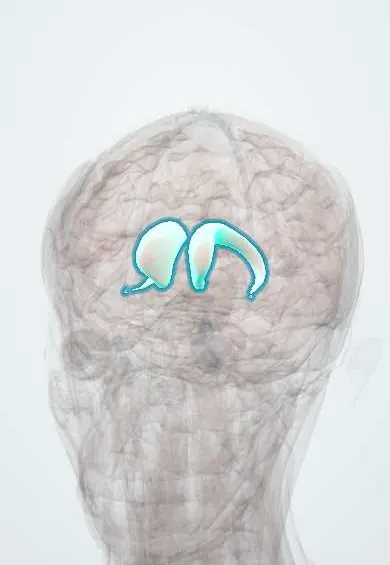
Complete deficiency of hypoxanthine-guanine phosphoribosyltransferase (HPRT1 gene, X-linked) that causes uric acid overproduction and a severe basal ganglia disorder.
Who gets it
Very rare: about 1 in 235,000 to 380,000 people, almost always males. There are no specific registries in Colombia; it is diagnosed in genetics and paediatric neurology centres.
Causes
- Pathogenic variants of the HPRT1 gene on the X chromosome
- X-linked recessive inheritance: carrier mothers; about a third of cases are new mutations
Risk factors
- Male sex
- Carrier mother or family history of affected males
Pathophysiology
Without HGPRT, hypoxanthine and guanine are not recycled and are degraded to uric acid; spare PRPP also speeds de novo purine synthesis. Urate production rises several-fold, with crystals in kidneys and joints. In the brain, loss of the enzyme disturbs the development of dopaminergic neurons of the basal ganglia; hence the dystonia and self-injury, which uric acid does not explain and which do not improve when it is lowered.
Classification
- Classic Lesch-Nyhan (almost no activity)
- Intermediate variants with neurological disease without self-injury
- Partial deficiency: HPRT-related hyperuricaemia (Kelley-Seegmiller), with gout and stones
Symptoms and signs
- Orange crystals («sand») in the nappy from the first months
- Motor delay and hypotonia around 3–6 months, then dystonia and involuntary movements
- Compulsive self-injury: biting lips, tongue and fingers, from age 2–3
- Mild to moderate intellectual disability and aggressive behaviour
- Gout and kidney stones in adolescence or earlier
- Difficulty swallowing and speaking
Diagnosis
- Clinical
- A boy with motor delay, dystonia and self-injury, with urate crystals in the nappy or early gout.
- Tests
- High blood uric acid and urine uric acid/creatinine ratio; HGPRT activity in red cells or fibroblasts; HPRT1 genetic testing (also for carriers and prenatal diagnosis).
- Imaging
- Renal ultrasound to look for stones and nephrocalcinosis; brain MRI is usually normal or shows mild basal ganglia atrophy.
Treatment
- Medical
- Allopurinol to lower uric acid and protect the kidneys; it does not correct the neurological symptoms
- Lifestyle
- Plenty of fluids to keep urine dilute
- Conservative
- Protection against self-injury: splints, gloves, mouth guards and sometimes tooth extraction
- Medical
- Drugs for dystonia, spasticity and behaviour, case by case
- Rehabilitation
- Physical, occupational and speech therapy; behavioural support with positive reinforcement
- Procedure
- Deep brain stimulation in specialised centres for severe cases
Complications
- Chronic kidney disease from urate nephropathy
- Xanthine stones during allopurinol treatment
- Aspiration pneumonia
- Mutilation from self-injury
Prognosis
Most patients survive into their second or third decade; the most frequent causes of death are aspiration pneumonia, kidney failure and sudden death.
Prevention
- Genetic counselling and carrier testing in affected families
Test yourself
Think of the answer, then tap the question to see it.
Which enzyme is missing in Lesch-Nyhan syndrome, and how is it inherited?
HGPRT (HPRT1 gene); X-linked recessive inheritance, which is why it affects boys.
Why does allopurinol not improve self-injury in Lesch-Nyhan syndrome?
The neurological symptoms come from dopaminergic dysfunction of the basal ganglia, not from uric acid.
Which early sign may the family notice in the nappy?
Orange urate crystals («sand»).
Related conditions
Educational information, not medical advice. For any symptom, see a health professional.
Sources: Lesch-Nyhan syndrome: MedlinePlus Genetics (MedlinePlus, US National Library of Medicine, 2026); HPRT1 gene: MedlinePlus Genetics (MedlinePlus, US National Library of Medicine, 2026); Textbook of Biochemistry for Medical Students, 6th ed. (Jaypee Brothers Medical Publishers (Vasudevan DM, Sreekumari S, Vaidyanathan K), 2011).
Spotted a mistake?We are always improving for the community. Tell us what is wrong and our team will review it.Report a mistake
Representative model, for educational purposes only.