
Occupational (work-related) asthma
Asthma caused by something breathed in at work, such as flour, latex or chemicals. Symptoms improve away from work; early removal from exposure matters.
What it is
Asthma caused by exposure at work: either immune sensitization to a workplace agent after a latency period, or airway injury from a high-level irritant exposure. It differs from work-exacerbated asthma, in which pre-existing asthma worsens at work.
Who gets it
One of the most common occupational lung diseases in industrialized countries; about one in six cases of adult-onset asthma is attributable to work. High-risk jobs include bakers, healthcare workers, cleaners, hairdressers, spray painters, woodworkers, farmers and animal handlers, and workers in plastics, foam, food, detergent and pharmaceutical manufacturing.
Causes
- Sensitizers of high molecular weight (proteins, usually IgE-mediated): flour and grain dust, natural rubber latex, laboratory animal and insect proteins, enzymes in detergents and baking, seafood proteins
- Sensitizers of low molecular weight (chemicals): isocyanates in paints, varnishes and foams; wood dusts (red cedar); persulfate salts in hair bleach; acid anhydrides and epoxy resins; glutaraldehyde and other disinfectants; metals such as platinum salts, nickel and chromium
- Irritants at high level (irritant-induced asthma or RADS): chlorine, ammonia, acids, smoke, fumes from fires or industrial accidents
- Repeated lower-level irritant exposure, such as cleaning products, is also linked to asthma
Risk factors
- Level and frequency of exposure (the strongest factor)
- Atopy (for high molecular weight agents)
- Pre-existing work-related rhinitis or conjunctivitis
- Smoking (for some agents, such as platinum salts and anhydrides)
- Poor ventilation, spills or lack of respiratory protection
- Accidental high-level exposure (RADS)
Pathophysiology
Sensitizer-induced: a workplace agent is inhaled repeatedly → high molecular weight proteins act as complete antigens and induce specific IgE and type 2 airway inflammation, while many low molecular weight chemicals bind airway proteins as haptens or act through non-IgE routes that are not fully understood → after a latency of weeks to years the airway is sensitised, often preceded by work-related rhinitis → from then on very low exposures trigger bronchoconstriction and inflammation, at once and often again hours later (late reaction, in the evening or at night) → continued exposure entrenches airway hyperresponsiveness and remodelling, which may become permanent. Irritant-induced: a single high-level exposure damages the airway epithelium directly, with no latency or sensitization, and leaves persistent hyperresponsiveness (RADS).
Classification
- Sensitizer-induced occupational asthma (with latency): high or low molecular weight agents
- Irritant-induced asthma, including reactive airways dysfunction syndrome (RADS): onset within about 24 hours of a single high-level exposure, no latency
- Work-exacerbated asthma: pre-existing or coincident asthma made worse by work conditions (not occupational asthma itself)
- Related: occupational rhinitis, often preceding the asthma
Symptoms and signs
- Wheeze, cough, chest tightness and dyspnoea
- Symptoms during the shift or in the evening and night after work (late reaction)
- Improvement on weekends and holidays, worsening on return to work
- Rhinitis, sneezing and conjunctivitis, often months before the asthma
- Skin symptoms with some agents (latex urticaria)
- In RADS: cough, wheeze and dyspnoea starting within hours of an accidental exposure
Diagnosis
- Clinical
- Ask every adult with new or worsening asthma about their job, the agents handled and whether symptoms improve away from work. The diagnosis needs two steps: confirm asthma, then show the link to work. A detailed occupational history includes safety data sheets for the products used and whether co-workers have similar symptoms.
- Tests
- Spirometry with bronchodilator response, and a bronchial challenge (methacholine) to show hyperresponsiveness, ideally while still working and repeated after time away. Serial peak expiratory flow recorded several times a day for some weeks, covering periods at work and away from work, shows the work-related pattern. Skin prick tests or specific IgE for high molecular weight agents; exhaled nitric oxide or sputum eosinophils; specific inhalation challenge in specialized centres is the reference test.
- Imaging
- Chest X-ray is usually normal and mainly excludes other diagnoses; CT is used when another lung disease is suspected.
Differential diagnosis
- Work-exacerbated asthma (pre-existing asthma)
- Non-occupational asthma
- Hypersensitivity pneumonitis
- COPD and chronic bronchitis from dust or fumes
- Inducible laryngeal obstruction (vocal cord dysfunction)
- Pneumoconiosis or other occupational lung disease
Asthma and work: which one is it?
| Type | Onset | Mechanism | Key point |
|---|---|---|---|
| Sensitizer-induced occupational asthma | After a latency of weeks to years | Immune sensitization (IgE for proteins; often unclear for chemicals) | Complete, early removal from the agent |
| Irritant-induced asthma (RADS) | Within about 24 hours of one high-level exposure | Direct chemical injury to the airway lining, no sensitization | No latency; treated as asthma, prevented by safety measures |
| Work-exacerbated asthma | Asthma already present, worse at work | Non-specific triggers: dust, cold air, fumes, exertion | Reduce exposure and improve asthma control |
| Hypersensitivity pneumonitis | Weeks to months, often with flu-like episodes | Immune reaction in the alveoli, not the airways | Crackles, restrictive pattern, low diffusing capacity; remove the antigen |
Goal of treatment
Remove the worker from exposure as early as possible, control the asthma, and protect co-workers.
Treatment
- Lifestyle
- Complete and early removal from exposure to the sensitizer: the most effective measure; reducing exposure is less effective than stopping it. For irritant-induced and work-exacerbated asthma, reducing exposure and improving workplace conditions may be enough.
- Medical
- Standard asthma treatment by step: inhaled reliever (short-acting beta-agonist or low-dose inhaled corticosteroid–formoterol), inhaled corticosteroids as the basis of control, adding long-acting bronchodilators or other agents as needed.
- Medical
- Treatment of associated rhinitis and conjunctivitis; adrenaline auto-injector and avoidance plan when latex or another agent has caused anaphylaxis.
- Conservative
- Workplace control: substitution of the agent (powder-free latex gloves), closed processes, local exhaust ventilation and, as a last line, respiratory protection; reporting to occupational health, legal notification and compensation where they apply; screening of exposed co-workers.
- Follow-up
- Follow-up with spirometry and symptom review after removal from exposure; vocational counselling, since job change has social and financial consequences.
Complications
- Persistent asthma and airway hyperresponsiveness despite removal from exposure
- Fixed airflow obstruction with continued exposure
- Severe attacks and anaphylaxis
- Loss of job and income
Common traps
- Once sensitised, a mask or lower exposure is enough: traces still trigger asthma; complete, early removal from the agent is the most effective treatment
- Someone who already has asthma cannot develop occupational asthma: a person with asthma can still become newly sensitised at work; asthma that is only made worse by work is work-exacerbated asthma, a separate entity
- Symptoms that start at night, after the shift, are not work-related: late asthmatic reactions peak hours after exposure, often in the evening or at night
- Normal tests after a holiday rule it out: test while the worker is still exposed; serial peak flow covering work and days off shows the pattern
- Irritant-induced asthma (RADS) develops after months of exposure, like sensitizer asthma: it follows one high-level irritant exposure, starts within about 24 hours and involves no sensitization
Prognosis
Best when the diagnosis is early and exposure stops soon after symptoms start; many workers still have symptoms and hyperresponsiveness years after leaving exposure. Continued exposure leads to worsening and fixed obstruction.
Test yourself
Think of the answer, then tap the question to see it.
What distinguishes sensitizer-induced occupational asthma from RADS?
Sensitizer asthma follows a latency period and immune sensitization; RADS follows a single high-level irritant exposure within about 24 hours, with no latency.
How do serial peak flow recordings support the diagnosis?
Peak flow measured several times a day for weeks falls or varies more on work days and improves on days away from work.
Which occupations are classic for flour sensitization and for isocyanates?
Bakers and millers for flour; spray painters and workers making foams, plastics and varnishes for isocyanates.
What is the single most effective treatment for sensitizer-induced occupational asthma?
Early and complete removal from exposure to the agent; reducing exposure or using masks is less effective.
A 30-year-old baker with a year of rhinitis now wheezes at night after work and feels well on holidays. Spirometry today is normal. Which test best links his asthma to work?
Serial peak expiratory flow several times a day for weeks, at work and away from it (with a methacholine challenge and flour-specific IgE): a work-related fall supports flour-induced occupational asthma.
Connections
Educational information, not medical advice. For any symptom, see a health professional.
Sources: Occupational asthma: MedlinePlus Medical Encyclopedia (MedlinePlus, US National Library of Medicine, 2025); Asthma (Work-related) | Asthma | CDC (Centers for Disease Control and Prevention (CDC), NIOSH, 2026); Guía de Atención Integral de Salud Ocupacional Basada en la Evidencia para Asma Ocupacional (GATISO-ASMA) (Ministerio de la Protección Social (Colombia), 2008); Asthma: Allergic, Nonallergic, and Environmental Phenotypes (StatPearls (NCBI Bookshelf), 2026).
Spotted a mistake?We are always improving for the community. Tell us what is wrong and our team will review it.Report a mistake
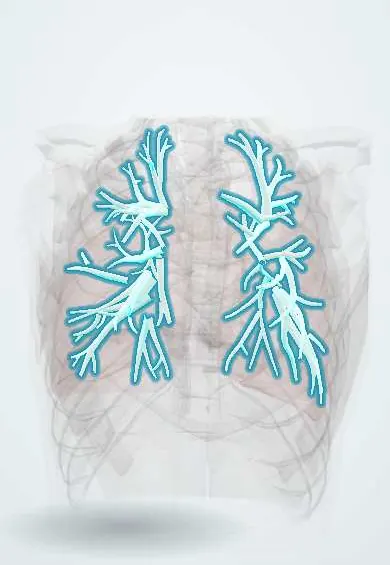
Representative model, for educational purposes only.