
Status asthmaticus (acute severe and life-threatening asthma)
An asthma attack that does not respond to the usual inhalers and can kill. A quiet chest and a rising CO₂ mean the patient is tiring, not getting better.
What it is
A severe asthma exacerbation that does not respond to initial bronchodilator treatment and threatens respiratory failure. It is recognised at the bedside and escalated step by step, from repeated bronchodilators and systemic corticosteroids to intensive care and, if needed, carefully set mechanical ventilation.
Who gets it
About 8–13% of people with asthma have at least one exacerbation a year, and asthma causes about 1,000 deaths worldwide each day. Two or more exacerbations in the previous year strongly predict the next one. Less than 4% of ECMO runs for respiratory failure are for asthma, and survival in that group exceeds 83%.
Causes
- Viral respiratory infections, the commonest trigger
- Allergen exposure in sensitised people: Alternaria mould, cat dander, house dust mites, cockroach
- Air pollution, tobacco smoke and diesel fumes
- Aspirin or other NSAIDs in NSAID-exacerbated respiratory disease
- Poor adherence to controller treatment or poor inhaler technique
Risk factors
- Previous severe exacerbations, especially two or more in the past year
- A previous exacerbation needing intubation
- Poor adherence or inhaler technique
- Obesity, obstructive sleep apnoea, reflux, nasal polyps
- Anxiety and depression
- Active smoking
Pathophysiology
A trigger → bronchospasm, airway wall swelling and mucus plugs narrow the airways → narrowing is worst in expiration, so the lungs cannot empty before the next breath begins → trapped air builds pressure at the end of expiration (intrinsic PEEP, or auto-PEEP) and the lungs hyperinflate, which raises the work of breathing → uneven ventilation leaves areas with more blood flow than air, causing hypoxaemia → as the breathing muscles tire, ventilation falls and CO₂ rises; airflow can become so poor that wheeze disappears (silent chest) → high pressure in the chest reduces blood return to the heart and lowers blood pressure, especially once positive-pressure ventilation starts, and overstretched alveoli can rupture (pneumothorax, pneumomediastinum).
Classification
- Severe exacerbation: no adequate response to initial inhaled bronchodilators
- Impending respiratory failure: altered consciousness, cyanosis, pulsus paradoxus above 15 mmHg, saturation below 90%, rising PaCO₂
- By setting: emergency department, hospital ward, intensive care
Symptoms and signs
- Breathlessness at rest; speech limited to words or short phrases; sitting upright
- Use of neck and accessory muscles, pursed lips
- Wheeze in both phases of breathing and a long expiration (inspiration to expiration ratio of at least 1:3)
- Fast breathing, fast heart rate and pulsus paradoxus (systolic pressure falls more than 10 mmHg on inspiration)
- In the most severe cases: a silent chest, cyanosis, drowsiness or confusion
Diagnosis
- Clinical
- A bedside diagnosis: severity is judged from speech, posture, effort, mental state and auscultation, and treatment is not delayed for tests.
- Tests
- Pulse oximetry; peak expiratory flow, if the patient can perform it, mainly to follow the response; arterial blood gas in severe attacks, where a normal or rising PaCO₂ means progression to respiratory failure; potassium, because beta-2 agonists lower it.
- Imaging
- Chest X-ray only when pneumonia, pneumothorax or pneumomediastinum is suspected; it often shows hyperinflation.
Differential diagnosis
- COPD exacerbation
- Vocal fold dysfunction (inducible laryngeal obstruction)
- Anaphylaxis
- Heart failure (cardiac asthma)
- Pneumonia
- Pneumothorax
Escalation in status asthmaticus (drugs named, doses set by the guideline)
| Step | What is added | Why | Watch for |
|---|---|---|---|
| First line | Oxygen; repeated inhaled short-acting beta-2 agonist (salbutamol) with ipratropium; a systemic corticosteroid | Opens the airways now; the steroid treats the inflammation over hours | Tremor, fast heart rate, low potassium |
| Not responding | Intravenous magnesium sulphate | Relaxes airway smooth muscle; modestly fewer admissions in severe attacks | Low blood pressure, flushing |
| Still failing | Adrenaline (epinephrine) only for anaphylaxis or refractory attacks; terbutaline in children; aminophylline in selected inpatients; heliox as an unproven adjunct | Extra bronchodilation when the usual drugs fail | Arrhythmias; seizures with aminophylline |
| Respiratory failure | Noninvasive ventilation in selected patients; intubation in the ICU, often with ketamine | Rests the tiring muscles | Low blood pressure at intubation, pneumothorax |
| Refractory | Inhaled anaesthetic gases such as sevoflurane; ECMO | Bronchodilation, or taking over gas exchange while the airways recover | Low blood pressure, arrhythmias; ECMO complications |
Goal of treatment
Reverse the bronchospasm fast, keep oxygen adequate, recognise tiring early and, if ventilation is needed, avoid the air trapping that causes low blood pressure and pneumothorax.
Treatment
- Acute
- Oxygen and repeated inhaled short-acting beta-2 agonist by spacer or nebuliser, adding ipratropium when the response is poor; some evidence favours giving both from the start. Continuous nebulisation has no proven advantage over repeated doses.
- Medical
- A systemic corticosteroid early in every severe attack.
- Medical
- Intravenous magnesium sulphate for severe or life-threatening attacks that do not respond to inhaled beta-2 agonists and systemic corticosteroids.
- Medical
- Adrenaline (epinephrine) is not routine: it is kept for coexisting anaphylaxis or refractory attacks when other treatment fails or is not available. Terbutaline is an alternative in children. Theophylline or aminophylline is kept for selected hospitalised patients because of arrhythmias and seizures. Heliox is an adjunct with conflicting evidence.
- Conservative
- In the patient who is not intubated, avoid anxiolytics and morphine: they depress breathing and may increase mortality and the need for ventilation. Give antibiotics only when bacterial infection is suspected; most triggers are viral.
- Acute
- Noninvasive ventilation for selected awake patients who are still struggling despite treatment; strongly consider intubation if there is no clear improvement after about 1 hour.
- Acute
- Intubation in the ICU by an experienced operator; ketamine is often chosen because it bronchodilates and does not lower blood pressure. Ventilate with a low rate and a long expiratory time, small tidal volumes, a plateau pressure kept below about 30–35 cmH₂O and an accepted high CO₂ (permissive hypercapnia). Avoid routine neuromuscular blockers, which with corticosteroids can cause prolonged weakness.
- Procedure
- Refractory cases: inhaled anaesthetic agents such as sevoflurane given by anaesthesia staff, and ECMO in experienced centres.
- Follow-up
- After recovery: review inhaler technique, adherence and controller treatment, give a written action plan and arrange follow-up; an exacerbation that needed intubation marks very poor control.
Complications
- Respiratory failure and respiratory arrest
- Pneumothorax and pneumomediastinum
- Low blood pressure from hyperinflation, especially at intubation
- Low potassium and arrhythmias from beta-2 agonists
- Prolonged weakness when neuromuscular blockers are combined with corticosteroids
Common traps
- A quieter chest means the attack is easing: a silent chest can mean almost no air is moving; judge by effort, speech and mental state.
- A normal CO₂ is reassuring in a severe attack: a breathless patient should be blowing CO₂ off; a normal or rising value means tiring and impending respiratory failure.
- Once intubated, ventilate fast to clear the CO₂: fast rates trap more air and cause low blood pressure and pneumothorax; use a slow rate, a long expiration and permissive hypercapnia.
- A high peak airway pressure means the alveoli are overstretched: in asthma the peak mostly reflects airway resistance, and the plateau pressure shows alveolar distension.
- A sedative will calm the panicking patient: before intubation, sedatives and morphine depress breathing and may increase mortality.
Prognosis
Most patients recover with prompt treatment, but asthma still causes about 1,000 deaths a day worldwide. Survival on ECMO for asthma exceeds 83%. Previous severe exacerbations strongly predict future ones.
Prevention
- Regular controller treatment with good adherence and inhaler technique
- A written action plan
- Treatment of obesity, sleep apnoea, reflux, nasal polyps, anxiety and depression
- Avoidance of triggers, tobacco smoke and pollution, and of NSAIDs in NSAID-exacerbated respiratory disease
- Review after every severe exacerbation
Test yourself
Think of the answer, then tap the question to see it.
Why is a silent chest an ominous sign in acute asthma?
It means airflow is so poor that wheeze can no longer be produced, a sign of impending respiratory failure, not improvement.
A breathless asthmatic has a PaCO₂ of 45 mmHg. Why is this worrying?
A breathless patient should be hyperventilating with a low CO₂; a normal or high value means the breathing muscles are tiring.
Why is a slow rate with a long expiratory time used when ventilating status asthmaticus?
It gives the lungs time to empty, limiting intrinsic PEEP and hyperinflation, which cause low blood pressure and pneumothorax.
When is intravenous magnesium sulphate added in acute asthma?
In severe or life-threatening attacks that do not respond to inhaled beta-2 agonists and systemic corticosteroids.
Why does blood pressure often fall just after intubating a patient with status asthmaticus?
Positive pressure and trapped air raise pressure in the chest, which reduces venous return to the heart.
Connections
Educational information, not medical advice. For any symptom, see a health professional.
Sources: Treatment of Acute Asthma Exacerbations (MSD Manual Professional Edition, 2026); Asthma (MSD Manual Professional Edition, 2026); Status Asthmaticus in the Pediatric ICU: A Comprehensive Review of Management and Challenges (Pediatric Reports (Europe PMC), 2024); Severe Asthma Exacerbations: From Risk Factors to Precision Management Strategies (Journal of Clinical Medicine (Europe PMC), 2026).
Spotted a mistake?We are always improving for the community. Tell us what is wrong and our team will review it.Report a mistake
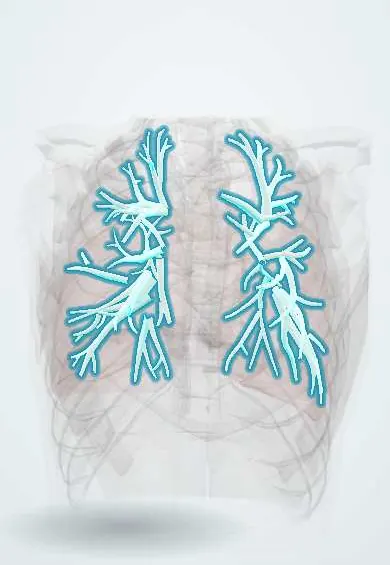
Representative model, for educational purposes only.