Orbital floor (blowout) fracture !
An orbital blowout fracture is a break of the thin floor of the eye socket from a blow to the eye; an eye muscle can get trapped, causing double vision.
Updated 2026-10-29
Structures involved
Tap one to see what it is and open it in 3D.
What it is
Fracture of the orbital floor (and sometimes the medial wall) caused by a blow to the eye, with the orbital rim left intact. Orbital contents can herniate into the maxillary sinus and the inferior rectus can be trapped.
Who gets it
Common in young adults, mainly men, after assaults, sports injuries, falls and road traffic accidents. Children have a special pattern, the trapdoor fracture, which needs urgent surgery.
Causes
- Blow from an object larger than the orbital opening (fist, ball, elbow)
- Road traffic accidents and falls
- Sports injuries
Risk factors
- Young male sex
- Interpersonal violence and alcohol use
- Contact and ball sports without eye protection
- Motorcycle accidents
Pathophysiology
A sudden rise in orbital pressure, or the force carried along the rim, breaks the thinnest part of the floor, medial to the infraorbital canal. Fat and the inferior rectus or its fascia can herniate and become trapped, limiting upward gaze. In children the elastic bone can snap back and trap the muscle (trapdoor), causing ischaemia and a strong oculocardiac reflex.
Classification
- Pure (rim intact) or impure (with rim or zygomatic fracture)
- Floor, medial wall or combined
- Trapdoor (greenstick) fracture in children, often with little visible injury (white-eyed blowout)
Symptoms and signs
- Periorbital bruising and swelling
- Double vision, especially on looking up
- Limited upward gaze
- Numbness of the cheek, side of the nose and upper lip (infraorbital nerve)
- Enophthalmos (sunken eye), often once swelling settles
- Air under the skin (subcutaneous emphysema) after nose blowing
Diagnosis
- Clinical
- Visual acuity, pupils, eye movements and diplopia are tested, with infraorbital sensation and enophthalmos. Forced duction test confirms mechanical restriction. A full eye examination looks for globe injury.
- Tests
- No specific laboratory tests. Orthoptic assessment (Hess chart) documents motility over time. ECG monitoring if the oculocardiac reflex is suspected.
- Imaging
- Thin-slice CT of the orbits with coronal and sagittal views is the test of choice: it shows the fracture, herniated tissue, muscle entrapment and the teardrop sign in the maxillary sinus.
Differential diagnosis
- Orbital contusion with swelling only
- Globe rupture or hyphaema
- Retrobulbar haemorrhage
- Cranial nerve palsy (III, IV, VI)
- Zygomatic complex fracture
Goal of treatment
Protect vision, free trapped tissue urgently when present, and restore orbital volume and eye movement to prevent lasting double vision and enophthalmos.
Treatment
- Conservative
- Small fractures without entrapment or enophthalmos: avoiding nose blowing, cold compresses and head elevation, with review as swelling settles.
- Medical
- Nasal decongestants; antibiotics are often given because the fracture opens into the sinus, though evidence varies; oral corticosteroids sometimes to reduce swelling.
- Surgical
- Urgent repair (within about 24–48 hours) for muscle entrapment with oculocardiac reflex, and for the paediatric trapdoor fracture.
- Surgical
- Elective repair within about two weeks for persistent diplopia, early enophthalmos or a large floor defect, using implants to rebuild the floor.
- Acute
- Retrobulbar haemorrhage: immediate lateral canthotomy and cantholysis to relieve orbital pressure.
Complications
- Persistent double vision
- Enophthalmos and eye level asymmetry
- Infraorbital numbness
- Inferior rectus ischaemia in trapdoor fractures
- Orbital cellulitis
- Implant problems after repair
Prognosis
Many patients improve as swelling settles and need no surgery. Timely repair of entrapment, especially in children, gives good recovery of eye movement; late repair has more lasting diplopia.
Prevention
- Protective eyewear in ball and racquet sports and at risky work
- Seat belts and helmets
- Violence prevention
Test yourself
Think of the answer, then tap the question to see it.
Which muscle is most often trapped in an orbital floor fracture?
The inferior rectus, limiting upward gaze and causing vertical double vision.
Why does a blowout fracture cause cheek numbness?
The fracture runs near the infraorbital canal and injures the infraorbital nerve, a branch of the maxillary nerve (V2).
What is a «white-eyed» blowout fracture?
A paediatric trapdoor fracture with muscle entrapment but few external signs; it needs urgent surgery.
Which reflex can cause bradycardia, nausea and syncope with muscle entrapment?
The oculocardiac reflex (trigeminal afferent, vagal efferent).
What is the imaging test of choice for an orbital blowout fracture?
Thin-slice CT of the orbits with coronal reconstructions.
Related conditions
Educational information, not medical advice. For any symptom, see a health professional.
Sources: Orbital Floor Fracture (StatPearls (NCBI Bookshelf), 2023).
Spotted a mistake?We are always improving for the community. Tell us what is wrong and our team will review it.Report a mistake
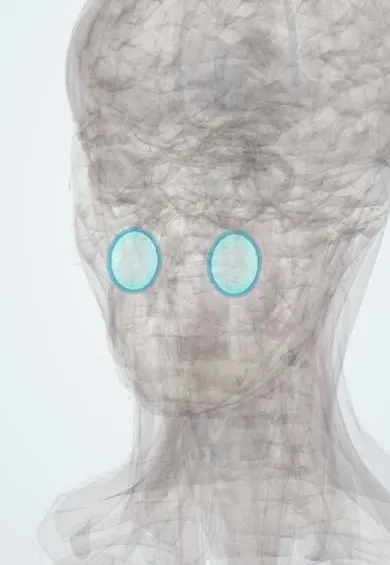
Representative model, for educational purposes only.