Conditions · Infectious and tropical diseases
Poliomyelitis and acute flaccid paralysis !
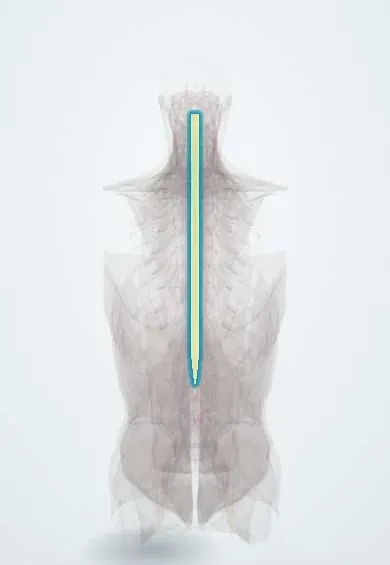
Polio is a vaccine-preventable viral infection that can destroy the spinal cord's motor nerve cells and leave a limb or breathing muscles paralysed.
Updated 2026-11-01
Structures involved
Tap one to see what it is and open it in 3D.
Microorganisms that cause it
In the clinical exam
Why it happens
What it is
An enterovirus infection (poliovirus) that is usually silent but in a small minority invades the motor neurons of the spinal cord and brainstem, causing asymmetric acute flaccid paralysis. Any acute flaccid paralysis in a child is investigated as possible polio.
Who gets it
Wild poliovirus has fallen by over 99% since 1988 and persists in very few countries; the Americas were certified free of wild polio in 1994. Vaccine-derived virus can still circulate where coverage is low. Colombia, like the rest of the region, keeps surveillance of acute flaccid paralysis in children under 15 with stool samples for every case.
Causes
- Poliovirus types 1, 2 and 3 (wild virus) and circulating vaccine-derived poliovirus
- Faecal-oral spread and, less often, respiratory secretions
- Rarely, vaccine-associated paralysis after oral (live) vaccine
Risk factors
- Incomplete vaccination, mainly in children under 5
- Poor sanitation and low community vaccination coverage
- Immunodeficiency (prolonged excretion of vaccine virus)
- Intramuscular injections, strenuous exercise or tonsillectomy during the incubation period (provocation paralysis)
Pathophysiology
The virus multiplies in the pharynx and intestine, spreads to lymphoid tissue and, in a few, enters the blood and the central nervous system. It destroys the anterior horn cells of the spinal cord and brainstem motor nuclei, so the muscles they supply lose nerve supply: flaccid weakness, low tone, absent reflexes and later atrophy, with sensation preserved.
Classification
- Inapparent infection (most cases)
- Abortive polio: brief non-specific febrile illness
- Non-paralytic polio: aseptic meningitis with neck and back stiffness
- Paralytic polio: spinal, bulbar or bulbospinal
- Post-polio syndrome: new weakness decades later
Symptoms and signs
- Fever, sore throat, headache, vomiting and muscle pain before weakness
- Neck and back stiffness with meningeal signs
- Rapid, asymmetric flaccid weakness, more often of the legs and proximal muscles
- Reduced or absent tendon reflexes with normal sensation
- Difficulty swallowing, nasal voice and drooling in bulbar disease
- Later muscle wasting and limb shortening in children
Diagnosis
- Clinical
- Acute, asymmetric flaccid paralysis with fever, preserved sensation and reduced reflexes. Every case of acute flaccid paralysis is notified and investigated, with follow-up examination for residual paralysis at about 60 days.
- Tests
- Two stool samples taken 24 hours apart within 14 days of onset for virus isolation and typing (wild versus vaccine-derived). Throat swab, CSF (lymphocytic pleocytosis, raised protein) and CSF PCR support the diagnosis. Nerve conduction shows motor neuron loss with normal sensory studies.
- Imaging
- Spinal MRI may show signal change in the anterior horns and helps exclude compression or transverse myelitis.
Differential diagnosis
- Guillain-Barré syndrome (symmetric, ascending, high CSF protein with few cells)
- Transverse myelitis (sensory level, bladder involvement)
- Acute flaccid myelitis from other enteroviruses
- Botulism (descending paralysis with cranial nerves first)
- Traumatic neuritis after an injection and spinal cord compression
Goal of treatment
There is no antiviral cure: support breathing and swallowing, prevent contractures and complications, rehabilitate function, and contain transmission through public-health response.
Treatment
- Acute
- Hospital care with bed rest in the acute phase, pain relief, positioning and avoidance of injections; mechanical ventilation for respiratory failure.
- Acute
- Public-health response: case notification, stool sampling and rapid vaccination campaigns around the case.
- Follow-up
- Nursing monitoring of vital capacity, respiratory rate, swallowing, bladder and bowel function; enteric precautions for stool handling.
- Rehabilitation
- Physiotherapy, splints and orthoses to preserve range of motion and function; orthopaedic surgery for late deformity.
Complications
- Respiratory failure and aspiration pneumonia
- Permanent paralysis, muscle atrophy and limb-length difference
- Joint contractures, scoliosis and osteoporosis
- Myocarditis and autonomic instability
- Post-polio syndrome: fatigue and new weakness years later
Prognosis
Most infections cause no lasting harm. About 1 in 200 infections leads to permanent paralysis, and 5–10% of those paralysed die when breathing muscles fail. Much strength returns in the first months; weakness left after about a year is usually permanent.
Prevention
- Complete routine vaccination; current schedules use inactivated vaccine (IPV) with or without oral vaccine (bOPV)
- Sustained high coverage in every municipality and catch-up campaigns
- Acute flaccid paralysis surveillance and environmental testing
- Hand hygiene and safe water and sanitation
Test yourself
Think of the answer, then tap the question to see it.
Which cells does poliovirus destroy to cause paralysis?
Anterior horn motor neurons of the spinal cord (and brainstem motor nuclei).
What is the typical pattern of weakness in paralytic polio?
Acute, asymmetric flaccid paralysis with reduced reflexes and normal sensation, often after a febrile illness.
Which samples are required for every case of acute flaccid paralysis?
Two stool samples taken 24 hours apart within 14 days of onset, for poliovirus isolation.
How does Guillain-Barré syndrome differ from polio clinically?
GBS is usually symmetric and ascending, often with sensory symptoms, and shows high CSF protein with few cells.
What is the main cause of death in acute paralytic polio?
Respiratory failure from paralysis of breathing muscles or bulbar involvement.
Related conditions
Educational information, not medical advice. For any symptom, see a health professional.
Sources: Poliomyelitis (World Health Organization, 2025); Polio: MedlinePlus Medical Encyclopedia (MedlinePlus (U.S. National Library of Medicine), 2024).
Spotted a mistake?We are always improving for the community. Tell us what is wrong and our team will review it.Report a mistake
Representative model, for educational purposes only.