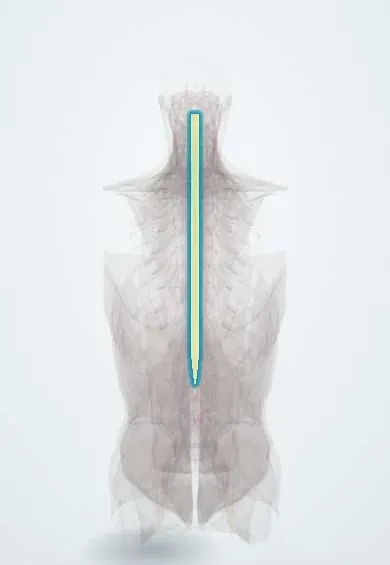
Transverse myelitis !
Transverse myelitis is inflammation across a segment of the spinal cord. Over hours to weeks it causes weakness, a sensory level and bladder problems.
Updated 2026-11-01
Structures involved
Tap one to see what it is and open it in 3D.
Why it happens
What it is
An acute or subacute inflammatory disorder of the spinal cord that affects both sides of one or more segments, damaging myelin and nerve fibres and producing weakness, sensory loss and autonomic (bladder, bowel and sexual) dysfunction below the level of the lesion.
Who gets it
Rare, with peaks in adolescence and in the fourth decade of life; it affects both sexes. In Latin America the work-up also considers infections that are more frequent in the region, such as HTLV-1, schistosomiasis, tuberculosis, syphilis and arboviruses (dengue, Zika, chikungunya), as well as neuromyelitis optica, which is relatively more common in people of Latin American and African ancestry than in those of European ancestry.
Causes
- Idiopathic, when no cause is found after full evaluation
- Post-infectious or para-infectious immune reaction after viral or bacterial infections
- Demyelinating diseases: multiple sclerosis, neuromyelitis optica spectrum disorder and MOG antibody disease
- Systemic autoimmune diseases: lupus, Sjogren disease, sarcoidosis
- Direct infection: herpesviruses, enteroviruses, HTLV-1, syphilis, tuberculosis, schistosomiasis
- Paraneoplastic myelitis (rare)
Risk factors
- Recent infection
- Personal or family history of autoimmune disease
- Prior optic neuritis or other demyelinating episodes
- Residence in or travel to areas endemic for HTLV-1 or schistosomiasis
Pathophysiology
An immune attack, triggered by infection or part of an autoimmune disease, inflames a segment of the cord. Inflammatory cells and cytokines damage myelin and axons in the ascending sensory and descending motor tracts and in autonomic pathways. The result is a level below which motor, sensory and sphincter function are lost; early spinal shock may cause flaccid weakness before spasticity develops.
Classification
- Acute complete vs acute partial transverse myelitis
- Longitudinally extensive transverse myelitis (three or more vertebral segments), typical of neuromyelitis optica
- Idiopathic vs disease-associated
- Monophasic vs recurrent
Symptoms and signs
- Weakness of both legs, sometimes the arms, developing over hours to days
- A sensory level on the trunk below which sensation is reduced
- A tight band-like feeling around the chest or abdomen
- Back or neck pain at the level of the lesion
- Numbness, tingling or burning in the limbs
- Urinary retention or urgency, constipation and sexual dysfunction
Diagnosis
- Clinical
- Neurological examination establishes a bilateral motor, sensory and sphincter syndrome with a clear sensory level. The first step is to rule out spinal cord compression.
- Tests
- Cerebrospinal fluid analysis (cells, protein, oligoclonal bands, IgG index, infection studies); serum AQP4-IgG and MOG-IgG antibodies; vitamin B12, copper, HIV, syphilis and HTLV-1 serology; autoimmune panel (ANA, anti-Ro/La).
- Imaging
- Urgent MRI of the whole spine with gadolinium excludes compression and shows a T2 signal lesion that may enhance; brain MRI looks for lesions suggesting multiple sclerosis. Optical coherence tomography may assess the optic nerves.
Differential diagnosis
- Compressive myelopathy (disc, tumour, epidural abscess or haematoma)
- Spinal cord infarction
- Guillain-Barre syndrome
- Subacute combined degeneration (vitamin B12 or copper deficiency)
- Spinal dural arteriovenous fistula
- Multiple sclerosis or neuromyelitis optica as the underlying disease
Goal of treatment
Reduce inflammation quickly to limit permanent cord damage, treat any underlying infection or disease, prevent complications of immobility and start rehabilitation early.
Treatment
- Acute
- High-dose intravenous corticosteroids are first line; plasma exchange is added when there is no response or the deficit is severe. Antivirals or antibiotics when an infection is identified.
- Medical
- Long-term immunotherapy when the myelitis is part of neuromyelitis optica, multiple sclerosis or a systemic autoimmune disease; treatment of neuropathic pain and spasticity.
- Follow-up
- Nursing priorities: respiratory function in cervical lesions, bladder scanning and catheterisation for retention, bowel programme, pressure-injury prevention and thromboprophylaxis.
- Rehabilitation
- Early physiotherapy and occupational therapy, mobility aids and bladder and bowel training; psychological support.
Complications
- Permanent paraparesis or tetraparesis
- Neurogenic bladder and bowel with urinary tract infections
- Spasticity and neuropathic pain
- Pressure injuries and venous thromboembolism
- Respiratory failure in high cervical lesions
- Recurrence when an underlying demyelinating disease is present
Prognosis
About a third of patients recover well, a third have moderate deficits and a third are left with severe disability. Rapid onset, complete paralysis and spinal shock predict a worse outcome. Most recovery happens in the first three to six months but can continue for up to two years.
Test yourself
Think of the answer, then tap the question to see it.
What is the first imaging study in suspected transverse myelitis?
Urgent gadolinium-enhanced MRI of the spine, mainly to exclude spinal cord compression.
What does a lesion spanning three or more vertebral segments suggest?
Longitudinally extensive transverse myelitis, typical of neuromyelitis optica spectrum disorder.
What is the first-line acute treatment of idiopathic transverse myelitis?
High-dose intravenous corticosteroids, with plasma exchange for severe or non-responding cases.
Which examination finding localises the lesion to the spinal cord?
A sensory level on the trunk with bilateral weakness and sphincter dysfunction.
Which retrovirus that causes chronic myelopathy should be tested for in Latin America?
HTLV-1, the cause of HTLV-1-associated myelopathy (tropical spastic paraparesis).
Related conditions
- Multiple sclerosis
- Neuromyelitis optica spectrum disorder
- Guillain-Barré syndrome
- Spinal cord injury
- Malignant spinal cord compression
- Spinal epidural abscess
- Systemic lupus erythematosus
- Sjögren disease
- Subacute combined degeneration (vitamin B12)
- Herpes zoster (shingles)
- Syphilis
Educational information, not medical advice. For any symptom, see a health professional.
Sources: Transverse Myelitis | National Institute of Neurological Disorders and Stroke (National Institute of Neurological Disorders and Stroke (NIH), 2025).
Spotted a mistake?We are always improving for the community. Tell us what is wrong and our team will review it.Report a mistake
Representative model, for educational purposes only.