Conditions · Infectious and tropical diseases
Strongyloidiasis !
Strongyloidiasis is a long-lasting threadworm infection from soil that can be silent for decades, but turns deadly when steroids weaken immunity.
Updated 2026-11-01
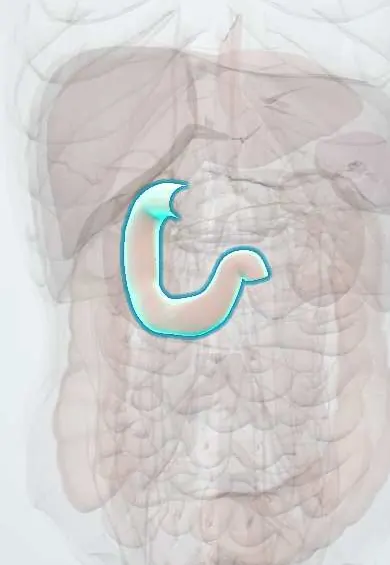
Structures involved
Tap one to see what it is and open it in 3D.
Microorganisms that cause it
Why it happens
- Actions of cortisol
- Small intestine: villi, crypts, enterocytes, Paneth cells; duodenum vs jejunum vs ileum
What it is
Infection by the nematode Strongyloides stercoralis, whose larvae penetrate the skin from contaminated soil and live in the small intestine. Its unique autoinfection cycle allows lifelong infection and, in immunosuppressed people, hyperinfection or dissemination.
Who gets it
Hundreds of millions of people are estimated to be infected worldwide, mainly in tropical and subtropical areas with poor sanitation, including rural Colombia and much of Latin America. It is often missed because routine stool tests are insensitive and standard deworming drugs for other helminths do not clear it.
Causes
- Strongyloides stercoralis filariform larvae in soil contaminated with human faeces
- Larvae penetrate intact skin, usually the feet
- Autoinfection: larvae mature in the gut and re-enter through the bowel wall or perianal skin
Risk factors
- Walking barefoot or farming in tropical and subtropical areas
- Poor sanitation, rural residence and institutional living
- Corticosteroid treatment (for example during asthma or COPD exacerbations or before transplant)
- HTLV-1 infection
- Transplant, haematological cancer, chemotherapy and other immunosuppression
- Alcohol use disorder and malnutrition
Pathophysiology
Larvae penetrate the skin, travel to the lungs, ascend the airways and are swallowed, maturing into adult females in the duodenal and jejunal mucosa. Eggs hatch in the gut and some larvae re-enter the body without leaving it (autoinfection). When cell-mediated immunity is suppressed, especially by glucocorticoids, autoinfection accelerates; massive numbers of larvae cross the bowel wall, carry gut bacteria into the blood and invade lungs, brain and other organs.
Classification
- Acute infection: skin reaction, cough, eosinophilia
- Chronic infection: often asymptomatic or mild gastrointestinal and skin symptoms
- Hyperinfection syndrome: greatly increased larval burden in gut and lungs
- Disseminated disease: larvae in organs outside the usual cycle
Symptoms and signs
- Itchy rash at the entry site and larva currens (fast-moving serpiginous rash on buttocks, thighs or trunk)
- Epigastric pain, bloating, diarrhoea alternating with constipation
- Dry cough, wheeze and transient lung infiltrates during migration
- Unexplained persistent eosinophilia, often the only clue
- Many chronic carriers have no symptoms
Diagnosis
- Clinical
- Suspected with eosinophilia, larva currens or gut symptoms in someone from an endemic area, and actively sought before starting steroids or other immunosuppression in people with exposure.
- Tests
- Serology is the most sensitive screening test but can cross-react and stays positive. Stool tests (agar plate culture, Baermann concentration, PCR) need several samples. In hyperinfection, larvae are abundant in stool, sputum or bronchoalveolar lavage; eosinophilia may be absent. Blood cultures for enteric bacteraemia.
- Imaging
- Chest X-ray or CT can show migratory infiltrates or diffuse opacities in hyperinfection.
Differential diagnosis
- Other soil-transmitted helminths (hookworm, ascariasis)
- Cutaneous larva migrans
- Asthma or COPD exacerbation
- Eosinophilic pneumonia
- Peptic ulcer disease
- Gram-negative sepsis of other origin
Goal of treatment
Eradicate the infection, including autoinfection, to prevent hyperinfection; in severe disease, reduce immunosuppression, treat the parasite aggressively and treat secondary bacterial sepsis.
Treatment
- Medical
- Ivermectin is the drug of choice; albendazole is an alternative with lower efficacy. Mass deworming with benzimidazoles for other helminths does not reliably cure it.
- Medical
- Screening and pre-emptive treatment of people with exposure before corticosteroids, transplant or chemotherapy.
- Acute
- Hyperinfection or dissemination: intensive care, reduction of immunosuppression where possible, prolonged daily ivermectin until stool and sputum clear, and broad-spectrum antibiotics for enteric bacteria.
- Follow-up
- Follow-up stool exams after treatment and serology over months; in hyperinfection, standard precautions and careful handling of stool, sputum and body fluids.
Drugs for this condition
Complications
- Hyperinfection syndrome with respiratory failure
- Gram-negative sepsis and meningitis from gut bacteria
- Intestinal obstruction, bleeding or ulceration
- Malabsorption and malnutrition
- Death in a high proportion of untreated disseminated cases
Prognosis
Chronic infection is cured with treatment. Untreated hyperinfection or disseminated disease is almost always fatal, and mortality remains high even with treatment, so prevention by screening before immunosuppression is key.
Prevention
- Wearing shoes and avoiding skin contact with contaminated soil
- Improved sanitation and latrines
- Screening and treating exposed people before steroids or transplant
- Community ivermectin programmes (WHO 2030 targets for school-age children)
Test yourself
Think of the answer, then tap the question to see it.
Which feature of the Strongyloides life cycle allows lifelong infection?
Autoinfection: larvae mature in the gut and reinvade through the bowel wall or perianal skin without leaving the host.
Which drug class most often triggers hyperinfection syndrome?
Corticosteroids; HTLV-1 infection is another major risk factor.
Why do patients with hyperinfection develop Gram-negative bacteraemia or meningitis?
Migrating larvae carry enteric bacteria from the gut into the bloodstream.
What is the drug of choice for strongyloidiasis?
Ivermectin; albendazole is a less effective alternative.
What is larva currens?
A fast-moving, itchy, serpiginous rash on the buttocks, thighs or trunk caused by migrating larvae.
Related conditions
- Soil-transmitted helminthiasis (ascariasis, hookworm, trichuriasis)
- Sepsis and septic shock
- Bacterial meningitis
- Eosinophilic pneumonias (including Löffler syndrome)
- Cutaneous larva migrans
- HIV infection and AIDS
- Asthma
- Chronic obstructive pulmonary disease (COPD)
- Peptic ulcer disease
Educational information, not medical advice. For any symptom, see a health professional.
Sources: Clinical Overview of Strongyloides | Strongyloides | CDC (Centers for Disease Control and Prevention, 2024); Clinical Care of Strongyloides | Strongyloides | CDC (Centers for Disease Control and Prevention, 2024); Soil-transmitted helminth infections (World Health Organization, 2025).
Spotted a mistake?We are always improving for the community. Tell us what is wrong and our team will review it.Report a mistake
Representative model, for educational purposes only.