Tuberous sclerosis complex !
Tuberous sclerosis complex is an inherited condition that causes benign growths in the brain, skin, kidneys, heart and lungs, often with seizures.
Updated 2026-11-01
Structures involved
Tap one to see what it is and open it in 3D.
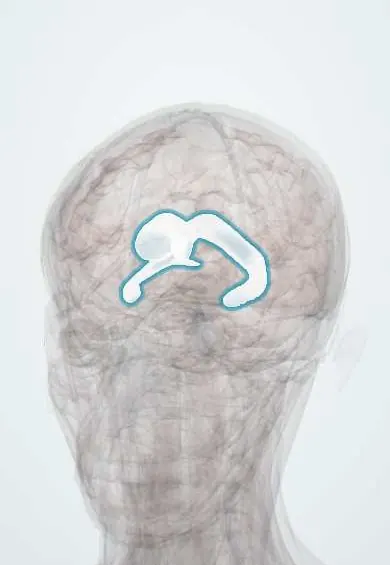
- Lateral ventricles
- Frontal lobe
- White matter
- Caudate nucleus
- Temporal lobe
- Parietal lobe
- Retina
- Skin
- Kidneys
Why it happens
- Tumour suppressor genes: RB, TP53, APC, BRCA and the two-hit hypothesis
- Mendelian inheritance: autosomal dominant, recessive and X-linked
- Hereditary cancer syndromes: the table to know
- mTOR (mechanistic target of rapamycin)
What it is
An autosomal dominant genetic disorder caused by TSC1 or TSC2 variants that produces benign hamartomas in many organs. Brain lesions cause epilepsy (often infantile spasms), intellectual disability and autism; skin, kidney, heart, eye and lung lesions are typical.
Who gets it
About 1 in 6,000 to 10,000 births worldwide, in all ethnic groups. About two-thirds of cases are de novo. In Colombia it is a rare disease followed in neuropaediatric and genetics services; many cases are first recognised through seizures in infancy.
Causes
- Pathogenic variant in TSC1 (hamartin, chromosome 9) or TSC2 (tuberin, chromosome 16); TSC2 variants usually cause more severe disease
- Autosomal dominant inheritance with variable expression; about two-thirds are new mutations
- Mosaicism can give milder or limited disease
Risk factors
- An affected parent (50% risk to each child)
- Parental germline mosaicism, which can recur in siblings even when parents look unaffected
Pathophysiology
Hamartin and tuberin form a complex that normally inhibits the mTOR pathway, a key regulator of cell growth. When the second copy is lost in a cell, mTOR is overactive and cells grow and divide abnormally, forming hamartomas: cortical tubers and subependymal nodules in the brain, angiofibromas in the skin, angiomyolipomas in the kidney, rhabdomyomas in the heart and lymphangioleiomyomatosis in the lungs.
Classification
- Definite TSC: two major features, or one major plus two or more minor, or a pathogenic TSC1/TSC2 variant
- Possible TSC: one major feature or two or more minor features
Symptoms and signs
- Seizures, often infantile spasms in the first year, and later focal epilepsy
- Hypomelanotic (ash-leaf) macules, best seen with a Wood lamp, often the earliest skin sign
- Facial angiofibromas over the nose and cheeks from childhood
- Shagreen patch on the lower back, forehead plaques and ungual (periungual) fibromas
- Intellectual disability, autism spectrum disorder and other TSC-associated neuropsychiatric disorders (TAND)
- Cardiac rhabdomyomas, often found on prenatal ultrasound, which may cause arrhythmia
- Retinal hamartomas and dental enamel pits
Diagnosis
- Clinical
- Based on international consensus criteria counting major features (hypomelanotic macules, angiofibromas, ungual fibromas, shagreen patch, retinal hamartomas, cortical dysplasias or tubers, subependymal nodules, SEGA, cardiac rhabdomyoma, lymphangioleiomyomatosis, angiomyolipomas) and minor features. Full skin examination with a Wood lamp, dilated eye examination, blood pressure and developmental and TAND screening.
- Tests
- Genetic testing for TSC1/TSC2 variants (a positive result is enough for diagnosis). EEG, including in infants before seizures appear, because early treatment of epileptiform activity may improve outcome. Kidney function and urinalysis; echocardiogram and ECG.
- Imaging
- Brain MRI shows cortical tubers, subependymal nodules along the lateral ventricles (calcified on CT, 'candle-guttering') and subependymal giant cell astrocytoma near the foramen of Monro. Abdominal MRI for renal angiomyolipomas and cysts; echocardiography for rhabdomyomas; chest CT in adult women for lymphangioleiomyomatosis.
Differential diagnosis
- Neurofibromatosis type 1 (café-au-lait spots and neurofibromas)
- Sturge-Weber syndrome (facial port-wine stain and leptomeningeal angioma)
- Isolated vitiligo or other causes of hypopigmented spots
- Acne vulgaris (versus facial angiofibromas)
- Other causes of infantile spasms (hypoxic-ischaemic injury, brain malformations, metabolic disease)
Goal of treatment
Control seizures early, watch for and treat growing tumours in the brain, kidneys and lungs before they cause harm, and support development, learning and behaviour across life.
Treatment
- Medical
- Antiseizure drugs; vigabatrin is first-line for infantile spasms in TSC, and other antiseizure drugs, a ketogenic diet or vagus nerve stimulation are used for drug-resistant epilepsy.
- Medical
- mTOR inhibitors (everolimus, sirolimus) shrink subependymal giant cell astrocytomas and renal angiomyolipomas, help refractory seizures and lymphangioleiomyomatosis; topical mTOR inhibitors are used for facial angiofibromas.
- Surgical
- Epilepsy surgery for a dominant epileptogenic tuber; resection of an enlarging SEGA or shunting for hydrocephalus; embolisation or kidney-sparing surgery for large or bleeding angiomyolipomas.
- Follow-up
- Lifelong surveillance: brain MRI every few years until adulthood, abdominal MRI for kidneys, blood pressure and kidney function, eye, skin and dental checks, lung assessment in women, and regular TAND screening.
- Rehabilitation
- Early intervention, special education, and behavioural and psychiatric support for autism, ADHD and anxiety.
Complications
- Drug-resistant epilepsy and status epilepticus
- Obstructive hydrocephalus from subependymal giant cell astrocytoma
- Bleeding renal angiomyolipomas, chronic kidney disease and hypertension
- Lymphangioleiomyomatosis with pneumothorax and respiratory failure
- Intellectual disability, autism and behavioural problems
- Sudden unexpected death in epilepsy (SUDEP)
Prognosis
Highly variable, from mild skin findings with normal intelligence to severe epilepsy and disability. Most deaths relate to epilepsy, kidney disease, brain tumours or lung disease; structured surveillance and mTOR inhibitors have improved outcomes.
Test yourself
Think of the answer, then tap the question to see it.
Which genes cause tuberous sclerosis complex, and which pathway do they regulate?
TSC1 (hamartin) and TSC2 (tuberin), which normally inhibit the mTOR pathway.
What is the most common early skin sign of TSC?
Hypomelanotic (ash-leaf) macules, seen best with a Wood lamp.
Which seizure type in infancy is classic for TSC, and which drug is first-line?
Infantile spasms; vigabatrin is first-line in TSC.
Which brain tumour in TSC can block the foramen of Monro and cause hydrocephalus?
Subependymal giant cell astrocytoma (SEGA).
Which kidney and heart lesions are typical of TSC?
Renal angiomyolipomas and cardiac rhabdomyomas.
Related conditions
- Epilepsy and seizures
- Infantile spasms (West syndrome)
- Autism spectrum disorder (ASD)
- Hydrocephalus
- Autosomal dominant polycystic kidney disease
- Chronic kidney disease
- Pneumothorax
- Attention-deficit/hyperactivity disorder (ADHD)
- Sturge–Weber syndrome
Educational information, not medical advice. For any symptom, see a health professional.
Sources: Tuberous sclerosis complex: MedlinePlus Genetics (MedlinePlus Genetics, US National Library of Medicine, 2026).
Spotted a mistake?We are always improving for the community. Tell us what is wrong and our team will review it.Report a mistake
Representative model, for educational purposes only.