Conditions · Infectious and tropical diseases
Viral encephalitis (herpes simplex encephalitis) !
Encephalitis is inflammation of the brain itself, usually from a virus. Herpes simplex causes most severe cases and needs urgent antiviral treatment.
Updated 2026-11-01
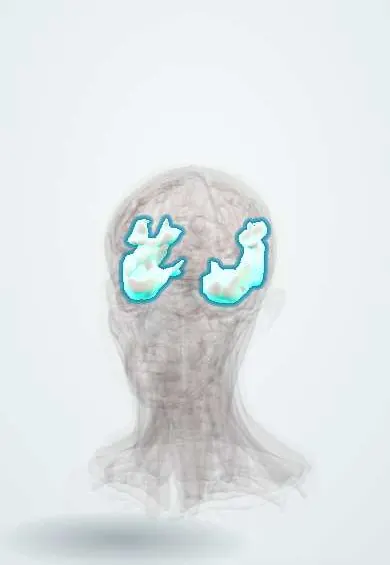
Structures involved
Tap one to see what it is and open it in 3D.
Microorganisms that cause it
Why it happens
- Patterns of necrosis: coagulative, liquefactive, caseous, fat, fibrinoid, gangrenous
- Cerebral blood flow, brain metabolism and intracranial pressure
- The limbic system, emotion and reward
- Learning and memory
What it is
Inflammation of the brain parenchyma caused by a virus, producing fever with altered mental status, behaviour change, seizures or focal signs. Herpes simplex virus type 1 (HSV-1) causes the most frequent severe sporadic form and characteristically damages the temporal lobes.
Who gets it
HSV-1 encephalitis occurs worldwide, all year round and at any age, with peaks in children and older adults. In Colombia and Latin America, arboviruses (dengue, equine encephalitis viruses), rabies and, in people with HIV, cytomegalovirus and other opportunistic agents are also considered according to exposure.
Causes
- Herpes simplex virus type 1 (most adult cases) and type 2 (neonates, through birth canal exposure)
- Varicella-zoster virus and enteroviruses
- Arboviruses transmitted by mosquitoes or ticks (e.g. equine encephalitis viruses, West Nile, dengue)
- Rabies virus after an animal bite
- Cytomegalovirus, JC virus and others in immunocompromised people
Risk factors
- Extremes of age (newborns and older adults)
- Immunosuppression: HIV, transplant, chemotherapy
- Exposure to mosquitoes or ticks in endemic areas
- Bites or scratches from unvaccinated animals (rabies)
- Maternal genital herpes near delivery (neonatal HSV)
Pathophysiology
In HSV encephalitis the virus, often reactivating from the trigeminal or olfactory pathway, reaches the medial temporal and orbitofrontal cortex. It causes a haemorrhagic, necrotising, usually asymmetric inflammation; cerebral oedema raises intracranial pressure, and cortical irritation triggers seizures. Damage to the hippocampus and amygdala explains later memory and behaviour problems.
Classification
- By agent: herpes viruses, arboviruses, enteroviruses, rabies, opportunistic viruses
- Primary (direct viral invasion) versus post-infectious or autoimmune encephalitis
- Meningoencephalitis when the meninges are also involved
Symptoms and signs
- Fever and headache, often after a short flu-like illness
- Confusion, disorientation or a reduced level of consciousness
- Personality or behaviour change, hallucinations, odd smells (temporal lobe involvement)
- Focal or generalised seizures
- Aphasia, memory loss or focal weakness
- Neck stiffness and photophobia when the meninges are involved
Diagnosis
- Clinical
- Fever plus altered mental status, seizures or new focal deficits suggests encephalitis. Neurological examination, Glasgow Coma Scale and history of exposures (travel, insects, animals, immune status) guide the search for the cause.
- Tests
- Lumbar puncture (after imaging when needed): lymphocytic pleocytosis, raised protein, normal or near-normal glucose, and sometimes red cells in HSV. CSF PCR for HSV-1/2 is the key test; PCR or serology for other viruses according to exposure. EEG may show temporal periodic discharges. Blood tests include HIV testing.
- Imaging
- MRI is the imaging of choice: T2/FLAIR hyperintensity in the medial temporal lobes, insula and orbitofrontal cortex, often asymmetric. CT is used first when MRI is not available or to exclude mass effect before lumbar puncture.
Differential diagnosis
- Bacterial meningitis
- Autoimmune encephalitis (e.g. anti-NMDA receptor)
- Brain abscess or tumour
- Metabolic or toxic encephalopathy (hypoglycaemia, hepatic, uraemic, drugs)
- Stroke or non-convulsive status epilepticus
- Cerebral malaria in travellers from endemic areas
Goal of treatment
Start empirical antiviral therapy as soon as encephalitis is suspected, without waiting for results, and protect the brain by controlling seizures, intracranial pressure, airway and fluids.
Treatment
- Acute
- Intravenous acyclovir started immediately on suspicion of HSV encephalitis and continued while the cause is confirmed; delay worsens outcome.
- Medical
- Antiseizure drugs, measures for raised intracranial pressure and, in selected cases, corticosteroids; cause-specific therapy for other agents (e.g. ganciclovir for cytomegalovirus).
- Follow-up
- Nursing care: neurological checks and Glasgow scale, seizure precautions, airway protection, fluid and sodium balance, and renal function and hydration during acyclovir therapy.
- Rehabilitation
- Neuropsychological, speech and physical rehabilitation for memory, language and motor sequelae.
Drugs for this condition
Complications
- Persistent memory loss and behaviour or personality change
- Epilepsy
- Aphasia and other focal deficits
- Cerebral oedema and herniation
- Post-HSV autoimmune (anti-NMDA receptor) encephalitis
- Death, especially when treatment is delayed
Prognosis
Untreated HSV encephalitis has a very high mortality; early antiviral therapy lowers it markedly, but many survivors keep memory or cognitive problems. Older age, coma at presentation and late treatment predict worse outcomes.
Prevention
- Vaccination against rabies after high-risk bites and against other vaccine-preventable agents (e.g. varicella, measles)
- Mosquito and tick bite prevention in endemic areas
- Management of maternal genital herpes near delivery to protect the newborn
Test yourself
Think of the answer, then tap the question to see it.
Which virus is the most common cause of severe sporadic encephalitis?
Herpes simplex virus type 1, which characteristically affects the temporal lobes.
What is the key diagnostic test for HSV encephalitis?
PCR for herpes simplex virus in the cerebrospinal fluid obtained by lumbar puncture.
What is the typical MRI finding in HSV encephalitis?
Asymmetric T2/FLAIR hyperintensity of the medial temporal lobes, insula and orbitofrontal cortex.
When should acyclovir be started in suspected encephalitis?
Immediately on clinical suspicion, without waiting for the CSF PCR result.
Which laboratory value should nursing staff monitor during intravenous acyclovir?
Renal function (creatinine), keeping the patient well hydrated, because acyclovir can cause crystal nephropathy.
Related conditions
- Genital herpes (herpes simplex infection)
- Bacterial meningitis
- Epilepsy and seizures
- Rabies
- Ischaemic stroke
- Dengue
Educational information, not medical advice. For any symptom, see a health professional.
Sources: Encephalitis: MedlinePlus Medical Encyclopedia (MedlinePlus (U.S. National Library of Medicine), 2024).
Spotted a mistake?We are always improving for the community. Tell us what is wrong and our team will review it.Report a mistake
Representative model, for educational purposes only.