
Breast pain (mastalgia) and breast cysts
Breast pain is very common and on its own is rarely cancer. Its pattern, a careful exam and, when needed, imaging sort out the few that need more.
What it is
Mastalgia is pain in one or both breasts. It is cyclic when it follows the menstrual cycle, non-cyclic when it does not, and extramammary when the pain comes from the chest wall or another organ but is felt in the breast. Breast cysts are fluid-filled sacs within the breast tissue, common in women in their thirties to early fifties, that can appear quickly and be tender.
Who gets it
Most women have breast pain at some point, and it is one of the commonest reasons for breast clinic visits. Cyclic pain is the most frequent type and occurs in premenopausal women; non-cyclic pain is more typical in the forties and fifties. Pain alone is a rare presentation of breast cancer. Breast cysts are most common around the perimenopause and become less frequent after menopause unless hormone therapy is used. In Colombia, breast cancer is the most frequent cancer in women, so anxiety about breast pain is high; the national guidance offers screening mammography every two years from 50 to 69, separate from the workup of symptoms.
Causes
- Cyclic: normal hormonal changes of the menstrual cycle acting on breast tissue, often with fibrocystic changes
- Non-cyclic: breast cysts, fibroadenoma, duct ectasia, mastitis or abscess, trauma, previous surgery, large heavy breasts
- Drugs: combined hormonal contraception, menopausal hormone therapy, some antidepressants, spironolactone, digoxin and others
- Pregnancy and breastfeeding (engorgement, blocked ducts, mastitis)
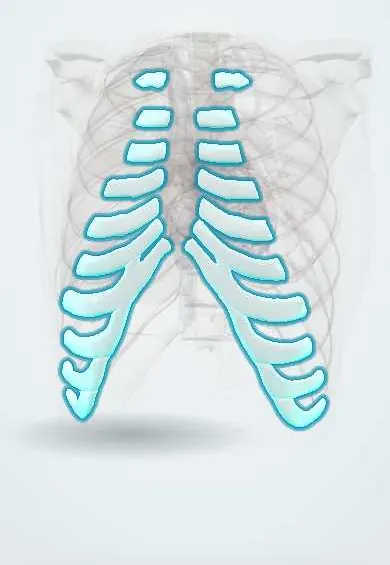
- Extramammary: costochondritis and chest wall strain, rib injury, cervical or thoracic nerve root pain, shingles, and referred pain from the heart, oesophagus, gallbladder or lungs
- Rarely, breast cancer, including inflammatory breast cancer
Risk factors
- Reproductive age and the perimenopause
- Hormone use (contraception, hormone therapy)
- Large breasts and a poorly supporting bra
- Fibrocystic breast changes
- Breastfeeding
- Anxiety, which can amplify pain
Pathophysiology
Cyclic pain: oestrogen and progesterone rise in the luteal phase → breast glands and stroma swell and retain fluid → tissue becomes tender and lumpy in both breasts → symptoms ease with menstruation. Cysts: ducts and lobules dilate during hormonal involution → fluid collects in a sac → a cyst that fills rapidly stretches tissue and hurts. Non-cyclic pain comes from a local process (inflammation of a duct, infection, a cyst, a scar). Extramammary pain: inflammation of the costal cartilages or strain of the pectoral muscles, or irritation of an intercostal nerve → pain is felt in the overlying breast.
Classification
- Cyclic mastalgia: linked to the cycle, usually both breasts, diffuse, worst in the upper outer areas
- Non-cyclic mastalgia: unrelated to the cycle, often one breast and one spot, burning or aching
- Extramammary (chest wall or referred) pain felt in the breast
- Breast cysts: simple (thin wall, clear fluid on ultrasound), complicated (debris inside), or complex (solid parts, needing biopsy)
Symptoms and signs
- Cyclic: heaviness, aching and tenderness in both breasts in the week or two before a period, easing once bleeding starts
- Non-cyclic: constant or intermittent burning, sharp or aching pain in one area
- Chest wall: pain reproduced by pressing a rib or cartilage, or by moving the arm or twisting
- Cyst: a smooth, round, mobile lump that may appear suddenly and be tender, sometimes changing with the cycle
- Nipple discharge, skin change or a new lump alongside pain (needs assessment)
Diagnosis
- Clinical
- Ask about timing with the cycle (a pain diary over two or three cycles helps), site, drugs, pregnancy and breastfeeding, family history, and cardiac or digestive symptoms. Examine both breasts and the axillae sitting and lying, and press the chest wall with the patient on her side so the breast falls away. A normal exam with cyclic, bilateral pain needs no further tests beyond age-appropriate screening.
- Tests
- A pregnancy test when relevant. Fine-needle aspiration of a symptomatic cyst: clear or greenish fluid with full disappearance of the lump needs no cytology; bloody fluid or a lump that persists after aspiration needs imaging and biopsy. Core needle biopsy of any suspicious solid lesion.
- Imaging
- Imaging is for focal, persistent non-cyclic pain or pain with other findings. Under about 30 years: ultrasound first. Older women: diagnostic mammography with ultrasound. Ultrasound tells a simple cyst (round, thin wall, no echoes inside, bright area behind it) from a solid lump or a complex cyst. Diffuse cyclic pain with a normal exam does not need imaging.
Differential diagnosis
- Fibrocystic breast changes
- Breast cyst or fibroadenoma
- Mastitis or breast abscess
- Duct ectasia and periductal mastitis
- Superficial thrombophlebitis of a breast vein (Mondor disease)
- Costochondritis, rib injury or pectoral strain
- Herpes zoster before the rash
- Angina, oesophageal reflux or gallbladder disease
- Breast cancer, including inflammatory breast cancer
- Gynaecomastia (in men)
Breast pain: which kind, and what to do
| Type | Pattern | Examination | Next step |
|---|---|---|---|
| Cyclic mastalgia | Both breasts, worse before periods, eases with bleeding | Lumpy, tender tissue; no discrete lump | Reassure, supportive bra, simple analgesia; no imaging |
| Breast cyst | Sudden tender lump, may vary with the cycle | Smooth, round, mobile lump | Ultrasound; aspirate if painful; image or biopsy if bloody or persists |
| Mastitis | Rapid onset during breastfeeding, with fever | Red, hot, tender area | Keep emptying the breast, analgesia, antibiotics if needed; ultrasound if a lump suggests abscess |
| Chest wall pain | Sharp, worse with movement or pressure | Pain reproduced over a cartilage or rib | Anti-inflammatory measures, reassurance |
| Breast cancer | Usually painless; persistent focal change | Hard, irregular lump, skin or nipple change | Urgent triple assessment: exam, imaging, biopsy |
Goal of treatment
Find the rare serious cause, explain the common benign one so the patient is reassured, and relieve pain with the simplest effective measures, keeping hormonal drugs for severe pain that does not respond.
Treatment
- Conservative
- Explanation and reassurance after a normal examination, which alone helps most women; a well-fitted supportive bra, including a soft one at night and a sports bra for exercise.
- Medical
- Topical non-steroidal anti-inflammatory gel on the painful area, or simple oral analgesics such as paracetamol or an oral anti-inflammatory for short periods.
- Medical
- Review drugs that can cause breast pain (hormonal contraception or hormone therapy, some antidepressants) and change them where possible.
- Procedure
- Symptomatic simple breast cyst: ultrasound-guided needle aspiration relieves pain; asymptomatic simple cysts need no treatment. Cysts that refill repeatedly, bloody aspirates or complex cysts are referred for biopsy or excision.
- Medical
- Severe, persistent pain that affects daily life despite these steps: hormonal treatments such as tamoxifen or danazol may be used by a specialist for short courses, weighing their side effects; evening primrose oil and vitamin E have little proven benefit.
- Lifestyle
- Keep a pain diary, use relaxation for anxiety-related amplification, and reduce caffeine if the patient finds it helps, although evidence is weak.
- Follow-up
- Continue routine breast screening for age; return promptly for any new lump, skin or nipple change.
Complications
- Anxiety, poor sleep and limits on exercise, work and sexual life
- Missed breast cancer when focal symptoms are dismissed as cyclic pain
- Missed cardiac or other extramammary cause
- Side effects of hormonal treatments
- Recurrent cysts
Common traps
- Breast pain is a common sign of breast cancer: cancer usually presents as a painless lump; pain alone rarely means cancer, but a focal lump or skin change with pain still needs full assessment
- Every woman with breast pain needs a mammogram: diffuse cyclic pain with a normal exam needs no imaging; focal, persistent non-cyclic pain does
- All breast pain comes from the breast: chest wall pain from the cartilage or muscle is common; examine with the patient on her side to press the chest wall directly
- A red, swollen breast is always mastitis: outside breastfeeding, or when it does not settle with antibiotics, think of inflammatory breast cancer and image and biopsy
- A breast cyst must be removed: a simple cyst on ultrasound is benign and is only aspirated if painful; bloody fluid, a lump that remains or solid parts need biopsy
Prognosis
Cyclic pain often comes and goes for years and usually ends at menopause; many women improve with reassurance and a good bra. Non-cyclic pain often settles once its cause is treated or on its own. Simple cysts are benign and do not increase breast cancer risk meaningfully, though new ones may form until menopause.
Prevention
- A well-fitted supportive bra, especially during exercise
- Breast awareness: knowing how one's breasts normally look and feel
- Age-appropriate screening mammography
- Review of drugs that can cause breast pain
Test yourself
Think of the answer, then tap the question to see it.
A 28-year-old has heavy, tender breasts on both sides the week before each period; the examination is normal. Does she need imaging?
No. This is cyclic mastalgia with a normal exam; explain, reassure, advise a supportive bra and topical anti-inflammatory gel, and continue routine screening when she reaches the age for it.
A 45-year-old notices a sudden tender, smooth, mobile lump. Ultrasound shows a round, thin-walled lesion with no echoes inside. What is it and what next?
A simple breast cyst. It is benign; aspiration relieves pain if it is bothersome. Bloody fluid or a lump that remains after aspiration needs imaging review and biopsy.
How can the examination tell chest wall pain from breast pain?
With the patient lying on her side so the breast falls away, press the ribs and cartilages directly: if that reproduces the pain, it comes from the chest wall, not the breast.
Why is a red, swollen breast in a woman who is not breastfeeding a warning sign?
Mastitis is uncommon outside breastfeeding; redness, swelling and peau d'orange can be inflammatory breast cancer, which needs imaging and biopsy rather than repeated antibiotics.
Why it happens
- Nonproliferative breast changes (fibrocystic)
- Breast disease: presentations and developmental anomalies
Connections
Educational information, not medical advice. For any symptom, see a health professional.
Sources: Mastalgia (StatPearls (NCBI Bookshelf), 2024); Fibrocystic Breast Disease (StatPearls (NCBI Bookshelf), 2024); Breast Cancer Screening in the Average-Risk Patient (StatPearls (NCBI Bookshelf), 2024); Breast Diseases (MedlinePlus (U.S. National Library of Medicine), 2025).
Spotted a mistake?We are always improving for the community. Tell us what is wrong and our team will review it.Report a mistake
Representative model, for educational purposes only.