Conditions · Gastroenterology and hepatology
Chagasic megaoesophagus and megacolon !
Late damage to gut nerves by Chagas disease makes the oesophagus or colon widen and stop moving food, causing trouble swallowing or severe constipation.
Updated 2026-11-01
Structures involved
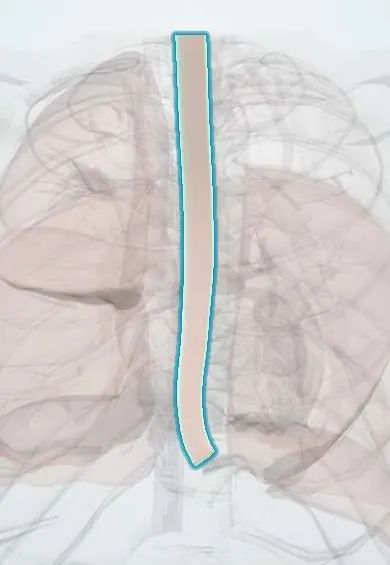
Tap one to see what it is and open it in 3D.
Why it happens
- Chronic inflammation: causes, cells and features
- Swallowing and esophageal motility
- The enteric nervous system, slow waves and GI control
- Small bowel and colon motility
- The GI tract wall: mucosa, submucosa, muscularis, serosa; enteric plexuses
What it is
The digestive form of chronic Chagas disease, in which destruction of the enteric nerves by Trypanosoma cruzi leads to loss of motility and progressive dilation of the oesophagus (megaoesophagus) or colon (megacolon), often years or decades after infection.
Who gets it
Chagas disease is endemic in Latin America, including rural areas of Colombia such as Santander, Boyacá, Casanare and Arauca. Fewer than one in ten people with chronic infection develop the digestive form; it is more frequent in the Southern Cone and Brazil than in the north of South America, where the cardiac form predominates, but it is examined in Colombia as a key cause of secondary achalasia and megacolon.
Causes
- Chronic infection with the protozoan Trypanosoma cruzi
- Transmitted mainly by the faeces of triatomine bugs («pito»), and also orally through contaminated food, by blood transfusion, organ transplant and from mother to baby
Risk factors
- Living or having lived in rural endemic areas in housing with mud walls or palm roofs
- Untreated chronic infection
- Infection with parasite lineages linked to digestive disease (more common in the Southern Cone)
- Being born to an infected mother
Pathophysiology
During the acute and chronic phases, the parasite and the immune response destroy neurons of the myenteric (Auerbach) plexus. In the oesophagus, loss of inhibitory neurons stops peristalsis and prevents the lower oesophageal sphincter from relaxing, as in idiopathic achalasia, so food stagnates and the oesophagus dilates. In the colon, especially the sigmoid and rectum, the same denervation causes poor propulsion and a non-relaxing segment, leading to faecal retention and progressive dilation. Megaoesophagus and megacolon often coexist with each other and with chagasic cardiomyopathy.
Classification
- Megaoesophagus graded by diameter and retention on barium study (Rezende or similar grades I to IV), from non-dilated to dolichomegaoesophagus
- Megacolon, usually of the sigmoid and rectum
- Combined digestive form, or cardiodigestive form with heart involvement
Symptoms and signs
- Slowly progressive dysphagia to solids and liquids
- Regurgitation of undigested food, especially when lying down
- Chest pain, hiccups, enlarged salivary glands and weight loss
- Chronic severe constipation, with days or weeks between bowel movements
- Abdominal distension and bloating
- Palpitations, syncope or heart failure symptoms if the heart is also involved
Diagnosis
- Clinical
- Suspected in a person from an endemic area with dysphagia and regurgitation or with chronic constipation and a distended abdomen; the heart should always be assessed as well.
- Tests
- Serology with two different tests for antibodies against T. cruzi confirms chronic infection. Oesophageal manometry shows an achalasia pattern. Upper endoscopy excludes cancer. ECG and echocardiography look for cardiomyopathy.
- Imaging
- Barium swallow shows a dilated oesophagus with a smooth «bird beak» narrowing at the sphincter. Barium enema or CT shows a dilated, elongated sigmoid and rectum; plain abdominal X-ray shows volvulus (the «coffee bean» sign).
Differential diagnosis
- Idiopathic achalasia
- Pseudoachalasia from cancer of the gastro-oesophageal junction
- Hirschsprung disease (megacolon in children)
- Chronic constipation from other causes (hypothyroidism, drugs)
- Systemic sclerosis and other motility disorders
- Toxic megacolon in inflammatory bowel disease
Goal of treatment
Relieve obstruction of the oesophagus or colon, restore nutrition, prevent and treat complications such as volvulus, and assess and manage any heart involvement.
Treatment
- Medical
- Antiparasitic treatment (benznidazole or nifurtimox) is offered in children and selected adults, but it does not reverse established megaviscera. Laxatives, osmotic agents and enemas for megacolon; smooth muscle relaxants have a limited role for megaoesophagus.
- Procedure
- Megaoesophagus: pneumatic dilation, botulinum toxin injection or peroral endoscopic myotomy (POEM). Sigmoid volvulus: endoscopic decompression when there is no gangrene.
- Surgical
- Laparoscopic Heller myotomy with partial fundoplication for megaoesophagus; oesophagectomy for advanced dolichomegaoesophagus. Resection of the sigmoid and rectum (for example, Duhamel-type operations) for megacolon or recurrent volvulus.
- Follow-up
- Nursing focus: aspiration precautions, nutrition and weight, bowel habit and abdominal distension, signs of volvulus, and screening of family members and of children born to infected mothers.
Complications
- Aspiration pneumonia
- Malnutrition and weight loss
- Squamous cell carcinoma of the oesophagus
- Faecaloma, sigmoid volvulus and bowel ischaemia or perforation
- Chagasic cardiomyopathy with heart failure, arrhythmias and sudden death
Prognosis
The digestive form progresses slowly and is rarely fatal by itself; symptoms usually improve with myotomy or colonic surgery. Long-term prognosis depends mainly on whether the heart is involved and on complications such as volvulus and cancer.
Prevention
- Vector control and improved rural housing
- Screening of blood donors and organs
- Hygiene in preparing fruit juices and food to prevent oral transmission
- Screening of pregnant women and treatment of infected children and women of childbearing age
Test yourself
Think of the answer, then tap the question to see it.
What causes chagasic megaoesophagus and megacolon?
Destruction of the myenteric plexus neurons by chronic Trypanosoma cruzi infection.
Which idiopathic disease does chagasic megaoesophagus mimic?
Achalasia, with failure of the lower oesophageal sphincter to relax and loss of peristalsis.
Which complication of chagasic megacolon causes acute abdominal pain and the «coffee bean» sign?
Sigmoid volvulus.
How is chronic Chagas infection confirmed?
With two different serological tests for antibodies against T. cruzi.
Which other organ must always be assessed in a patient with chagasic megaviscera?
The heart, with ECG and echocardiography, to look for chagasic cardiomyopathy.
Related conditions
- Chagas disease
- Chagas cardiomyopathy
- Achalasia
- Sigmoid volvulus
- Large bowel obstruction
- Aspiration pneumonia and pneumonitis
- Oesophageal cancer
- Constipation and faecal impaction
- Hirschsprung disease
- Distal oesophageal spasm and hypercontractile oesophagus
- Gastroparesis (delayed gastric emptying)
Educational information, not medical advice. For any symptom, see a health professional.
Sources: Chagas Disease - Infectious Disease - MSD Manual Professional Edition (MSD Manual Professional Edition, 2025); Enfermedad de Chagas - OPS/OMS | Organización Panamericana de la Salud (Organización Panamericana de la Salud (OPS/OMS), 2025); Chagas disease (also known as American trypanosomiasis) (World Health Organization, 2025).
Spotted a mistake?We are always improving for the community. Tell us what is wrong and our team will review it.Report a mistake
Representative model, for educational purposes only.