Conditions · Systemic conditions
Chagas disease !
Chagas disease is a parasitic infection spread mainly by kissing bugs; it lasts for life and years later can damage the heart, oesophagus or colon.
Updated 2026-10-30
Structures involved
Tap one to see what it is and open it in 3D.
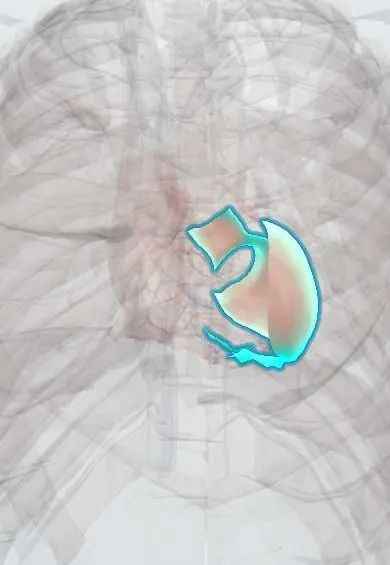
- Left ventricle
- Esophagus
- Sigmoid colon
- Bundle branches
- Atrioventricular (AV) node
- Sinoatrial (SA) node
- Right ventricle
- Descending colon
- Rectum
Microorganisms that cause it
In immunology
In the clinical exam
In physiology
- The enteric nervous system, slow waves and GI control
- Swallowing and esophageal motility
- Small bowel and colon motility
Why it happens
- Chronic inflammation: causes, cells and features
- Fibrosis in organs: TGF-β and the myofibroblast
- Cardiac muscle: intercalated discs
What it is
A parasitic infection caused by Trypanosoma cruzi, mainly spread by triatomine bugs. After an often silent acute phase it becomes lifelong; years later a minority develop heart disease or a dilated oesophagus or colon.
Who gets it
Endemic in rural Latin America, including several regions of Colombia, where the vector is called «pito». Migration has made it a global issue, and many infected people do not know it. A meta-analysis of Colombian studies (2007–2017) estimated a seroprevalence of 2.0%, highest in adults, pregnant women and the Orinoco region (Casanare).
Causes
- Trypanosoma cruzi, a flagellated protozoan
- Vector-borne: triatomine bugs («pito», kissing bugs) that feed at night and deposit infected faeces near the bite
- Oral: food or drinks (such as fruit juices) contaminated with bugs or their faeces, which can cause outbreaks
- Congenital (mother to baby) transmission
- Blood transfusion and organ transplantation; laboratory accidents
Risk factors
- Living in or having lived in rural endemic areas
- Houses with mud walls, thatched roofs or cracks where bugs hide
- Being born to a mother with Chagas disease
- Transfusion or transplant from an unscreened donor
- Immunosuppression (e.g. HIV), which can reactivate the infection
Pathophysiology
Parasites enter through the bite wound or mucosa, multiply inside cells and spread through the blood. Immune control ends the acute phase, but parasites persist in heart and gut muscle. Chronic inflammation and fibrosis damage the myocardium and conduction system and destroy autonomic neurons in the oesophagus and colon, causing dilation (megaviscera).
Classification
- Acute phase: weeks to a few months, high parasitaemia, usually mild or no symptoms
- Chronic indeterminate form: positive serology with normal ECG and no symptoms (most people)
- Chronic cardiac form: chagasic cardiomyopathy
- Chronic digestive form: megaoesophagus and megacolon
- Mixed cardiodigestive form; congenital Chagas disease; reactivation in immunosuppression
Symptoms and signs
- Acute: fever, malaise, swollen lymph nodes, enlarged liver and spleen
- Romaña sign: painless swelling of one eyelid when the parasite enters through the conjunctiva
- Chagoma: a swollen skin lesion at the entry site
- Chronic cardiac: palpitations, fainting, breathlessness, swelling of the legs, chest pain
- Megaoesophagus: difficulty swallowing, regurgitation, weight loss
- Megacolon: severe chronic constipation and abdominal distension
Diagnosis
- Clinical
- Epidemiological history (origin, housing, «pito» exposure, mother with Chagas, transfusions) plus cardiac or digestive findings. Screening of pregnant women and blood donors in endemic areas.
- Tests
- Acute phase and newborns: direct detection of parasites in blood (fresh smear, concentration methods) or PCR. Chronic phase: two different serologic tests (e.g. ELISA and immunofluorescence). ECG typically shows right bundle branch block with left anterior fascicular block; Holter for arrhythmias.
- Imaging
- Echocardiography for dilated cardiomyopathy, wall-motion defects and apical aneurysm; cardiac MRI in selected cases. Barium swallow and barium enema for megaoesophagus and megacolon.
Differential diagnosis
- Idiopathic dilated cardiomyopathy
- Ischaemic heart disease
- Achalasia (primary)
- Chronic constipation from other causes
- Other causes of acute febrile illness with lymphadenopathy
Goal of treatment
Eliminate the parasite when it is most effective (acute phase, congenital cases, children and young adults), and prevent or treat cardiac and digestive complications.
Treatment
- Medical
- Antiparasitic drugs benznidazole or nifurtimox, mainly for acute, congenital and reactivated infection, children and women of childbearing age; benefit in advanced cardiomyopathy is limited.
- Medical
- Heart failure therapy with standard drug classes, antiarrhythmics such as amiodarone, and anticoagulation when there is a thrombus or embolic risk.
- Procedure
- Pacemaker for advanced conduction block and implantable defibrillator for selected patients at risk of sudden death.
- Surgical
- Heart transplantation in end-stage cardiomyopathy, with monitoring for reactivation.
- Surgical
- Megaoesophagus: endoscopic dilation or surgical myotomy; megacolon: resection, especially after volvulus.
- Follow-up
- Regular ECG and clinical follow-up in the indeterminate form to detect progression.
Drugs for this condition
Complications
- Dilated cardiomyopathy and heart failure
- Ventricular arrhythmias and sudden cardiac death
- Thromboembolism and stroke
- Megaoesophagus with aspiration and malnutrition
- Megacolon with faecal impaction and sigmoid volvulus
- Congenital infection
Prognosis
Most people stay in the indeterminate form for life. A minority (often quoted as up to about a third) develop cardiac or digestive disease after decades. Chagasic cardiomyopathy has a worse prognosis than many other cardiomyopathies.
Prevention
- House improvement and indoor residual insecticide spraying against triatomines
- Screening of blood donors and organ donors
- Screening of pregnant women in endemic areas and testing of their newborns
- Treatment of infected girls and women before pregnancy
- Hygiene in preparing food and drinks to prevent oral transmission
Test yourself
Think of the answer, then tap the question to see it.
Which parasite causes Chagas disease and what is its usual vector?
Trypanosoma cruzi, spread by triatomine bugs («pito» in Colombia) through their infected faeces.
What is the Romaña sign?
Painless unilateral swelling of the eyelids when T. cruzi enters through the conjunctiva in acute Chagas disease.
Which ECG pattern is classic for chagasic cardiomyopathy?
Right bundle branch block with left anterior fascicular block.
How is chronic Chagas disease confirmed in the laboratory?
With two different positive serologic tests, because parasitaemia is low in the chronic phase.
What are the two classic digestive complications of chronic Chagas disease?
Megaoesophagus and megacolon, caused by destruction of the enteric nerve plexuses.
Related conditions
Educational information, not medical advice. For any symptom, see a health professional.
Sources: Chagas Disease (StatPearls (NCBI Bookshelf), 2025); Prevalence of Chagas disease in Colombia: A systematic review and meta-analysis (PloS one, 2019) · adapted, CC BY 4.0.
Spotted a mistake?We are always improving for the community. Tell us what is wrong and our team will review it.Report a mistake
Representative model, for educational purposes only.