Conditions · Systemic conditions
Chikungunya !
Chikungunya is a viral illness spread by Aedes mosquitoes, with sudden high fever and intense joint pain that can last for months.
Updated 2026-10-30
Structures involved
Tap one to see what it is and open it in 3D.
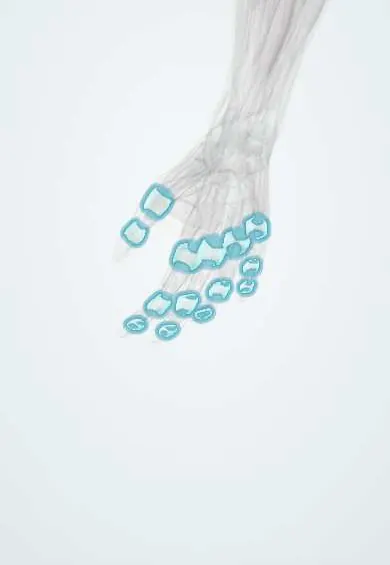
- Finger joint capsules
- Wrist capsule
- Joint capsule
- Toe joint capsules
- Flexor tendon sheaths
- Extensor tendon sheaths
- Ankle tendon sheaths
- Ankle bursae
Microorganisms that cause it
Why it happens
- Systemic effects of inflammation: fever, acute-phase proteins, leukocytosis, sepsis
- Health effects of climate change
- Fever
- Synovial joints: capsule, synovial membrane and articular cartilage
What it is
A viral illness caused by the chikungunya virus, spread by Aedes mosquitoes, with sudden high fever and intense, usually symmetric joint pain that can last for months.
Who gets it
Present across tropical America since the 2013–2014 epidemic, including Colombia, where Aedes aegypti also transmits dengue and Zika. Outbreaks follow rainy seasons and urban mosquito breeding. In Colombian national surveillance (October 2015–December 2016), chikungunya virus was found in 1.07% of 23,871 samples from suspected Zika cases.
Causes
- Chikungunya virus (alphavirus, Togaviridae family)
- Bite of infected Aedes aegypti or Aedes albopictus
- Rarely: mother-to-child transmission around delivery
Risk factors
- Living in or travelling to areas with Aedes mosquitoes
- Standing water near the home
- Older age, diabetes and pre-existing joint disease (more chronic arthralgia)
- Newborns of mothers infected near delivery (severe disease)
Pathophysiology
After the bite the virus replicates in skin and spreads through blood to joints, muscle and connective tissue. Direct infection and inflammation of the synovium and tendons cause the arthritis; persistent inflammation is thought to drive chronic joint pain.
Classification
- Acute phase (first weeks)
- Post-acute phase (up to about three months)
- Chronic phase (joint symptoms beyond about three months)
Symptoms and signs
- Abrupt high fever
- Severe, often disabling joint pain, usually symmetric in hands, wrists, ankles and knees
- Joint swelling and morning stiffness
- Maculopapular rash
- Headache, muscle pain and fatigue
- Tenosynovitis
Diagnosis
- Clinical
- Sudden fever with disabling polyarthralgia in an area with Aedes transmission suggests it; dengue must be considered at the same time.
- Tests
- RT-PCR for viral RNA in the first days; IgM serology after about the first week. Blood count may show lymphopenia; inflammatory markers can rise.
- Imaging
- Not routine; ultrasound or MRI can show synovitis or tenosynovitis in chronic cases.
Differential diagnosis
- Dengue
- Zika virus infection
- Rheumatoid arthritis
- Reactive arthritis
- Malaria
- Parvovirus B19 infection
Goal of treatment
Relieve pain and fever, keep the patient hydrated and mobile, avoid harm while dengue is not excluded, and manage chronic arthritis to preserve function.
Treatment
- Conservative
- Rest, fluids and paracetamol (acetaminophen) for fever and pain; NSAIDs are avoided until dengue is ruled out.
- Medical
- Persistent arthritis: NSAIDs, short courses of corticosteroids and, in chronic inflammatory arthritis, conventional disease-modifying antirheumatic drugs, under specialist guidance.
- Rehabilitation
- Physical therapy and graded exercise for stiffness and loss of joint function.
Drugs for this condition
Complications
- Chronic inflammatory arthritis lasting months to years
- Encephalitis and Guillain–Barré syndrome
- Myocarditis
- Severe neonatal infection
- Loss of work and daily-activity capacity
Prognosis
The acute illness usually settles within one to two weeks and death is rare. A large share of patients, more often older adults, keep joint pain for months; some develop lasting arthritis.
Prevention
- Eliminating standing water where Aedes breeds
- Repellents, long clothing, screens and bed nets
- Vaccines exist in some countries; availability and indications vary
Test yourself
Think of the answer, then tap the question to see it.
What clinical feature best distinguishes chikungunya from dengue?
Intense, often disabling symmetric polyarthralgia and arthritis; dengue causes more marked thrombocytopenia, plasma leakage and bleeding.
Why are NSAIDs avoided early in a febrile illness that may be chikungunya?
Because dengue can look the same in the first days and NSAIDs increase bleeding risk in dengue; paracetamol is used until dengue is excluded.
Which mosquito transmits chikungunya in Colombia?
Aedes aegypti (and Aedes albopictus), the same vector as dengue and Zika.
When is chikungunya arthralgia considered chronic?
When joint symptoms persist beyond about three months after onset.
Related conditions
Educational information, not medical advice. For any symptom, see a health professional.
Sources: Chikungunya Fever (StatPearls (NCBI Bookshelf), 2026); Dengue, chikungunya and zika virus coinfection: results of the national surveillance during the zika epidemic in Colombia (Epidemiology and infection, 2019) · adapted, CC BY 4.0.
Spotted a mistake?We are always improving for the community. Tell us what is wrong and our team will review it.Report a mistake
Representative model, for educational purposes only.