Conditions · Gastroenterology and hepatology
Cholangiocarcinoma (bile duct cancer) !
A rare cancer of the bile ducts. It often blocks bile flow, causing painless jaundice, itching and weight loss, and is usually found late.
Updated 2026-11-01
Structures involved
Tap one to see what it is and open it in 3D.
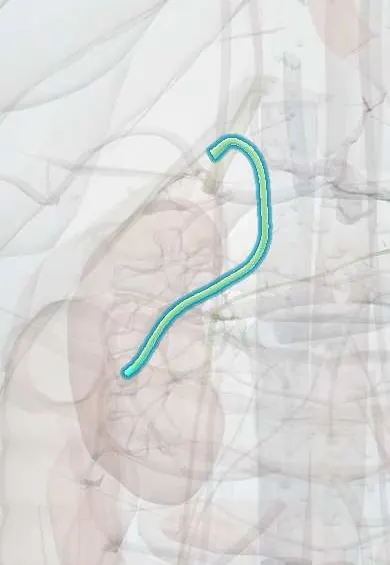
- Common bile duct
- Common hepatic duct
- Liver
- Gallbladder
- Cystic duct
- Pancreas
- Duodenum
- Portal vein
- Proper hepatic artery
Microorganisms that cause it
In the clinical exam
Why it happens
- Precancerous conditions: when chronic inflammation, metaplasia or hyperplasia raise the risk
- Dysplasia and carcinoma in situ
- Oncogenic viruses and H. pylori: the table to know
- Bile and the enterohepatic circulation
- Heme breakdown and bilirubin
- Gallbladder and bile ducts
What it is
A malignant tumour, almost always an adenocarcinoma, arising from the epithelium of the bile ducts inside or outside the liver. It tends to obstruct bile flow and is often advanced when diagnosed.
Who gets it
Rare in most of the Americas and Europe, with most cases between 50 and 75 years of age; it is far more common in Southeast Asia, where liver fluke infection is endemic. In Latin America, gallbladder cancer is the more frequent biliary cancer, and cholangiocarcinoma must be told apart from it.
Causes
- Chronic inflammation of the biliary epithelium leading to dysplasia and carcinoma
- Most cases have no identifiable cause
- Recognised predisposing conditions: primary sclerosing cholangitis, choledochal (bile duct) cysts, liver fluke infection and hepatolithiasis
Risk factors
- Primary sclerosing cholangitis, usually with ulcerative colitis (the classic exam association)
- Choledochal cysts and Caroli disease
- Liver fluke infection (Clonorchis, Opisthorchis) in endemic areas
- Chronic hepatitis B or C and cirrhosis
- Intrahepatic stones and recurrent cholangitis
- Older age; smoking, obesity and diabetes add risk
Pathophysiology
Long-standing injury and inflammation of the bile duct lining cause repeated cell turnover, DNA damage and dysplasia that progresses to adenocarcinoma. The tumour narrows or blocks the duct, so conjugated bilirubin and bile salts back up into the blood (jaundice, itching, dark urine, pale stools). It spreads along the duct wall, into the liver and nearby vessels, nodes and peritoneum.
Classification
- Intrahepatic: within the liver, often presents as a liver mass
- Perihilar (Klatskin tumour): at the junction of the right and left hepatic ducts, the most common site
- Distal: in the common bile duct, near the pancreas
Symptoms and signs
- Painless jaundice with dark urine and pale (clay-coloured) stools
- Generalised itching (pruritus)
- Weight loss, loss of appetite and fatigue
- Dull right upper quadrant pain that may spread to the back
- Fever and chills if cholangitis develops
- Distal tumours can cause a palpable, non-tender gallbladder (Courvoisier sign)
Diagnosis
- Clinical
- Suspected in a person with obstructive (cholestatic) jaundice, especially with primary sclerosing cholangitis or another risk factor. Examination looks for jaundice, scratch marks, an enlarged liver or a palpable gallbladder.
- Tests
- Liver tests show a cholestatic pattern (raised conjugated bilirubin, alkaline phosphatase and GGT). The tumour marker CA 19-9 is often raised but is not specific. Tissue diagnosis by brushing cytology or biopsy taken at ERCP, or by endoscopic ultrasound-guided sampling.
- Imaging
- Ultrasound first shows dilated bile ducts above the obstruction. Contrast CT and MRI with MRCP define the level, the extent and resectability. ERCP allows sampling and stent placement.
Differential diagnosis
- Choledocholithiasis (bile duct stones)
- Pancreatic head cancer or ampullary cancer
- Gallbladder cancer
- Benign biliary stricture or a dominant stricture in primary sclerosing cholangitis
- IgG4-related sclerosing cholangitis
- Hepatocellular carcinoma or liver metastases (for intrahepatic masses)
Goal of treatment
Remove the tumour completely when possible, which is the only chance of cure; otherwise relieve biliary obstruction, control symptoms and prolong life.
Treatment
- Surgical
- Surgical resection with clear margins (bile duct resection, often with partial hepatectomy, or a pancreaticoduodenectomy for distal tumours) is the only curative option; many patients are not candidates at diagnosis. Liver transplantation is used in highly selected perihilar cases.
- Medical
- Systemic chemotherapy, often combined with immunotherapy, for advanced disease and after surgery; targeted therapies for tumours with specific molecular changes.
- Procedure
- Biliary drainage with stents placed at ERCP or through the skin (percutaneous transhepatic drainage) relieves jaundice, itching and cholangitis.
- Follow-up
- Watch for fever, worsening jaundice and stent blockage, and support nutrition, skin care for pruritus and pain control; palliative care for advanced disease.
Complications
- Acute cholangitis and liver abscess
- Biliary cirrhosis from long-standing obstruction
- Malnutrition and fat-soluble vitamin deficiency, with bleeding from low vitamin K
- Spread to the liver, lymph nodes and peritoneum
- Stent blockage
Prognosis
Generally poor because most cases are found when they can no longer be removed. Survival is best after complete resection of early tumours; advanced disease has a short median survival despite treatment.
Prevention
- Avoiding raw or undercooked freshwater fish where liver flukes are endemic
- Hepatitis B vaccination and treatment of viral hepatitis
- Surveillance imaging and tests in people with primary sclerosing cholangitis
Test yourself
Think of the answer, then tap the question to see it.
Which chronic liver disease, usually associated with ulcerative colitis, is the classic risk factor for cholangiocarcinoma?
Primary sclerosing cholangitis.
What is a Klatskin tumour?
A perihilar cholangiocarcinoma at the bifurcation of the right and left hepatic ducts.
What is the typical pattern of liver tests in cholangiocarcinoma?
Cholestatic: raised conjugated bilirubin, alkaline phosphatase and GGT, with only mildly raised transaminases.
Which parasitic infections predispose to cholangiocarcinoma?
Liver flukes, Clonorchis sinensis and Opisthorchis species, acquired from raw freshwater fish.
What is the only potentially curative treatment?
Complete surgical resection with clear margins (transplantation in selected perihilar cases).
Related conditions
- Primary sclerosing cholangitis
- Ulcerative colitis
- Choledocholithiasis
- Acute cholangitis
- Pancreatic cancer
- Hepatocellular carcinoma
- Viral hepatitis
- Cirrhosis
Educational information, not medical advice. For any symptom, see a health professional.
Sources: Cholangiocarcinoma: MedlinePlus Medical Encyclopedia (MedlinePlus (U.S. National Library of Medicine), 2025).
Spotted a mistake?We are always improving for the community. Tell us what is wrong and our team will review it.Report a mistake
Representative model, for educational purposes only.