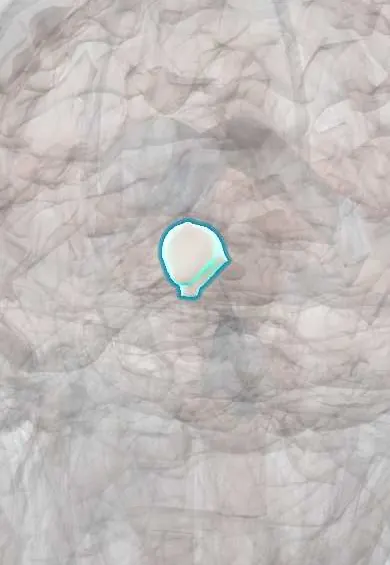
Cluster headache !
Cluster headache causes attacks of extreme pain around one eye, with a red watery eye and runny nose, coming in daily bouts for weeks.
Updated 2026-11-01
Structures involved
Tap one to see what it is and open it in 3D.
- Hypothalamus
- Trigeminal nerve (V)
- V1 ophthalmic
- Trigeminal ganglion
- Internal carotid artery
- Cavernous sinus
- Lacrimal gland
- Eyelids
Why it happens
What it is
A primary headache disorder with short attacks of very severe, strictly one-sided pain around the eye or temple, accompanied by autonomic signs on the same side. Attacks come in bouts (clusters) lasting weeks to months. It is the most common trigeminal autonomic cephalalgia.
Who gets it
Uncommon (roughly 1 in 1,000 people), about three times more frequent in men, usually starting between 20 and 40 years. Often misdiagnosed for years as migraine, sinusitis or dental pain, also in Latin America.
Causes
- Cause not fully known; activation of the hypothalamus drives the circadian and seasonal timing of attacks
- Activation of the trigeminal-autonomic reflex (trigeminal pain fibres plus parasympathetic outflow via the facial nerve)
- Some family clustering suggests a genetic contribution
Risk factors
- Male sex and age 20 to 40 years
- Current or past heavy smoking
- Alcohol during a bout (a classic trigger)
- First-degree relative with cluster headache
- Nitrates, naps and changes in sleep pattern as triggers during a bout
Pathophysiology
The posterior hypothalamus, which keeps the body clock, switches on and activates the trigeminovascular system and a parasympathetic reflex through the facial nerve. This produces intense pain in the territory of the ophthalmic division of the trigeminal nerve, with tearing, nasal congestion and redness on the same side. Swelling around the carotid artery in the cavernous sinus can irritate sympathetic fibres and cause a partial Horner syndrome.
Classification
- Episodic: bouts of attacks separated by pain-free remissions of at least 3 months
- Chronic: attacks for 1 year or more without remission, or with remissions shorter than 3 months
Symptoms and signs
- Excruciating, boring or stabbing pain around or behind one eye or at the temple, always on the same side within a bout
- Attacks of 15 to 180 minutes, from one every other day to eight a day, often at the same hour and waking the person at night
- Same-side tearing, red eye, nasal congestion or runny nose, and eyelid swelling
- Same-side drooping eyelid and small pupil (partial Horner syndrome)
- Restlessness and agitation: the person paces or rocks, unlike the stillness of migraine
Diagnosis
- Clinical
- Clinical diagnosis by ICHD-3 criteria: at least 5 attacks of severe one-sided orbital, supraorbital or temporal pain lasting 15–180 minutes, with same-side autonomic signs and/or restlessness. A headache diary helps.
- Tests
- No blood test confirms it. Tests are used to exclude other causes when the picture is atypical (e.g. ESR and CRP in older people).
- Imaging
- Brain MRI, including the pituitary region, is commonly done at least once to exclude secondary causes, since pituitary and other structural lesions can mimic it.
Differential diagnosis
- Migraine
- Trigeminal neuralgia
- Paroxysmal hemicrania and SUNCT (other trigeminal autonomic cephalalgias)
- Acute angle-closure glaucoma
- Pituitary tumour or carotid artery dissection with Horner syndrome
Goal of treatment
Stop each attack as fast as possible, shorten and suppress the bout with preventive treatment, and avoid triggers such as alcohol during a cluster.
Treatment
- Acute
- High-flow 100% oxygen through a non-rebreather mask and injected or nasal triptans are the first-line treatments for an attack; oral analgesics act too slowly.
- Medical
- Preventive treatment for the bout: verapamil (a calcium-channel blocker) is the usual first choice, which needs ECG monitoring for heart block; lithium and topiramate are alternatives.
- Medical
- Transitional (bridging) therapy while prevention takes effect: a short course of oral corticosteroids or a greater occipital nerve block.
- Procedure
- In refractory chronic cases, nerve blocks and neuromodulation (e.g. non-invasive vagus nerve or occipital nerve stimulation) are options in specialist centres.
- Lifestyle
- Avoiding alcohol during bouts, stopping smoking and keeping a regular sleep schedule.
Drugs for this condition
Complications
- Depression, anxiety and, in severe cases, suicidal thoughts (it has been called the "suicide headache")
- Sleep disruption from nocturnal attacks
- Medication side effects: heart block with verapamil, rebound with excessive triptan use
- Loss of work days and social isolation
Prognosis
Not life-threatening, but very disabling. Most people have the episodic form, with bouts that tend to recur once or twice a year; a minority become chronic. Attacks often become less frequent with age.
Test yourself
Think of the answer, then tap the question to see it.
What is the classic presentation of cluster headache?
A young man with severe one-sided pain around the eye for 15–180 minutes, with same-side tearing, red eye and runny nose, often at night, restless during attacks.
What are the first-line treatments to abort a cluster headache attack?
High-flow 100% oxygen and a fast-acting triptan (injected or nasal).
Which drug is the usual first-line preventive for cluster headache, and what must be monitored?
Verapamil; ECG monitoring for PR prolongation and heart block.
How is a patient's behaviour during an attack different in cluster headache and migraine?
In cluster headache the patient is restless and paces; in migraine the patient prefers to lie still in a dark, quiet room.
Which brain structure is thought to drive the circadian timing of cluster attacks?
The hypothalamus (posterior hypothalamic region).
Related conditions
- Migraine
- Tension-type headache
- Trigeminal neuralgia
- Giant cell arteritis
- Acute angle-closure glaucoma
- Horner syndrome
- Pituitary adenoma
Educational information, not medical advice. For any symptom, see a health professional.
Sources: Cluster headache (MedlinePlus (U.S. National Library of Medicine), 2024).
Spotted a mistake?We are always improving for the community. Tell us what is wrong and our team will review it.Report a mistake
Representative model, for educational purposes only.