Conditions · Gastroenterology and hepatology
Colorectal polyps and hereditary polyposis syndromes (FAP, Lynch) !
Growths on the lining of the colon or rectum. Most are harmless, but adenomas can become cancer, so they are found and removed at colonoscopy.
Updated 2026-11-01
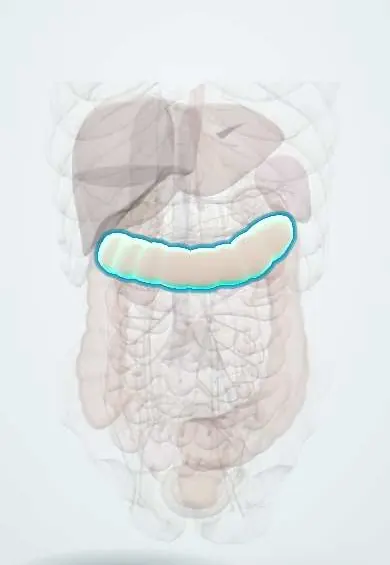
Structures involved
Tap one to see what it is and open it in 3D.
Why it happens
- Genomic instability: mismatch repair, BRCA and xeroderma pigmentosum
- Oncogenes: RAS, MYC, HER2, BCR-ABL and the table to know
- Tumour suppressor genes: RB, TP53, APC, BRCA and the two-hit hypothesis
- Multistep carcinogenesis: the adenoma–carcinoma sequence
- Dysplasia and carcinoma in situ
- Benign vs malignant tumours: the comparison table
Show 4 more
What it is
Growths that project from the lining (mucosa) of the colon or rectum. Adenomatous and serrated polyps are precursors of colorectal cancer; inherited syndromes such as familial adenomatous polyposis (FAP) and Lynch syndrome greatly raise cancer risk.
Who gets it
Very common after age 50, and found in a large share of adults who undergo screening colonoscopy. Colorectal cancer, which mostly arises from polyps, is among the most frequent cancers in Colombia and Latin America and is rising. Lynch syndrome is the most common inherited colorectal cancer syndrome; FAP is much rarer.
Causes
- Stepwise accumulation of genetic changes in the colonic epithelium (adenoma to carcinoma sequence)
- Serrated pathway driven by different mutations and DNA methylation
- FAP: germline mutation of the APC tumour suppressor gene, autosomal dominant
- Lynch syndrome (hereditary nonpolyposis colorectal cancer): germline mutation of a DNA mismatch repair gene (MLH1, MSH2, MSH6, PMS2) or EPCAM, autosomal dominant
Risk factors
- Age over 45 to 50 years
- Family history of colorectal polyps or cancer, especially in a first-degree relative or at a young age
- Inflammatory bowel disease of the colon
- Obesity, smoking, alcohol and a diet high in red and processed meat and low in fibre
- Physical inactivity and type 2 diabetes
- A known hereditary syndrome (FAP, Lynch, Peutz-Jeghers, MUTYH-associated polyposis)
Pathophysiology
In the adenoma to carcinoma sequence, loss of APC lets epithelial cells proliferate into an adenoma; further mutations (such as KRAS and later TP53) drive growth and invasion over years. In Lynch syndrome, faulty mismatch repair causes microsatellite instability, so adenomas progress to cancer faster. The larger the polyp and the more villous or dysplastic it is, the higher the cancer risk.
Classification
- Non-neoplastic: hyperplastic, inflammatory (pseudopolyps) and hamartomatous polyps
- Neoplastic adenomas: tubular (most common, lowest risk), tubulovillous and villous (highest risk)
- Sessile serrated lesions and traditional serrated adenomas (precancerous)
- By shape: pedunculated (on a stalk) or sessile (flat)
- Hereditary syndromes: classic FAP (hundreds to thousands of adenomas), attenuated FAP, Lynch syndrome, Peutz-Jeghers syndrome (hamartomas with mucocutaneous pigmentation), juvenile polyposis
Symptoms and signs
- Usually no symptoms; found on screening
- Visible blood in or on the stool, or a positive faecal occult blood test
- Iron-deficiency anaemia with tiredness from slow blood loss
- Change in bowel habit; large villous adenomas can cause mucus discharge and, rarely, low potassium
- In FAP: dental anomalies, osteomas, desmoid tumours and congenital hypertrophy of the retinal pigment epithelium (CHRPE)
Diagnosis
- Clinical
- Most polyps are found on screening. A detailed family history (number of relatives, cancer types, ages) identifies who needs genetic evaluation, using criteria such as the Amsterdam and revised Bethesda criteria for Lynch syndrome.
- Tests
- Colonoscopy is the key test because it finds and removes polyps for histology. Stool tests (faecal immunochemical test, guaiac occult blood, stool DNA) are used for screening and need colonoscopy if positive. Tumour testing for mismatch repair protein loss or microsatellite instability, and germline genetic testing for APC, mismatch repair genes or MUTYH.
- Imaging
- CT colonography is an alternative when colonoscopy is incomplete or not possible. Upper endoscopy screens for duodenal and gastric polyps in FAP.
Differential diagnosis
- Colorectal cancer
- Haemorrhoids and anal fissure (as sources of bleeding)
- Inflammatory pseudopolyps of inflammatory bowel disease
- Lipoma or other submucosal lesions
- Diverticular disease
Goal of treatment
Find and remove precancerous polyps before they become cancer, set the right surveillance interval, and identify families with hereditary syndromes for early screening and preventive surgery.
Treatment
- Procedure
- Polypectomy during colonoscopy (snare or endoscopic mucosal resection) with histology of every polyp removed.
- Surgical
- Prophylactic colectomy or proctocolectomy in FAP, usually in the late teens or early adulthood; segmental resection for polyps that cannot be removed endoscopically or contain invasive cancer. Some women with Lynch syndrome choose risk-reducing hysterectomy and removal of the ovaries after childbearing.
- Follow-up
- Surveillance colonoscopy at intervals set by the number, size and histology of polyps; much more frequent colonoscopy in Lynch syndrome, starting at a young age, plus endometrial and upper GI surveillance; genetic counselling and cascade testing of relatives.
- Medical
- Aspirin may reduce cancer risk in Lynch syndrome in selected people, on specialist advice.
Complications
- Colorectal cancer
- Bleeding or perforation after polypectomy
- Extracolonic cancers in Lynch syndrome (endometrium, ovary, stomach, small bowel, urinary tract, biliary tract)
- Duodenal and periampullary cancer, desmoid tumours and thyroid cancer in FAP
Prognosis
Removing adenomas sharply lowers the risk of dying from colorectal cancer. Without colectomy, nearly everyone with classic FAP develops colorectal cancer, usually by about age 40. People with Lynch syndrome who follow surveillance have a much better outlook than those who do not.
Prevention
- Colorectal cancer screening of average-risk adults from about age 45 to 50 (stool test or colonoscopy)
- Earlier and more frequent screening for people with a family history or a hereditary syndrome
- Healthy weight, physical activity, high-fibre diet, less red and processed meat, not smoking and limiting alcohol
Test yourself
Think of the answer, then tap the question to see it.
Which type of adenomatous polyp carries the highest risk of becoming cancer?
Villous adenoma (risk also rises with size above 1 cm and high-grade dysplasia).
Which gene is mutated in familial adenomatous polyposis, and what is the inheritance?
APC tumour suppressor gene; autosomal dominant.
What is the molecular defect in Lynch syndrome?
Germline mutation of a DNA mismatch repair gene (MLH1, MSH2, MSH6, PMS2) or EPCAM, causing microsatellite instability.
Apart from colorectal cancer, which cancer is most common in women with Lynch syndrome?
Endometrial cancer.
What is the standard preventive treatment in classic FAP?
Prophylactic colectomy or proctocolectomy, usually in late adolescence or early adulthood.
Related conditions
- Colorectal cancer
- Lower gastrointestinal bleeding
- Iron deficiency anaemia
- Ulcerative colitis
- Crohn disease
- Endometrial cancer
- Gastric cancer
Educational information, not medical advice. For any symptom, see a health professional.
Sources: Colorectal polyps: MedlinePlus Medical Encyclopedia (MedlinePlus (U.S. National Library of Medicine), 2025); Familial adenomatous polyposis (MedlinePlus (U.S. National Library of Medicine), 2025); Lynch syndrome: MedlinePlus Genetics (MedlinePlus (U.S. National Library of Medicine), 2025).
Spotted a mistake?We are always improving for the community. Tell us what is wrong and our team will review it.Report a mistake
Representative model, for educational purposes only.