Conditions · Metabolism (biochemistry)
GM1 gangliosidosis !
In GM1 gangliosidosis a missing enzyme lets a fat called GM1 build up in nerve cells, which slowly die; most cases start in babies.
Updated 2026-11-01
Structures involved
Tap one to see what it is and open it in 3D.
In biochemistry
What it is
An autosomal recessive lysosomal storage disease caused by acid β-galactosidase deficiency (GLB1 gene), with GM1 ganglioside build-up in neurons and, in infants, in liver, spleen and bone.
Who gets it
About 1 in 100,000 to 200,000 newborns; the infantile form is the most often reported, and most people with the adult form are of Japanese descent. We found no Colombian data.
Causes
- Biallelic variants of the GLB1 gene (autosomal recessive)
- Other GLB1 variants cause Morquio B disease, mostly a skeletal disorder
Risk factors
- Both parents are carriers
- Consanguinity
- An affected sibling
Pathophysiology
Acid β-galactosidase removes the terminal galactose of GM1 ganglioside, the first lysosomal step of ganglioside breakdown, and also acts on keratan sulfate and glycoproteins. Without it GM1 fills the lysosomes of neurons in the brain and spinal cord, which swell and die; storage in liver, spleen, bone and heart muscle explains the organ enlargement, bone deformities and cardiomyopathy of the infantile form.
Classification
- Type I (infantile): onset before 6 months, the most severe
- Type II: late infantile (around 18 months) or juvenile (around 5 years)
- Type III (adult or chronic): onset usually in the teens, with dystonia and vertebral changes
Symptoms and signs
- Slowing and then loss of development
- Weak muscles that later become stiff
- Exaggerated startle to noise
- Seizures
- Enlarged liver and spleen
- Coarse facial features and enlarged gums
- Vision loss with a cherry-red spot in the macula
- Bone and spine deformities
Diagnosis
- Clinical
- Developmental regression with hypotonia, exaggerated startle, a cherry-red spot and, in infants, enlarged liver and spleen and coarse features.
- Tests
- Low β-galactosidase activity in white blood cells or fibroblasts; GLB1 gene testing; abnormal urinary oligosaccharides and keratan sulfate; vacuolated lymphocytes on the blood smear.
- Imaging
- Brain MRI with white matter and basal ganglia changes and atrophy; skeletal X-rays with dysostosis multiplex; echocardiography for cardiomyopathy.
Treatment
- Medical
- Seizure control and treatment of reflux and heart failure; gene therapy and substrate reduction are being studied in clinical trials.
- Rehabilitation
- Physiotherapy and positioning to prevent contractures; feeding support, sometimes with a gastrostomy.
- Follow-up
- Regular follow-up of heart, eyes, bones and breathing.
- Conservative
- Palliative care, family support and genetic counselling.
Complications
- Aspiration pneumonia
- Blindness
- Cardiomyopathy and heart failure
- Contractures and spine deformity
Prognosis
Children with type I usually do not survive early childhood; type II shortens life, and life expectancy in type III varies.
Prevention
- Genetic counselling and carrier testing in affected families
- Prenatal diagnosis when the family variants are known
Test yourself
Think of the answer, then tap the question to see it.
Which enzyme is deficient in GM1 gangliosidosis?
Acid β-galactosidase (GLB1 gene), which removes the terminal galactose of GM1.
Which eye finding does GM1 gangliosidosis share with Tay–Sachs disease?
A cherry-red spot in the macula.
What separates infantile GM1 gangliosidosis from Tay–Sachs disease on examination?
GM1 gangliosidosis adds enlarged liver and spleen, coarse features and bone changes; Tay–Sachs has no organ enlargement.
Which other disease is caused by variants in the same gene?
Morquio B disease (mucopolysaccharidosis IVB), mainly a skeletal disorder.
Related conditions
- Farber disease (Farber lipogranulomatosis)
- Tay–Sachs disease
- Gaucher disease
- Niemann–Pick disease
- Epilepsy and seizures
- Heart failure
Educational information, not medical advice. For any symptom, see a health professional.
Sources: GM1 gangliosidosis: MedlinePlus Genetics (MedlinePlus, US National Library of Medicine, 2026); GLB1 gene: MedlinePlus Genetics (MedlinePlus, US National Library of Medicine, 2026); Textbook of Biochemistry for Medical Students, 6th ed. (Jaypee Brothers Medical Publishers (Vasudevan DM, Sreekumari S, Vaidyanathan K), 2011).
Spotted a mistake?We are always improving for the community. Tell us what is wrong and our team will review it.Report a mistake
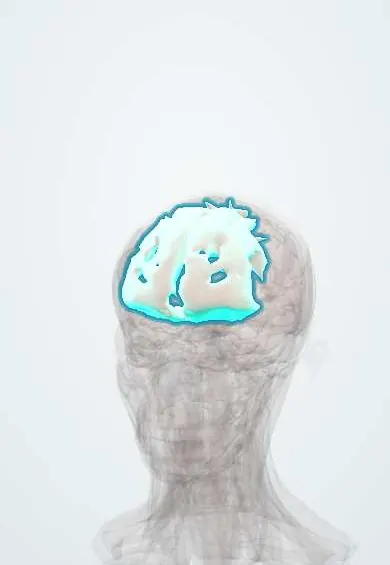
Representative model, for educational purposes only.