Conditions · Emergency medicine and toxicology
Iron poisoning !
Poisoning by swallowing too many iron tablets, often a child taking prenatal vitamins. Iron burns the gut, then causes shock and liver failure.
Updated 2026-11-01
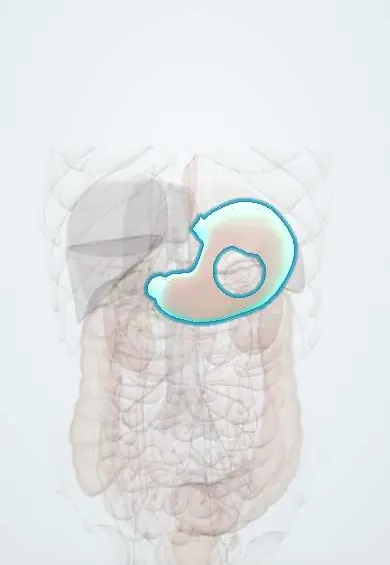
Structures involved
Tap one to see what it is and open it in 3D.
Why it happens
What it is
Toxicity after ingestion of iron-containing supplements. Free iron is corrosive to the gastrointestinal lining and, once absorbed beyond the binding capacity of transferrin, poisons cellular metabolism, causing metabolic acidosis, shock and liver necrosis. Toxicity depends on the amount of elemental iron, not the weight of the tablet.
Who gets it
Historically one of the leading causes of fatal poisoning in young children, because iron and prenatal vitamin tablets are common in homes and often look like sweets. Child-resistant packaging and warning labels reduced deaths sharply in high-income countries; in Latin America iron supplements are widely prescribed in pregnancy and to children, so accidental ingestions remain a concern.
Causes
- Accidental ingestion by toddlers of iron or prenatal vitamin tablets
- Intentional overdose by adolescents or adults, including pregnant women
- Products differ in elemental iron content (ferrous sulfate, fumarate, gluconate)
- Children's chewable multivitamins usually contain little iron and rarely cause serious toxicity
Risk factors
- Age under 6 years and homes with a pregnant or recently delivered woman
- Tablets stored outside child-resistant containers
- Brightly coloured, sugar-coated tablets mistaken for sweets
- Pregnancy and mental health problems in intentional ingestions
Pathophysiology
Iron directly injures the gastric and duodenal mucosa, causing vomiting, bleeding and fluid loss. When serum iron exceeds the total iron-binding capacity, free iron enters cells, generates free radicals and disrupts mitochondrial oxidative phosphorylation, producing lactic (anion-gap) metabolic acidosis. It also increases capillary permeability and depresses the myocardium, causing shock. Iron carried by the portal vein reaches the liver first, causing periportal necrosis and liver failure. Healing of the injured gastric outlet can leave scarring weeks later.
Classification
- Stage 1 (first hours): gastrointestinal toxicity
- Stage 2 (latent phase): apparent improvement that can be misleading
- Stage 3: shock and metabolic acidosis
- Stage 4 (2–3 days): liver failure
- Stage 5 (2–8 weeks): gastric outlet or bowel obstruction from scarring
Symptoms and signs
- Vomiting and diarrhoea, often with blood, within hours of ingestion
- Abdominal pain
- Lethargy, pallor and fast breathing (from acidosis)
- Low blood pressure and fast pulse
- Jaundice and confusion if liver failure develops
- Later vomiting after meals from gastric outlet narrowing
Diagnosis
- Clinical
- History of the product, number of tablets and time, with calculation of elemental iron per kilogram. A patient without vomiting or diarrhoea within the first hours is unlikely to have serious toxicity.
- Tests
- Serum iron level drawn a few hours after ingestion (and repeated for sustained-release products), blood gas with anion gap and lactate, glucose, electrolytes, complete blood count, liver tests, clotting times, kidney function and type and screen if bleeding.
- Imaging
- Abdominal X-ray can show radiopaque iron tablets and guide decontamination, though chewable or dissolved forms may not be visible; endoscopy or contrast studies later evaluate strictures.
Differential diagnosis
- Acute gastroenteritis
- Other poisonings causing vomiting and acidosis (salicylates, toxic alcohols, metformin)
- Acetaminophen poisoning causing liver failure
- Upper gastrointestinal bleeding from other causes
- Sepsis with shock and acidosis
Goal of treatment
Support circulation and correct acidosis, remove unabsorbed tablets when appropriate, bind circulating free iron with a chelator in significant poisoning, and detect liver failure and late gut scarring.
Treatment
- Acute
- Airway, breathing and circulation; generous intravenous crystalloid to replace gastrointestinal and capillary fluid losses, and correction of acidosis and bleeding.
- Medical
- Activated charcoal does not bind iron and is not used. Whole-bowel irrigation may be used when tablets are seen on X-ray; endoscopic removal for clumped tablets in selected cases.
- Medical
- Intravenous deferoxamine (chelating agent) for severe symptoms, shock, metabolic acidosis or high serum iron; it binds free iron to form ferrioxamine, which is excreted in the urine and turns it a reddish 'vin rosé' colour. Prolonged infusion is avoided because of lung injury risk.
- Follow-up
- Vital signs, fluid balance and urine output, serial iron levels, acid–base status, glucose and liver function; nursing watches for hypotension during deferoxamine infusion and for the deceptive latent phase.
- Surgical
- Surgery for bowel perforation or ischaemia and, later, for gastric outlet or bowel strictures; liver transplant evaluation in fulminant liver failure.
Complications
- Hypovolaemic and distributive shock
- Severe anion-gap metabolic acidosis
- Acute liver failure with coagulopathy and hypoglycaemia
- Gastrointestinal haemorrhage and perforation
- Gastric outlet or small bowel obstruction from scarring weeks later
- Acute respiratory distress syndrome, including after prolonged deferoxamine
- Yersinia infection, favoured by iron and by deferoxamine
Prognosis
Children who remain without gastrointestinal symptoms for several hours rarely develop serious toxicity. Mortality is concentrated in those who develop shock, acidosis or liver failure; survivors of severe poisoning need follow-up for late strictures.
Prevention
- Child-resistant packaging and storage of iron and prenatal vitamins out of children's reach
- Advising pregnant women and families about the danger of iron tablets for small children
- Rapid consultation with a poison information centre after any suspected ingestion
Test yourself
Think of the answer, then tap the question to see it.
What is the chelating agent used for severe iron poisoning, and what urine colour change may it cause?
Intravenous deferoxamine; the iron–deferoxamine complex can turn urine reddish ('vin rosé').
Why is activated charcoal not used in iron poisoning?
Charcoal does not bind iron (or other metals and alcohols); whole-bowel irrigation is preferred when tablets are seen on X-ray.
Which type of acid–base disturbance does severe iron poisoning cause?
An anion-gap (lactic) metabolic acidosis from disrupted mitochondrial oxidative phosphorylation and shock.
What is the clinical danger of the second (latent) stage of iron poisoning?
Symptoms improve temporarily, which can be mistaken for recovery before shock, acidosis and liver failure appear.
What late complication can appear weeks after significant iron ingestion?
Gastric outlet or bowel obstruction from scarring of the corroded mucosa.
Related conditions
- Acute liver failure
- Upper gastrointestinal bleeding
- Hypovolaemic shock
- Lactic acidosis
- Iron deficiency anaemia
- Hereditary hemochromatosis
- Acute respiratory distress syndrome (ARDS)
- Acetaminophen toxicity
- Salicylate (aspirin) toxicity
- Lead poisoning
Educational information, not medical advice. For any symptom, see a health professional.
Sources: Iron overdose (MedlinePlus, US National Library of Medicine, 2026).
Spotted a mistake?We are always improving for the community. Tell us what is wrong and our team will review it.Report a mistake
Representative model, for educational purposes only.