
Latent tuberculosis infection
A quarter of the world carries sleeping TB bacteria without being sick or contagious. Treating those most likely to wake them prevents future TB.
What it is
A state of persistent immune response to Mycobacterium tuberculosis antigens with no clinical, radiological or microbiological evidence of active disease. The person has no symptoms, a normal chest X-ray and is not infectious, but carries a lifelong risk of reactivation that preventive treatment reduces.
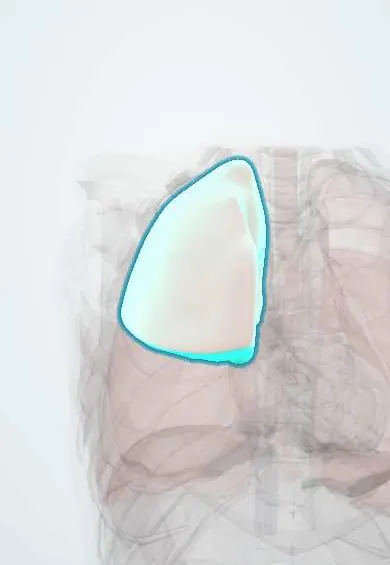
Who gets it
WHO estimates that about a quarter of the world's population has been infected, and about 5–10% of them will develop TB disease in their lifetime, most often in the first two years after infection. The risk is many times higher with HIV and other immune suppression. In Colombia the national programme prioritises testing for people with HIV, child contacts under 5, people starting biological therapy, dialysis, transplant candidates, silicosis and health workers.
Causes
- Inhaled droplet nuclei from a person with infectious pulmonary TB
- Bacilli contained by macrophages and T cells inside granulomas, alive but not multiplying much
- Not the result of BCG vaccination, which can cause a positive TST but not infection
Risk factors
- Close contact with a person with pulmonary TB, especially household contacts and children under 5
- Birth or long stays in high-burden settings, prisons, shelters and other crowded places
- Health work with exposure to TB patients or mycobacteriology laboratories
- Risk of progression to disease: HIV, anti-TNF and other biological drugs, long-term corticosteroids, dialysis, organ or stem-cell transplant, silicosis, recent infection, young age, diabetes and malnutrition
Pathophysiology
Bacilli reach the alveoli → macrophages engulf them and carry them to hilar nodes → about 2–8 weeks later T-cell immunity develops (this is when TST and IGRA turn positive) → granulomas wall off the bacilli, which survive in a slow, low-oxygen state → the person stays well and cannot transmit → if cellular immunity falls (HIV, anti-TNF drugs, steroids, transplant, age), the bacilli multiply again and cause active TB, sometimes decades later.
Classification
- Recent infection (conversion within the last two years): highest risk of progression
- Remote infection: lower but lifelong risk
- Infection with a contact known to have drug-resistant TB: preventive choice follows the contact's susceptibility
Symptoms and signs
- None: latent infection causes no symptoms
- Any cough, fever, night sweats or weight loss means active TB must be excluded before calling it latent
Diagnosis
- Clinical
- Step one is always to exclude active TB: ask about cough, fever, night sweats and weight loss (poor weight gain in children). Test only people in risk groups, because testing low-risk people produces mostly false positives. There is no gold standard for latent infection: it is a positive TST or IGRA plus the absence of active disease.
- Tests
- Tuberculin skin test (TST, PPD): intradermal injection read at 48–72 hours as millimetres of induration. Commonly used positive cut-offs are 5 mm (HIV, recent contacts, transplant, immunosuppression), 10 mm (other risk groups) and 15 mm (no risk factors); Colombia uses 5 mm in people with HIV and 10 mm in health workers. A negative TST in an immunosuppressed person is repeated after about three weeks to detect a boosted reaction. IGRA (interferon-gamma release assay): a blood test with antigens absent from BCG, one visit, no booster effect; preferred after BCG or when the person may not return. Neither test separates latent from active TB, and both can be falsely negative in advanced HIV, severe illness, malnutrition, very recent infection and miliary TB.
- Imaging
- Chest X-ray for everyone with a positive test, to exclude active disease before any preventive treatment. Calcified nodules or a calcified hilar node (old primary complex) are compatible with latent infection; cavities, infiltrates or effusion are not.
Differential diagnosis
- Active pulmonary or extrapulmonary TB with few symptoms
- Previously treated TB, in which a positive test stays positive and gives no new information
- False-positive TST after BCG vaccination or exposure to nontuberculous mycobacteria
- False-negative test in advanced HIV, very recent infection or severe illness
Positive test, what does it mean?
| State | Symptoms and X-ray | TST | IGRA | Infectious? |
|---|---|---|---|---|
| Latent TB infection | None; normal X-ray or only calcified old lesions | Positive | Positive | No |
| Active TB disease | Cough, fever, sweats, weight loss; abnormal X-ray in most | Usually positive; can be negative in HIV or miliary TB | Usually positive; can be negative | Yes, if pulmonary |
| BCG only, never infected | None | Can be positive | Negative | No |
| Nontuberculous mycobacteria | None, or lung or node disease of their own | Can be weakly positive | Usually negative (a few species cross-react) | No person-to-person spread |
Goal of treatment
Kill the dormant bacilli so that infection never becomes disease, without ever giving preventive treatment to someone who has active TB.
Treatment
- Medical
- Tuberculosis preventive treatment (TPT) with isoniazid alone or with rifamycin-based options: rifapentine plus isoniazid, rifampicin alone, or rifampicin plus isoniazid. The shorter rifamycin-based options are completed more often; the regimen is chosen by the programme guideline.
- Medical
- For contacts of people with multidrug-resistant TB, preventive options follow the source case's drug susceptibility; WHO describes levofloxacin for this situation.
- Follow-up
- Follow-up for hepatotoxicity (nausea, jaundice, dark urine), especially with isoniazid, alcohol use, liver disease or pregnancy; pyridoxine accompanies isoniazid to prevent neuropathy; rifamycins interact with many drugs, including antiretrovirals and hormonal contraceptives.
- Follow-up
- People who do not take preventive treatment are taught the symptoms of TB and evaluated again if they appear.
Complications
- Progression to active pulmonary or extrapulmonary TB
- Drug-resistant TB if preventive monotherapy is given to someone who already has active disease
- Drug-induced liver injury and drug interactions during preventive treatment
Common traps
- A positive IGRA means active TB: neither TST nor IGRA separates latent from active infection; symptoms, chest X-ray and sputum decide
- Start preventive treatment as soon as the test is positive: active TB must be excluded first, because one or two drugs against active disease breed resistance
- A positive TST in a BCG-vaccinated person can be ignored: BCG causes false positives, but in a risk group a positive result is still taken seriously, and an IGRA (not affected by BCG) can settle it
- A negative test rules out infection: tests are falsely negative in advanced HIV, very recent exposure, young infants, malnutrition and miliary TB
- Everyone with diabetes or who smokes should be screened: Colombia's programme does not recommend systematic testing in these groups unless they belong to a priority group
Prognosis
Completed preventive treatment greatly reduces the risk of later TB. A positive TST or IGRA usually stays positive afterwards, so it cannot be used to check cure.
Prevention
- Early diagnosis and treatment of infectious cases, which stops new infections
- Contact investigation around every pulmonary TB case
- Testing before biological therapy, dialysis and transplant
- BCG at birth protects children against severe forms (meningitis, miliary TB) but does not prevent infection
Test yourself
Think of the answer, then tap the question to see it.
What must always be done before starting TB preventive treatment in a person with a positive TST or IGRA?
Exclude active TB: ask about cough, fever, sweats and weight loss and obtain a chest X-ray. Giving preventive monotherapy to active disease selects resistance.
Why is IGRA preferred over TST in a person who received BCG?
IGRA uses antigens that BCG and most nontuberculous mycobacteria lack, so BCG does not make it positive; it also needs a single visit and has no booster effect.
A 45-year-old woman with rheumatoid arthritis is about to start an anti-TNF drug. She has no symptoms, IGRA is positive and the chest X-ray is normal. What next?
Latent TB infection in a high-risk person: give TB preventive treatment, ideally before or as the anti-TNF starts, because anti-TNF drugs break down granulomas and can reactivate TB.
What TST induration is considered positive in a person with HIV?
5 mm or more read at 48–72 hours; if negative, Colombia repeats it at about three weeks to look for a boosted reaction.
Can a repeat IGRA be used to show that preventive treatment worked?
No. The test measures immune memory and usually stays positive after successful treatment.
Why it happens
- Coal workers' pneumoconiosis and silicosis
- Psoriasis and seborrheic dermatitis
- Granulomatous pneumonia: tuberculosis and endemic fungi
- Granulomatous inflammation: caseating vs non-caseating, the causes to know
Connections
Educational information, not medical advice. For any symptom, see a health professional.
Sources: Latent Tuberculosis (StatPearls (NCBI Bookshelf), 2024); Tuberculosis Screening (StatPearls (NCBI Bookshelf), 2023); Clinical Testing Guidance for Tuberculosis: Tuberculin Skin Test (Centers for Disease Control and Prevention (CDC), 2025); Clinical Testing Guidance for Tuberculosis: Interferon Gamma Release Assay (Centers for Disease Control and Prevention (CDC), 2024); Treatment for Latent Tuberculosis Infection (Centers for Disease Control and Prevention (CDC), 2025); Tuberculosis (World Health Organization, 2026); Resolución 227 de 2020: lineamientos técnicos y operativos del Programa Nacional de Prevención y Control de la Tuberculosis (Ministerio de Salud y Protección Social (Colombia), 2020).
Spotted a mistake?We are always improving for the community. Tell us what is wrong and our team will review it.Report a mistake
Representative model, for educational purposes only.