
TB/HIV coinfection
TB is the leading killer of people with HIV. Each infection speeds the other, so every TB patient is tested for HIV and every person with HIV is checked for TB.
What it is
Active or latent tuberculosis in a person living with HIV. HIV destroys the CD4 T cells that hold TB inside granulomas, so infection progresses faster and more often to disease, presents atypically as CD4 falls, and is treated together with antiretroviral therapy while managing drug interactions and immune reconstitution.
Who gets it
WHO reports that TB is the leading cause of death among people with HIV, and that people with HIV are about 12 times more likely to develop TB disease. In Colombia every person with TB is offered an HIV test, and coinfection is notified and followed jointly by the TB and HIV programmes.
Causes
- Mycobacterium tuberculosis in a person with HIV-1 or HIV-2
- New infection that progresses rapidly, or reactivation of latent infection as CD4 falls
Risk factors
- Low CD4 count and no antiretroviral therapy
- Contact with a person with pulmonary TB, prisons and crowded housing
- Injected drug use, homelessness and malnutrition
- Living in high-burden settings
Pathophysiology
HIV depletes CD4 T cells → macrophages get less interferon-gamma and kill bacilli poorly → granulomas form badly, so latent infection reactivates and new infection progresses quickly → with very low CD4 there is little tissue destruction (few cavities, smear-negative) but high bacillary load in blood, nodes and urine → TB itself activates the immune system and raises HIV replication, speeding CD4 loss → when antiretroviral therapy restores CD4 cells, the new immune response can attack remaining TB antigens and cause inflammatory worsening (IRIS).
Classification
- By CD4: preserved immunity (classic reactivation picture) versus advanced HIV (CD4 below 200 cells/µL; atypical, extrapulmonary and disseminated)
- Paradoxical TB-IRIS: a person already on TB treatment worsens after starting antiretroviral therapy
- Unmasking TB-IRIS: TB not yet diagnosed appears with marked inflammation in the first weeks of antiretroviral therapy
- Drug-susceptible versus drug-resistant TB
Symptoms and signs
- The four screening symptoms: cough, fever, weight loss and night sweats, of any duration
- Breathlessness and chest pain
- Enlarged lymph nodes, abdominal pain or headache from extrapulmonary disease
- In advanced HIV, a sepsis-like illness with fever and wasting may be the only sign
Diagnosis
- Clinical
- Screening goes both ways. Every person with TB is offered an HIV test. Every person with HIV is asked about cough, fever, weight loss and night sweats at every visit; the absence of all four makes active TB unlikely (negative predictive value near 98%), and Colombia's HIV guideline does not recommend routine chest X-ray without symptoms. Any symptom leads to testing for active TB; no symptoms lead to evaluation for preventive treatment.
- Tests
- Rapid molecular test with liquid culture on sputum or other samples for anyone with HIV and a symptom; urine LF-LAM in seriously ill or hospitalised people and those with low CD4; blood mycobacterial culture in suspected dissemination. Smear is often negative. CD4 count and viral load. TST is positive at 5 mm or more in people with HIV, and both TST and IGRA are often falsely negative with advanced immunosuppression. Baseline liver tests.
- Imaging
- Chest X-ray: classic upper-lobe cavities with high CD4; with low CD4, lower-lobe or diffuse infiltrates, hilar nodes, effusion, miliary pattern or a normal film. CT and abdominal ultrasound (enlarged abdominal nodes, splenic micro-abscesses) help find extrapulmonary disease.
Differential diagnosis
- Pneumocystis pneumonia
- Histoplasmosis, common in Colombia and almost indistinguishable from disseminated TB
- Disseminated Mycobacterium avium complex
- Cryptococcal disease, bacterial pneumonia and Kaposi sarcoma of the lung
- Lymphoma
Fever, cough and low CD4: TB or another opportunistic infection?
| Infection | Typical CD4 | Clues | How it is confirmed |
|---|---|---|---|
| Tuberculosis | Any; atypical and disseminated below 200 | Weeks of fever and weight loss, nodes, effusions; X-ray from cavities to normal | Molecular test and culture; urine LAM if very low CD4 |
| Pneumocystis pneumonia | Below 200 | Dry cough, breathlessness, low oxygen on exertion, bilateral ground-glass | Induced sputum or lavage stains or PCR |
| Histoplasmosis | Usually below 150 | Fever, wasting, liver and spleen enlargement, low blood counts, skin lesions | Urine antigen, culture, histology |
| Disseminated M. avium complex | Below 50 | Fever, sweats, diarrhoea, anaemia, high alkaline phosphatase | Mycobacterial blood culture |
| Cryptococcal disease | Below 100 | Headache, fever, sometimes lung nodules or skin lesions | Serum or CSF cryptococcal antigen |
Goal of treatment
Treat TB first, start antiretroviral therapy soon after, keep rifampicin in the regimen by adjusting the antiretrovirals, prevent other opportunistic infections, and recognise IRIS without stopping effective treatment.
Treatment
- Medical
- TB is treated with the same programme regimens as in people without HIV. Rifampicin is the most powerful TB drug, so the principle is to keep it and adapt the antiretroviral regimen.
- Medical
- Timing of antiretroviral therapy (ART): TB treatment starts first; Colombia's programme starts ART within 2 weeks when CD4 is below 50 cells/µL and within 2–8 weeks otherwise. The exception is tuberculous meningitis, where early ART caused severe events, so it is deferred and individualised by an infectious disease specialist. A missing CD4 count does not delay ART.
- Medical
- Interactions in principle: rifampicin strongly induces liver enzymes (CYP3A4, UGT1A1) and drug transporters, lowering the levels of protease inhibitors (generally not combined), some integrase inhibitors (dolutegravir and raltegravir need adjustment) and other antiretrovirals; efavirenz-based options remain usable; rifabutin, a weaker inducer, is an alternative when a protease inhibitor is needed. The regimen is chosen by an HIV expert.
- Medical
- Trimethoprim–sulfamethoxazole prophylaxis is given to people with TB/HIV according to the programme, to prevent other opportunistic infections.
- Medical
- TB-IRIS management: continue both TB and antiretroviral treatment in most cases, exclude drug resistance and other infections, use anti-inflammatory drugs for mild cases and corticosteroids for moderate to severe ones; drain large abscesses or effusions.
- Medical
- Prevention in people with HIV without active TB: Colombia's HIV guideline recommends TB preventive treatment for those with a positive TST or IGRA or close contact with a TB case, using rifapentine with isoniazid or isoniazid alone.
Complications
- TB-IRIS: fever, enlarging nodes, new effusions or abscesses, and in the brain, life-threatening swelling
- Disseminated TB and death, especially when diagnosis or ART is delayed
- Drug-induced liver injury, rash and overlapping toxicities
- Antiretroviral failure from drug interactions or poor adherence
- Drug-resistant TB
Common traps
- Smear-negative sputum makes TB unlikely in advanced HIV: low CD4 means few cavities and few bacilli in sputum; molecular test, culture, urine LAM and blood culture are needed
- Start ART and TB treatment on the same day to save time: TB treatment comes first; ART follows within weeks (within two if CD4 below 50), and is deferred in TB meningitis
- Worsening after starting ART means TB treatment is failing: paradoxical IRIS is common; resistance and other infections are excluded, and both treatments usually continue
- Rifampicin is dropped because of interactions with antiretrovirals: rifampicin is the backbone of TB cure; the antiretroviral regimen is adjusted instead, or rifabutin is used with protease inhibitors
- A negative TST or IGRA rules out TB infection in HIV: both are often falsely negative with low CD4; symptoms, contact history and imaging matter more
Prognosis
Mortality is much higher than in TB without HIV, mainly in advanced HIV and when ART is delayed. Treating both infections together and starting ART early in those with very low CD4 reduces deaths; IRIS is usually self-limited and rarely fatal outside the nervous system.
Prevention
- Early HIV diagnosis and ART, which lowers TB risk sharply
- TB screening with the four symptoms at every HIV visit
- TB preventive treatment once active TB is excluded
- Infection control in HIV clinics, wards and prisons
- HIV testing for every person with TB and for their partners
Test yourself
Think of the answer, then tap the question to see it.
How does the chest X-ray of pulmonary TB change as CD4 falls?
From classic upper-lobe cavities to lower-lobe or diffuse infiltrates, hilar nodes, effusion, miliary pattern or even a normal film, because granulomas and cavities need intact T-cell immunity.
A man with newly diagnosed HIV, CD4 35 cells/µL, starts TB treatment for smear-negative, Xpert-positive pulmonary TB. When should ART start?
Within the first 2 weeks of TB treatment, because CD4 is below 50; early ART reduces mortality despite the higher risk of IRIS.
Three weeks after ART was added to TB treatment, a woman has new fever and larger neck nodes; cultures had been susceptible. Most likely cause and approach?
Paradoxical TB-IRIS. Exclude resistance and new infections, continue both treatments and treat inflammation (corticosteroids if moderate to severe).
Why is a protease inhibitor generally not combined with rifampicin?
Rifampicin strongly induces CYP3A4 and transporters, lowering protease inhibitor levels too far; rifabutin is the usual substitute when a protease inhibitor is needed.
Which four symptoms are asked at every visit to screen people with HIV for TB?
Cough, fever, weight loss and night sweats, of any duration. If none is present, active TB is unlikely and preventive treatment is considered.
Connections
Educational information, not medical advice. For any symptom, see a health professional.
Sources: Immune Reconstitution Inflammatory Syndrome (StatPearls (NCBI Bookshelf), 2023); Tuberculosis Overview (StatPearls (NCBI Bookshelf), 2024); Tuberculosis (World Health Organization, 2026); Resolución 227 de 2020: lineamientos técnicos y operativos del Programa Nacional de Prevención y Control de la Tuberculosis (Ministerio de Salud y Protección Social (Colombia), 2020); Guía de Práctica Clínica basada en la evidencia científica para la atención de la infección por VIH/SIDA en personas adultas, gestantes y adolescentes (Ministerio de Salud y Protección Social (Colombia), 2021).
Spotted a mistake?We are always improving for the community. Tell us what is wrong and our team will review it.Report a mistake
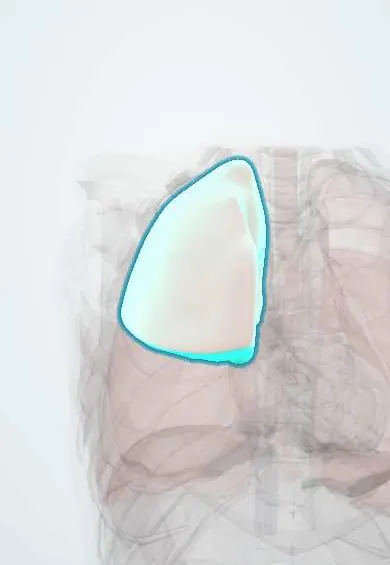
Representative model, for educational purposes only.