Lumbar Disc Herniation !
A lumbar disc herniation is when the soft centre of a lower-back disc pushes out and can press on a nerve, causing back and leg pain (sciatica).
Updated 2026-10-23
Structures involved
Tap one to see what it is and open it in 3D.
In histology
In embryology
- Primitive streak and notochord (nucleus pulposus, sacrococcygeal teratoma)
- Vertebrae: resegmentation of the sclerotomes
In the clinical exam
- Lasègue sign (straight leg raise) and Bragard sign
- Deep tendon reflexes and their grading
- Sensory examination: modalities and dermatomes
- Abnormal gaits: hemiparetic, parkinsonian, ataxic, steppage, waddling
In physiology
Why it happens
What it is
Displacement of the nucleus pulposus through the annulus fibrosus, most often at L4–L5 or L5–S1, which can compress a nerve root.
Causes
- Age-related degeneration of the disc
- Sudden loading or twisting
- Repetitive stress
Symptoms and signs
- Low back pain
- Radicular pain into the leg (sciatica)
- Numbness or weakness in a dermatomal/myotomal pattern
- In severe cases, bowel/bladder changes (cauda equina emergency)
Diagnosis
- Clinical
- History, neurological exam, straight-leg raise
- Imaging
- MRI is the preferred study; X-ray for alignment or other causes
Treatment
- Conservative
- Most improve with activity modification, physical therapy, and time. Medicines or injections for pain.
- Surgical
- Discectomy for persistent severe radiculopathy or neurological deficit after conservative care.
Related conditions
- Sciatica (Lumbar Radiculopathy)
- Meralgia paresthetica
- Piriformis syndrome
- Mechanical low back pain
- Lumbar spinal stenosis
- Cauda equina syndrome
- Spondylolisthesis
- Sacroiliac joint pain
Educational information, not medical advice. For any symptom, see a health professional.
Sources: Lumbar Disc Herniation (StatPearls (NCBI Bookshelf), 2024).
Spotted a mistake?We are always improving for the community. Tell us what is wrong and our team will review it.Report a mistake
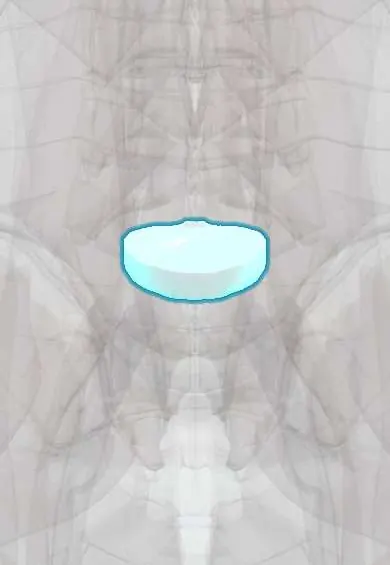
Representative model, for educational purposes only.