Obesity hypoventilation syndrome !
Severe obesity makes some people breathe too little, so carbon dioxide builds up in the blood while awake, not only during sleep.
Updated 2026-11-01
Structures involved
Tap one to see what it is and open it in 3D.
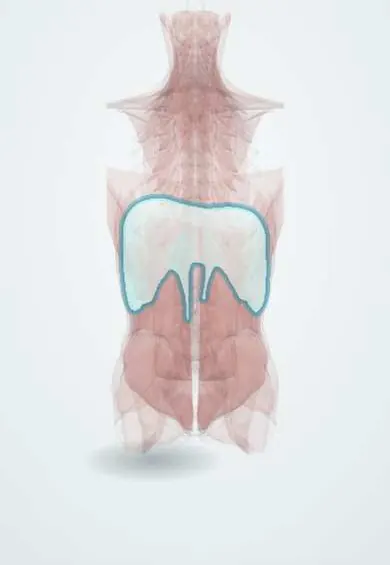
- Diaphragm
- Medulla oblongata
- Right lower lobe
- Left lower lobe
- External intercostals
- Pulmonary arteries
- Right ventricle
Why it happens
- Obesity: leptin, adipokines and its consequences
- Control of breathing, chemoreceptors and lung reflexes
- The work of breathing
- Respiratory acidosis and alkalosis
What it is
The combination of obesity (body mass index of 30 or more) and daytime hypercapnia (arterial PaCO2 above 45 mmHg) during wakefulness, after other causes of hypoventilation have been excluded. Most patients also have obstructive sleep apnoea. It is also called Pickwickian syndrome.
Who gets it
Found in roughly one in ten to one in five people with obesity referred for sleep studies, and more often as body mass index rises above 40. It is underdiagnosed and often recognised only during an acute admission with hypercapnic respiratory failure. Rising obesity in Colombia and Latin America makes it increasingly relevant; living at high altitude, as in Bogotá, adds hypoxaemia.
Causes
- Severe obesity reducing chest wall and lung compliance
- Blunted central respiratory drive to carbon dioxide (leptin resistance is proposed)
- Obstructive sleep apnoea with repeated nocturnal hypercapnia
- Weak or mechanically disadvantaged respiratory muscles and diaphragm
Risk factors
- Body mass index of 40 or more, central (abdominal) obesity
- Severe obstructive sleep apnoea
- Raised serum bicarbonate in a patient with obesity
- Use of sedatives, opioids or alcohol
- Coexisting hypothyroidism or chronic lung disease
Pathophysiology
Fat on the chest wall and abdomen pushes the diaphragm up, lowers lung volumes and increases the work of breathing. Upper airway obstruction during sleep causes repeated hypercapnia; the kidneys retain bicarbonate, which blunts the brainstem (medullary) response to CO2, so the hypoventilation persists into the day. Chronic hypoxaemia causes pulmonary vasoconstriction, pulmonary hypertension, right heart strain and secondary polycythaemia.
Classification
- With obstructive sleep apnoea (about 90% of cases)
- Sleep hypoventilation without significant apnoea
- Severity graded by daytime PaCO2, hypoxaemia and presence of cor pulmonale
Symptoms and signs
- Excessive daytime sleepiness and fatigue
- Loud snoring, witnessed apnoeas and unrefreshing sleep
- Morning headache (from nocturnal hypercapnia)
- Breathlessness on exertion
- Leg swelling, cyanosis and plethora when cor pulmonale and polycythaemia develop
Diagnosis
- Clinical
- Suspected in any person with obesity and daytime sleepiness, unexplained hypoxaemia, or hypercapnia found in hospital. Diagnosis requires obesity, awake hypercapnia and exclusion of other causes (COPD, neuromuscular disease, chest wall deformity, hypothyroidism, drugs).
- Tests
- Arterial blood gas while awake: PaCO2 above 45 mmHg with compensated respiratory acidosis. Serum bicarbonate of 27 mmol/L or more is a useful screen. Polysomnography confirms sleep apnoea and nocturnal hypoventilation. Spirometry (mild restriction), thyroid function, full blood count (polycythaemia), ECG.
- Imaging
- Chest X-ray to exclude lung or chest wall disease and to show cardiomegaly; echocardiography to look for pulmonary hypertension and right ventricular dysfunction.
Differential diagnosis
- Isolated obstructive sleep apnoea without daytime hypercapnia
- Chronic obstructive pulmonary disease with CO2 retention
- Neuromuscular disease (amyotrophic lateral sclerosis, myasthenia gravis, diaphragm paralysis)
- Kyphoscoliosis and other chest wall disorders
- Severe hypothyroidism and drug-induced hypoventilation
Goal of treatment
Restore normal ventilation during sleep, normalise daytime CO2 and oxygen, prevent hypercapnic crises and cor pulmonale, and achieve sustained weight loss.
Treatment
- Procedure
- Positive airway pressure at night: CPAP when obstructive apnoea dominates, non-invasive ventilation (bilevel pressure) when hypoventilation persists or in severe disease.
- Acute
- In acute-on-chronic hypercapnic respiratory failure: non-invasive ventilation, controlled oxygen targeting moderate saturations, and intubation if consciousness falls or ventilation fails.
- Lifestyle
- Sustained weight loss through diet, physical activity and, when indicated, anti-obesity drugs; avoidance of alcohol and sedatives.
- Surgical
- Bariatric surgery for severe obesity can resolve or greatly improve the syndrome.
- Follow-up
- Nursing: upright positioning, continuous oximetry, monitoring of consciousness and repeated gas analysis, careful use of opioids and sedatives, and checking mask fit and adherence.
Complications
- Acute-on-chronic hypercapnic respiratory failure
- Pulmonary hypertension and cor pulmonale
- Secondary polycythaemia
- Heart failure and arrhythmias
- Higher perioperative and anaesthetic risk
Prognosis
Untreated, mortality is high, with frequent admissions and early death from cardiorespiratory failure. Regular nocturnal positive airway pressure and weight loss improve gas exchange, symptoms and survival.
Prevention
- Prevention and treatment of obesity
- Screening of patients with obesity and sleep apnoea for raised bicarbonate or hypercapnia
- Caution with sedatives and opioids in people with severe obesity
Test yourself
Think of the answer, then tap the question to see it.
What three criteria define obesity hypoventilation syndrome?
BMI of 30 or more, awake daytime hypercapnia (PaCO2 above 45 mmHg), and exclusion of other causes of hypoventilation.
Which simple blood test is a useful screen?
Serum bicarbonate; a raised value reflects metabolic compensation for chronic CO2 retention.
Why can uncontrolled high-flow oxygen be harmful in these patients?
It can worsen hypercapnia and acidosis; oxygen is titrated to moderate saturations together with ventilatory support.
What is the mainstay of long-term treatment?
Nocturnal positive airway pressure (CPAP or bilevel non-invasive ventilation) plus weight loss.
Which cardiac complication follows chronic hypoxaemia?
Pulmonary hypertension with right ventricular failure (cor pulmonale).
Related conditions
- Obesity
- Obstructive sleep apnoea
- Pulmonary hypertension and cor pulmonale
- Heart failure
- Acute respiratory failure (hypoxaemic and hypercapnic)
- Hypothyroidism
- Chronic obstructive pulmonary disease (COPD)
- High-altitude illness (AMS, HACE, HAPE)
Educational information, not medical advice. For any symptom, see a health professional.
Sources: Obesity hypoventilation syndrome (OHS) (MedlinePlus Medical Encyclopedia (U.S. National Library of Medicine), 2024); Obesity Hypoventilation Syndrome (National Heart, Lung, and Blood Institute (NHLBI, NIH), 2024).
Spotted a mistake?We are always improving for the community. Tell us what is wrong and our team will review it.Report a mistake
Representative model, for educational purposes only.