REM sleep behaviour disorder (RBD) !
A sleep disorder in which people act out vivid, often violent dreams because muscles are not relaxed during REM sleep; it can precede Parkinson disease.
Updated 2026-11-01
Structures involved
Tap one to see what it is and open it in 3D.
Why it happens
What it is
A parasomnia in which the normal muscle paralysis (atonia) of REM sleep is lost, so patients move, shout, punch or kick while dreaming. Idiopathic (isolated) RBD in older adults is the strongest known early sign of the alpha-synuclein diseases: most patients later develop Parkinson disease, dementia with Lewy bodies or multiple system atrophy.
Who gets it
Affects about 1% of the general population and 2% or more of people over 60. In sleep clinics it is diagnosed mostly in men over 50, though in community studies the sex ratio is closer to equal. It is very frequent in synucleinopathies (most patients with multiple system atrophy and many with Parkinson disease or Lewy body dementia) and in narcolepsy.
Causes
- Isolated (idiopathic) RBD: early stage of a synucleinopathy in most older patients
- Secondary to neurodegenerative disease: Parkinson disease, dementia with Lewy bodies, multiple system atrophy, some spinocerebellar ataxias
- Narcolepsy type 1 (younger patients)
- Drugs: antidepressants (SSRIs, SNRIs, tricyclics) and withdrawal from alcohol or sedatives
- Structural lesions of the pontine tegmentum (stroke, tumour, demyelination)
Risk factors
- Age over 50 and male sex
- Antidepressant use
- Narcolepsy
- Post-traumatic stress disorder
- Farming, pesticide exposure and head injury reported in some studies
Pathophysiology
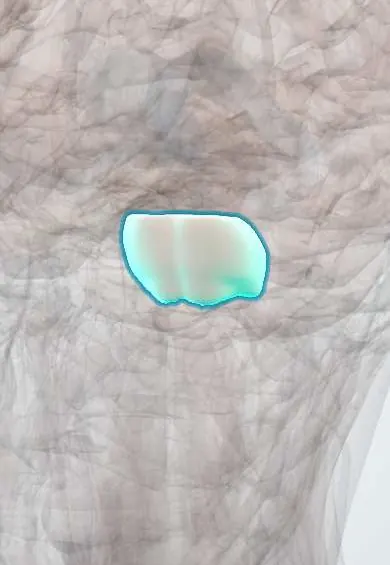
During REM sleep, neurons in the pons (the sublaterodorsal or subcoeruleus nucleus) activate inhibitory neurons in the ventromedial medulla, which suppress spinal motor neurons and produce atonia. When alpha-synuclein pathology or another lesion damages this circuit, atonia is lost and dream content is acted out. In synucleinopathies these lower brainstem nuclei are affected early, before the substantia nigra, which is why RBD often appears years before parkinsonism or dementia.
Classification
- Isolated (idiopathic) RBD
- Secondary (symptomatic) RBD: neurodegenerative, narcolepsy-related, drug-induced or lesional
- Prodromal RBD: REM sleep without atonia on polysomnography without reported behaviours
Symptoms and signs
- Dream enactment: talking, shouting, swearing, punching, kicking or jumping out of bed during sleep
- Vivid, unpleasant dreams of being attacked or chased, with behaviours matching the dream
- Episodes in the second half of the night, when REM sleep is more abundant
- Rapid awakening with clear recall of the dream (unlike sleepwalking or night terrors)
- Injuries to the patient or bed partner
- Possible early signs of synucleinopathy: loss of smell, constipation, depression, orthostatic dizziness
Diagnosis
- Clinical
- Suspected from a history, often provided by the bed partner, of repeated dream-enacting behaviours. Ask about drugs, smell loss, constipation, mood and early motor signs, and examine for parkinsonism and cognitive impairment.
- Tests
- Video-polysomnography is required to confirm the diagnosis: it shows REM sleep without atonia (excess muscle tone or twitches on chin and limb EMG) and documents behaviours during REM sleep. It also excludes mimics such as obstructive sleep apnoea with arousals and nocturnal seizures.
- Imaging
- Brain MRI if the neurological examination is abnormal or a structural lesion is suspected. Dopamine transporter imaging is used in research to estimate the risk of conversion to a synucleinopathy.
Differential diagnosis
- Obstructive sleep apnoea with arousal-related movements ("pseudo-RBD")
- NREM parasomnias: sleepwalking and night terrors
- Nocturnal frontal lobe seizures
- Nightmares and post-traumatic stress disorder
- Periodic limb movements of sleep
- Nocturnal confusion in dementia
Goal of treatment
Prevent injury to the patient and bed partner, reduce dream enactment, review triggering drugs, and follow the patient for early signs of a neurodegenerative disease with honest counselling.
Treatment
- Conservative
- Bedroom safety: remove sharp objects and weapons, pad the floor and bed edges, lower the bed or put the mattress on the floor, move furniture away and consider separate beds for the partner.
- Medical
- Melatonin at bedtime as a first option, especially in older adults; clonazepam (a benzodiazepine) is also effective but needs caution for falls, confusion and sleep apnoea.
- Medical
- Review and, if possible, change antidepressants that worsen RBD; treat coexisting sleep apnoea.
- Follow-up
- Yearly review for parkinsonism, cognitive change, smell loss and autonomic symptoms; offer participation in research on neuroprotection.
Complications
- Injuries: bruises, lacerations, fractures and subdural haematoma
- Injuries to the bed partner and relationship strain
- Conversion to Parkinson disease, dementia with Lewy bodies or multiple system atrophy
- Falls and daytime sedation from treatment
Prognosis
Behaviours respond well to treatment in most patients. However, in isolated RBD the risk of developing a synucleinopathy is about 6% per year, reaching over 70% at 12 years and around 90% after longer follow-up. No treatment yet prevents this conversion.
Test yourself
Think of the answer, then tap the question to see it.
What is the key polysomnographic finding in REM sleep behaviour disorder?
REM sleep without atonia (persistent or excessive EMG muscle activity during REM sleep).
Which group of diseases does isolated RBD most often precede?
Synucleinopathies: Parkinson disease, dementia with Lewy bodies and multiple system atrophy.
How can RBD be distinguished from sleepwalking at the bedside?
RBD occurs in REM sleep, usually in the second half of the night, and the patient wakes quickly and recalls the dream; sleepwalking arises from deep NREM sleep early in the night with confusion and amnesia.
Which drug classes can trigger or worsen RBD?
Antidepressants such as SSRIs, SNRIs and tricyclics.
What is the first non-drug priority in management?
Making the sleep environment safe for the patient and bed partner.
Related conditions
- Parkinson disease
- Dementia with Lewy bodies
- Multiple system atrophy (MSA)
- Narcolepsy
- Obstructive sleep apnoea
- Epilepsy and seizures
- Spinocerebellar ataxias (autosomal dominant ataxias)
- Major depressive disorder
- Post-traumatic stress disorder (PTSD) and acute stress disorder
Educational information, not medical advice. For any symptom, see a health professional.
Sources: Parasomnias - Neurology - MSD Manual Professional Edition (MSD Manual Professional Edition, 2026).
Spotted a mistake?We are always improving for the community. Tell us what is wrong and our team will review it.Report a mistake
Representative model, for educational purposes only.