Chronic inflammatory demyelinating polyneuropathy (CIDP) !
An immune attack on the myelin of peripheral nerves that causes weakness and numbness in arms and legs, worsening for more than 8 weeks.
Updated 2026-11-01
Structures involved
Tap one to see what it is and open it in 3D.
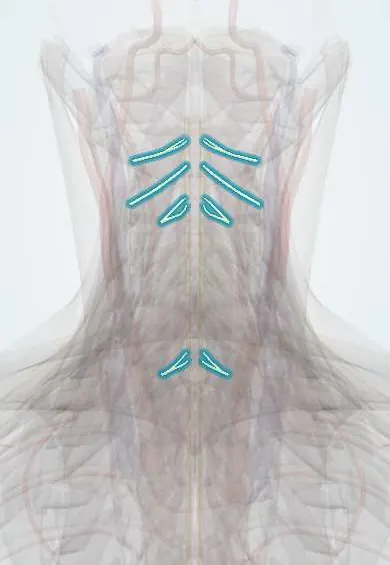
- Neck nerve roots
- Lumbar plexus
- Sciatic nerve
- Dorsal root ganglia
- Femoral nerve
- Mid-back nerve roots
- Brachial plexus roots
Why it happens
What it is
An acquired, immune-mediated disease in which the myelin sheath of nerve roots and peripheral nerves is repeatedly damaged. It produces symmetric weakness of both proximal and distal muscles with loss of reflexes, progressing or relapsing over more than two months. It is often described as the chronic counterpart of Guillain-Barré syndrome and is treatable.
Who gets it
A rare disease, with a prevalence of a few cases per 100,000 people; it can start at any age but is more frequent in middle-aged and older adults and slightly more common in men. In Latin America it is probably under-recognised because nerve conduction studies and specialist neurology are concentrated in large cities, and some cases are first labelled as Guillain-Barré syndrome.
Causes
- Autoimmune attack (cellular and antibody-mediated) against myelin of peripheral nerves and roots
- Usually idiopathic; sometimes follows an infection or vaccination
- Associated conditions: monoclonal gammopathy (MGUS), diabetes, HIV infection, hepatitis, lymphoma and connective tissue diseases
- Variant forms with specific antibodies against nodal and paranodal proteins
Risk factors
- Age over 50
- Male sex
- Monoclonal gammopathy
- Diabetes mellitus
- HIV infection and other chronic immune disorders
Pathophysiology
Macrophages and autoantibodies strip myelin from segments of nerve fibres, mainly at the nerve roots, plexuses and proximal nerves. Demyelination slows conduction and causes conduction block, which explains weakness and loss of reflexes. Repeated demyelination and remyelination form "onion bulbs" around axons and can thicken the roots. When inflammation persists, secondary axonal loss leads to muscle wasting and incomplete recovery.
Classification
- Typical CIDP: symmetric proximal and distal weakness with sensory loss
- Distal variant: mainly distal, often sensory, sometimes linked to IgM paraprotein
- Multifocal variant (Lewis-Sumner): asymmetric, following individual nerves
- Pure motor and pure sensory variants
- Course: slowly progressive or relapsing-remitting
Symptoms and signs
- Symmetric weakness of arms and legs affecting both proximal muscles (difficulty climbing stairs, rising from a chair) and distal muscles
- Numbness, tingling and loss of vibration and position sense, with unsteady gait
- Reduced or absent deep tendon reflexes
- Progression or relapses over more than 8 weeks
- Fatigue; cranial nerve or autonomic involvement is uncommon and mild
Diagnosis
- Clinical
- Suspected in a patient with symmetric proximal and distal weakness, sensory loss and areflexia that progresses for more than 8 weeks. The key distinction from Guillain-Barré syndrome is the time course (GBS reaches its worst within 4 weeks and is monophasic).
- Tests
- Nerve conduction studies are the key test: slowed conduction velocity, prolonged distal latencies and F-waves, conduction block and temporal dispersion (demyelinating pattern). Cerebrospinal fluid shows high protein with a normal cell count (albuminocytologic dissociation). Blood tests look for associated causes: serum protein electrophoresis and immunofixation, glucose, HIV and hepatitis serology, thyroid function and vitamin B12. Nerve biopsy is rarely needed.
- Imaging
- MRI of the spine or plexuses may show thickened, enhancing nerve roots; nerve ultrasound can show enlarged nerves.
Differential diagnosis
- Guillain-Barré syndrome
- Charcot-Marie-Tooth disease (hereditary, with family history and foot deformity)
- Diabetic and other axonal polyneuropathies
- Multifocal motor neuropathy
- Polyneuropathy with monoclonal gammopathy, including POEMS syndrome
- Amyotrophic lateral sclerosis and myasthenia gravis
Goal of treatment
Stop the immune attack early to prevent permanent axonal loss, restore strength and function, then find the lowest maintenance treatment that keeps the disease in remission.
Treatment
- Medical
- First-line immunotherapy: intravenous immunoglobulin or glucocorticoids; both are effective, and the choice depends on comorbidities and access. Subcutaneous immunoglobulin can be used for maintenance.
- Procedure
- Plasma exchange for severe disease or when the first-line options fail, usually as a short-term measure.
- Medical
- Steroid-sparing immunosuppressants (e.g. azathioprine, mycophenolate) or newer immune therapies such as neonatal Fc receptor blockers in refractory or relapsing cases; treat any associated disorder.
- Conservative
- Physiotherapy and occupational therapy, ankle-foot orthoses for foot drop, fall prevention and neuropathic pain control.
- Follow-up
- Regular strength and disability scores to judge response and taper treatment; monitor glucose, blood pressure and bone health on steroids and renal function and thrombosis risk with immunoglobulin.
Complications
- Permanent weakness and muscle wasting from axonal loss
- Falls and fractures
- Chronic neuropathic pain and fatigue
- Adverse effects of long-term immunotherapy (infections, osteoporosis, diabetes)
- Disability and loss of work
Prognosis
Most patients (around 80%) improve with immunotherapy, but many need treatment for years and relapses are common. Earlier treatment gives better recovery; a minority are left with significant disability. Death from CIDP itself is rare.
Test yourself
Think of the answer, then tap the question to see it.
What time course separates CIDP from Guillain-Barré syndrome?
CIDP progresses or relapses for more than 8 weeks; Guillain-Barré syndrome reaches its nadir within 4 weeks and is monophasic.
What are the typical cerebrospinal fluid findings in CIDP?
High protein with a normal white cell count (albuminocytologic dissociation).
What does the nerve conduction study show?
A demyelinating pattern: slowed conduction velocity, prolonged distal and F-wave latencies, conduction block and temporal dispersion.
What are the first-line treatments for CIDP?
Intravenous immunoglobulin or glucocorticoids; plasma exchange in severe or refractory cases.
Which blood test should be done in every patient with CIDP?
Serum protein electrophoresis with immunofixation to look for a monoclonal gammopathy.
Related conditions
- Guillain-Barré syndrome
- Peripheral neuropathy (diabetic and other)
- Charcot-Marie-Tooth disease
- MGUS and Waldenström macroglobulinaemia
- Type 2 diabetes mellitus
- HIV infection and AIDS
- Multiple sclerosis
- Myasthenia gravis
Educational information, not medical advice. For any symptom, see a health professional.
Sources: Chronic Inflammatory Demyelinating Polyneuropathy (CIDP) - Neurology - MSD Manual Professional Edition (MSD Manual Professional Edition, 2026); Peripheral Neuropathy | National Institute of Neurological Disorders and Stroke (National Institute of Neurological Disorders and Stroke (NINDS), 2026).
Spotted a mistake?We are always improving for the community. Tell us what is wrong and our team will review it.Report a mistake
Representative model, for educational purposes only.