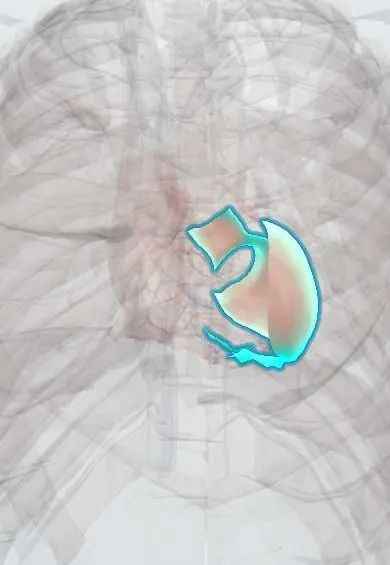
Dilated cardiomyopathy !
In dilated cardiomyopathy the ventricles enlarge and pump weakly, leading to heart failure. In Latin America Chagas disease is a key cause.
Updated 2026-11-01
Structures involved
Tap one to see what it is and open it in 3D.
- Left ventricle
- Right ventricle
- Left atrium
- Mitral anterior leaflet
- Left ventricle papillary muscles
- Bundle branches
In the clinical exam
- Precordial inspection and palpation: apex beat, heaves and thrills
- Heart failure syndrome: left- and right-sided signs
Why it happens
- Hypertrophy: physiologic and pathologic
- Mendelian inheritance: autosomal dominant, recessive and X-linked
- Alcohol: how it injures the liver, brain, heart and fetus
- Systemic (arterial) thromboembolism
- Heart failure physiology
- The Frank–Starling mechanism
What it is
A heart muscle disease with dilation and reduced systolic function of the left ventricle, or both ventricles, not explained by coronary artery disease or abnormal loading conditions. It is a leading cause of heart failure and heart transplantation.
Who gets it
A common cardiomyopathy in adults. In Colombia and other Latin American countries, Chagas disease is an important cause of dilated cardiomyopathy, and up to a third of people with chronic Trypanosoma cruzi infection develop heart involvement decades later.
Causes
- Genetic (for example titin and lamin A/C mutations) or idiopathic
- Chagas disease (Trypanosoma cruzi), important in Latin America
- Viral myocarditis
- Toxic: alcohol, cocaine, anthracycline chemotherapy and trastuzumab
- Peripartum cardiomyopathy
- Tachycardia-induced, thyroid disease and thiamine deficiency (wet beriberi)
Risk factors
- Family history of cardiomyopathy or sudden death
- Heavy alcohol use
- Living or having lived in Chagas-endemic areas
- Previous cardiotoxic chemotherapy
- Late pregnancy and the months after delivery
Pathophysiology
Loss or dysfunction of myocytes reduces contractility. The ventricle dilates to keep stroke volume (eccentric remodelling), wall stress rises, and neurohormonal systems (renin-angiotensin-aldosterone, sympathetic) are activated, causing fluid retention and further remodelling. Annular dilation produces functional mitral regurgitation, and scar and stretch favour arrhythmias and mural thrombi.
Classification
- By cause: genetic/familial, inflammatory, toxic, infectious (Chagas), peripartum, tachycardia-induced, idiopathic
- Heart failure class (NYHA I to IV) and stage (ACC/AHA A to D)
Symptoms and signs
- Exertional dyspnoea, orthopnoea and paroxysmal nocturnal dyspnoea
- Fatigue and reduced exercise tolerance
- Leg oedema, weight gain and abdominal swelling
- Palpitations and syncope from arrhythmias
- S3 gallop, displaced apex beat and a mitral regurgitation murmur
- Embolic events (stroke) from ventricular or atrial thrombus
Diagnosis
- Clinical
- Signs and symptoms of heart failure with a search for the cause: family history, alcohol and drug use, chemotherapy, recent viral illness, pregnancy, and residence in Chagas-endemic areas.
- Tests
- ECG (bundle branch block, arrhythmias; right bundle branch block with left anterior fascicular block suggests Chagas), natriuretic peptides, troponin, thyroid function, iron studies, Chagas serology when relevant, Holter; genetic testing when familial disease is suspected.
- Imaging
- Echocardiography shows dilated ventricles with reduced ejection fraction and often functional mitral regurgitation; cardiac MRI characterises fibrosis and inflammation; coronary angiography or CT excludes ischaemic cardiomyopathy.
Differential diagnosis
- Ischaemic cardiomyopathy
- Valvular heart disease (severe aortic or mitral regurgitation)
- Hypertensive heart disease
- Myocarditis
- Restrictive or infiltrative cardiomyopathy
Goal of treatment
Relieve congestion, block the neurohormonal pathways that drive remodelling, treat reversible causes, prevent sudden death and thromboembolism, and improve survival.
Treatment
- Medical
- Guideline-directed therapy for reduced ejection fraction: ACE inhibitors, ARBs or an angiotensin receptor-neprilysin inhibitor; beta-blockers; mineralocorticoid receptor antagonists; SGLT2 inhibitors.
- Medical
- Loop diuretics for congestion, and anticoagulation when there is atrial fibrillation or intracardiac thrombus.
- Medical
- Treatment of the cause: stopping alcohol or cardiotoxic drugs, controlling tachyarrhythmias and thyroid disease, thiamine replacement, and antiparasitic treatment in Chagas when indicated.
- Procedure
- Implantable cardioverter-defibrillator when ejection fraction stays very low despite treatment, and cardiac resynchronisation therapy with left bundle branch block and a wide QRS.
- Surgical
- Left ventricular assist device or heart transplantation for advanced heart failure.
- Lifestyle
- Salt and fluid advice, daily weight, physical activity adapted to the patient, vaccination, and avoiding alcohol.
- Follow-up
- Regular echocardiography, kidney function and potassium on neurohormonal drugs, and family screening in genetic forms.
Complications
- Progressive heart failure and cardiogenic shock
- Ventricular arrhythmias and sudden cardiac death
- Atrial fibrillation
- Stroke and systemic embolism from mural thrombus
- Functional mitral and tricuspid regurgitation
Prognosis
Variable. Modern drug and device therapy has improved survival, and some forms (alcohol, peripartum, tachycardia-induced) can recover substantially. Chagas cardiomyopathy tends to have a worse prognosis than other causes.
Prevention
- Avoiding heavy alcohol use and stimulant drugs
- Cardiac monitoring during cardiotoxic chemotherapy
- Vector control and screening for Chagas in endemic areas, and screening of pregnant women and blood donors
- Screening relatives in familial forms
Test yourself
Think of the answer, then tap the question to see it.
What defines dilated cardiomyopathy?
Ventricular dilation with reduced systolic function not explained by coronary artery disease or abnormal loading conditions.
Which infectious cause of dilated cardiomyopathy is characteristic of Latin America?
Chagas disease (Trypanosoma cruzi).
Which are the main drug classes of guideline-directed therapy for reduced ejection fraction?
ACE inhibitor, ARB or ARNI; beta-blocker; mineralocorticoid receptor antagonist; and SGLT2 inhibitor.
Which ECG pattern suggests Chagas cardiomyopathy?
Right bundle branch block with left anterior fascicular block.
Which toxic causes of dilated cardiomyopathy are classic in exams?
Alcohol, cocaine, anthracyclines and trastuzumab.
Related conditions
- Heart failure
- Chagas cardiomyopathy
- Chagas disease
- Ventricular tachycardia
- Atrial fibrillation
- Mitral regurgitation
- Cardiac arrest (VF, pulseless VT, asystole, PEA)
- Myocardial Infarction (Heart Attack)
- Hypertrophic cardiomyopathy
Educational information, not medical advice. For any symptom, see a health professional.
Sources: Dilated cardiomyopathy: MedlinePlus Medical Encyclopedia (MedlinePlus, US National Library of Medicine, 2026); Chagas disease (also known as American trypanosomiasis) (World Health Organization, 2026).
Spotted a mistake?We are always improving for the community. Tell us what is wrong and our team will review it.Report a mistake
Representative model, for educational purposes only.