Conditions · Emergency medicine and toxicology
Drowning !
Breathing difficulty from being submerged in water. Lack of oxygen injures the lungs, heart and brain; quick rescue breaths and CPR save lives.
Updated 2026-11-01
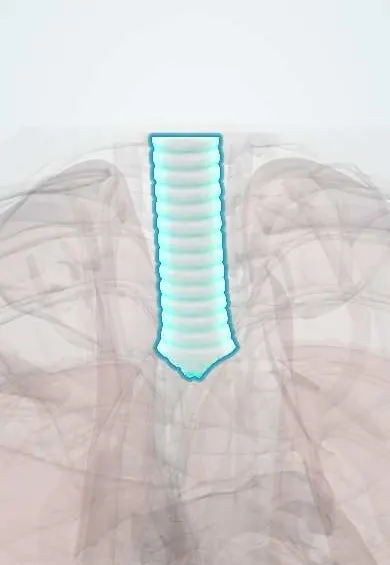
Structures involved
Tap one to see what it is and open it in 3D.
Why it happens
- Hypoxia, ischemia and reperfusion injury
- The autopsy: clinical and medicolegal
- Surface tension, surfactant and Laplace's law
- The causes of hypoxemia
- The alveolus: type I and II pneumocytes, surfactant, the blood–air barrier
What it is
Respiratory impairment from submersion or immersion in liquid. Outcomes are described as fatal or non-fatal drowning (older terms such as 'near-drowning' or 'dry drowning' are no longer recommended). The central problem is hypoxia: restoring oxygenation and ventilation is the priority of rescue and resuscitation.
Who gets it
The WHO estimates about 300,000 drowning deaths a year, more than 90% in low- and middle-income countries. Children under 5 account for nearly a quarter of deaths, and males die at more than twice the rate of females. In Colombia rivers, open water, wells and household water tanks are common settings, with peaks during holiday seasons.
Causes
- Young children left unsupervised near pools, buckets, tanks, rivers or the sea
- Inability to swim and lack of barriers around water
- Alcohol use during swimming or boating
- Seizures, arrhythmias (long QT syndrome) or hypoglycaemia while in water
- Diving injuries to the cervical spine, boating accidents and floods
Risk factors
- Age under 5 years and adolescent or young adult males
- Lack of supervision and unfenced water
- Alcohol or drug use
- Epilepsy, autism and cardiac channelopathies
- Rural living, travel on overcrowded boats and natural disasters
Pathophysiology
After voluntary breath-holding, laryngospasm and then aspiration of water occur. Aspirated fresh or salt water washes out and inactivates surfactant and damages the alveolar–capillary membrane, causing alveolar collapse, intrapulmonary shunt and non-cardiogenic pulmonary oedema (acute respiratory distress syndrome). Hypoxaemia leads to bradycardia and cardiac arrest, and to hypoxic–ischaemic brain injury. Differences between fresh and salt water are not clinically important in the amounts usually aspirated. Cold water can add hypothermia, which may be protective if it develops quickly.
Classification
- Fatal versus non-fatal drowning (with or without morbidity)
- Severity grades (Szpilman) from cough with normal lung sounds to cardiorespiratory arrest
- Submersion (airway under water) versus immersion (head above water)
Symptoms and signs
- Cough, vomiting and shortness of breath after rescue
- Rapid breathing, crackles and cyanosis
- Confusion, agitation, drowsiness or coma
- Chest pain and frothy sputum
- Cold skin from hypothermia
- Absent breathing and pulse in cardiac arrest
Diagnosis
- Clinical
- History of submersion (duration, water temperature, mechanism) and assessment of breathing, oxygenation, circulation and neurological status. Asymptomatic patients with normal oxygen saturation are observed for several hours, since respiratory deterioration can be delayed.
- Tests
- Pulse oximetry and blood gas, glucose, electrolytes, kidney function, core temperature, ECG (arrhythmia, long QT) and blood alcohol or toxicology screen when relevant.
- Imaging
- Chest X-ray for pulmonary oedema or aspiration (may be normal early); cervical spine imaging only when the mechanism suggests injury (diving, high-energy impact); head CT if trauma is suspected.
Differential diagnosis
- Cardiac arrhythmia or seizure as the primary event in the water
- Cervical spine injury from diving
- Hypoglycaemia or intoxication
- Hypothermia alone
- Child abuse or neglect in unexplained infant drownings
Goal of treatment
Correct hypoxia as fast as possible, support ventilation and circulation, prevent secondary brain injury, manage hypothermia and associated injuries, and identify the event that caused the drowning.
Treatment
- Acute
- Safe rescue, then open the airway and give rescue breaths first (five initial breaths), followed by CPR; ventilation is the priority because arrest is hypoxic. Abdominal thrusts to drain water are not recommended; routine cervical immobilisation only when injury is likely.
- Medical
- High-flow oxygen; non-invasive ventilation or intubation with positive end-expiratory pressure for hypoxaemia or pulmonary oedema; lung-protective ventilation for ARDS. Antibiotics only if pneumonia develops.
- Medical
- Rewarming if hypothermic, correction of glucose and electrolytes, and treatment of the triggering cause (seizure, arrhythmia, intoxication).
- Procedure
- Extracorporeal membrane oxygenation (ECMO) for refractory hypoxaemia or hypothermic cardiac arrest in specialised centres.
- Follow-up
- Observation for several hours even when well, with serial oxygen saturation, respiratory rate and neurological checks; intensive care for those with hypoxaemia or altered consciousness, and post-arrest care focused on avoiding fever and hypoxia.
Complications
- Acute respiratory distress syndrome
- Hypoxic–ischaemic brain injury and long-term neurological disability
- Aspiration pneumonia
- Arrhythmias and cardiac arrest
- Hypothermia and electrolyte disturbances
- Associated cervical spine or head injuries
Prognosis
Most people who are alert on arrival recover fully. Long submersion, delayed CPR, need for prolonged resuscitation and persistent coma predict death or severe brain injury; cold water and rapid hypothermia can improve survival in some children.
Prevention
- Constant, close adult supervision of children near any water, including buckets and tanks
- Barriers and covers for pools, wells and water tanks; teaching children to swim and water safety
- Life jackets on boats, avoiding alcohol during water activities, and training the public in CPR
Test yourself
Think of the answer, then tap the question to see it.
Why do resuscitation guidelines for drowning start with rescue breaths rather than compressions alone?
Because cardiac arrest from drowning is caused by hypoxia, so restoring oxygenation is the first priority.
What is the main lung injury mechanism in drowning?
Aspirated water washes out and inactivates surfactant, causing alveolar collapse, shunt and non-cardiogenic pulmonary oedema (ARDS).
Is the distinction between fresh-water and salt-water drowning clinically important?
No; in the volumes usually aspirated both cause similar lung injury and hypoxia.
Should an alert drowning patient with normal saturation be discharged immediately?
No; they are observed for several hours because respiratory deterioration can be delayed.
When is cervical spine immobilisation indicated in drowning?
Only when injury is likely, such as diving into shallow water, high-energy impact or signs of neck injury; it is not routine.
Related conditions
- Acute respiratory distress syndrome (ARDS)
- Acute respiratory failure (hypoxaemic and hypercapnic)
- Accidental hypothermia
- Cardiac arrest (VF, pulseless VT, asystole, PEA)
- Perinatal asphyxia and hypoxic-ischaemic encephalopathy
- Aspiration pneumonia and pneumonitis
- Cervical spine fracture
- Acute alcohol (ethanol) intoxication
- Status epilepticus
- Long QT syndrome and torsades de pointes
- Traumatic brain injury
Educational information, not medical advice. For any symptom, see a health professional.
Sources: Drowning (World Health Organization, 2026); Non-fatal drowning (MedlinePlus, US National Library of Medicine, 2026).
Spotted a mistake?We are always improving for the community. Tell us what is wrong and our team will review it.Report a mistake
Representative model, for educational purposes only.