Status epilepticus !
Status epilepticus is a seizure that does not stop, or repeated seizures without recovery in between. It is an emergency that can damage the brain.
Updated 2026-11-01
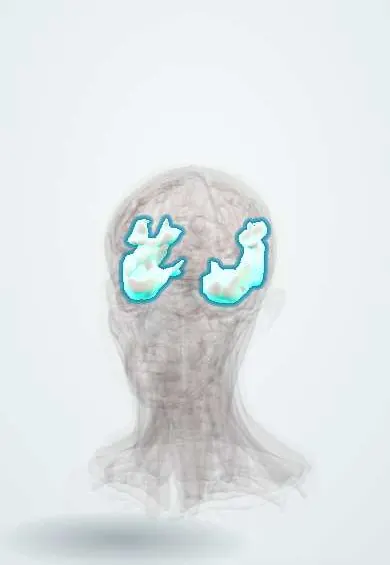
Structures involved
Tap one to see what it is and open it in 3D.
Why it happens
What it is
A seizure lasting 5 minutes or more, or two or more seizures without full recovery of consciousness between them. Convulsive status epilepticus is a time-critical emergency: the longer it lasts, the harder it is to stop and the greater the risk of brain injury and death.
Who gets it
Seen at any age, with peaks in young children and older adults. About half of cases occur in people without known epilepsy. In Colombia and Latin America, neurocysticercosis, central nervous system infections, head trauma and irregular access to antiseizure medicines are important causes; WHO notes a large epilepsy treatment gap in low- and middle-income countries.
Causes
- In known epilepsy: stopping or missing antiseizure medicines, or low drug levels
- Acute brain insults: stroke, head trauma, intracranial haemorrhage, tumour
- Central nervous system infections: meningitis, encephalitis, neurocysticercosis
- Metabolic causes: hypoglycaemia, hyponatraemia, hypocalcaemia, uraemia
- Alcohol or sedative withdrawal, drug toxicity or overdose
- Eclampsia in pregnancy or the postpartum period
Risk factors
- Poorly controlled epilepsy or poor adherence to treatment
- Previous status epilepticus
- Young children with fever and older adults with stroke
- Alcohol use disorder
- Structural brain lesions
Pathophysiology
Normally seizures stop on their own because inhibitory GABA-mediated circuits regain control. In status epilepticus that fails: GABA-A receptors are pulled inside neurons and NMDA glutamate receptors increase, so benzodiazepines lose effect with time and excitation sustains itself. Prolonged firing causes excitotoxic neuronal death, especially in the hippocampus, plus systemic effects such as hypoxia, acidosis, hyperthermia and rhabdomyolysis.
Classification
- Convulsive (generalised tonic-clonic) status epilepticus
- Non-convulsive status epilepticus: altered consciousness with little or no movement, diagnosed by EEG
- Focal status epilepticus with preserved or impaired awareness
- Refractory status epilepticus: continues despite a benzodiazepine and one second-line drug
- Super-refractory status epilepticus: persists 24 hours or more despite anaesthetic drugs
Symptoms and signs
- Continuous tonic-clonic movements lasting 5 minutes or more
- Repeated seizures without regaining consciousness between them
- Unresponsiveness, eye deviation or subtle twitching of the face or limbs
- Tongue biting, incontinence, cyanosis and noisy breathing
- In non-convulsive status: confusion, staring or a coma that does not improve as expected
Diagnosis
- Clinical
- Diagnosed at the bedside from seizure duration and lack of recovery, while treatment starts. History from witnesses: known epilepsy, medicines, alcohol, trauma, fever, pregnancy. Check airway, breathing, circulation and capillary glucose at once.
- Tests
- Capillary and serum glucose, electrolytes including sodium, calcium and magnesium, kidney and liver function, blood count, arterial blood gas, creatine kinase, antiseizure drug levels and a toxicology screen; pregnancy test in women of childbearing age. Lumbar puncture when infection is suspected and imaging allows. EEG confirms non-convulsive status and guides treatment in refractory cases.
- Imaging
- Head CT once the patient is stabilised to look for bleeding, tumour, cysticerci or trauma; MRI later for structural causes.
Differential diagnosis
- Psychogenic non-epileptic seizures
- Convulsive syncope
- Rigors from fever or sepsis
- Movement disorders or drug-induced dystonia
- Decerebrate or decorticate posturing from raised intracranial pressure
- Metabolic or toxic encephalopathy without seizures
Goal of treatment
Stop the seizure as fast as possible, protect airway, breathing and circulation, correct reversible causes (especially hypoglycaemia) and prevent recurrence and brain injury.
Treatment
- Acute
- Stabilisation (0–5 minutes): lateral position, airway protection and oxygen, pulse oximetry and cardiac monitoring, intravenous access, capillary glucose, and thiamine before glucose when alcohol use or malnutrition is possible.
- Acute
- First line (about 5–20 minutes): a benzodiazepine, such as intravenous lorazepam or diazepam, or intramuscular midazolam when there is no intravenous access; intranasal or buccal midazolam and rectal diazepam are options outside hospital. It may be repeated once.
- Acute
- Second line (about 20–40 minutes) if seizures continue: an intravenous antiseizure drug such as fosphenytoin or phenytoin, valproate or levetiracetam; phenobarbital is an alternative. In eclampsia, magnesium sulfate is the drug of choice.
- Acute
- Refractory status: intensive care, intubation and continuous infusion of anaesthetic agents (midazolam, propofol or a barbiturate) guided by continuous EEG.
- Follow-up
- Nursing priorities: time the seizure, do not restrain the person or put anything in the mouth, pad the bed rails, suction and oxygen ready, watch respiratory depression after benzodiazepines, and record neurological checks and vital signs.
Drugs for this condition
Complications
- Hypoxia, aspiration pneumonia and respiratory failure
- Hyperthermia, lactic acidosis and rhabdomyolysis with acute kidney injury
- Cardiac arrhythmias and neurogenic pulmonary oedema
- Permanent neuronal injury, cognitive decline and later epilepsy
- Death, especially in older adults and when caused by an acute brain insult
Prognosis
Depends mainly on the cause, the patient's age and how long seizures last. Status due to missed medicines in known epilepsy usually does well; status from anoxic injury, stroke or infection carries high mortality. Delays in starting a benzodiazepine make control harder.
Prevention
- Regular use of prescribed antiseizure medicines and access to them
- A written seizure rescue plan for people with epilepsy and their carers
- Control and treatment of neurocysticercosis through hygiene and sanitation
- Prenatal care to detect and treat preeclampsia
Test yourself
Think of the answer, then tap the question to see it.
What is the operational time threshold for treating a convulsive seizure as status epilepticus?
5 minutes of continuous seizure activity, or repeated seizures without recovery of consciousness in between.
Which drug class is first-line treatment for status epilepticus?
Benzodiazepines (for example lorazepam or diazepam intravenously, or midazolam intramuscularly).
Which bedside test should be done immediately in every seizing patient?
Capillary blood glucose, because hypoglycaemia is a quickly reversible cause.
Which second-line drugs are used when seizures continue after benzodiazepines?
Intravenous fosphenytoin or phenytoin, valproate or levetiracetam; phenobarbital is an alternative.
What is the drug of choice for seizures due to eclampsia?
Magnesium sulfate.
Related conditions
- Epilepsy and seizures
- Neurocysticercosis
- Bacterial meningitis
- Traumatic brain injury
- Ischaemic stroke
- Intracerebral haemorrhage
- Preeclampsia
- Wernicke encephalopathy (thiamine deficiency)
- Raised intracranial pressure and brain herniation
Educational information, not medical advice. For any symptom, see a health professional.
Sources: Evidence-Based Guideline: Treatment of Convulsive Status Epilepticus in Children and Adults: Report of the Guideline Committee of the American Epilepsy Society (Epilepsy Currents (American Epilepsy Society), 2016); Epilepsy: MedlinePlus Medical Encyclopedia (MedlinePlus, US National Library of Medicine, 2026); Epilepsy (World Health Organization, 2024).
Spotted a mistake?We are always improving for the community. Tell us what is wrong and our team will review it.Report a mistake
Representative model, for educational purposes only.