Conditions · Emergency medicine and toxicology
Foreign-body airway obstruction (choking) !
Choking happens when food or an object blocks the airway. Severe blockage stops breathing within minutes and needs immediate first aid.
Updated 2026-11-01
Structures involved
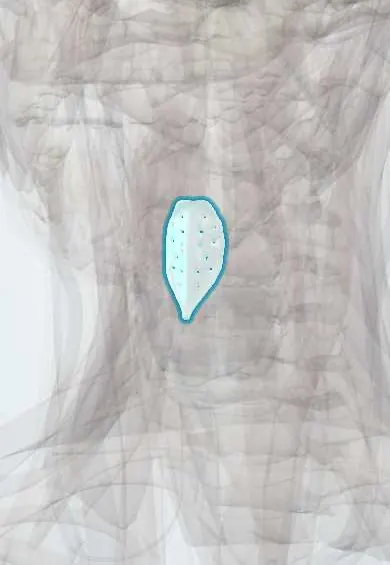
Tap one to see what it is and open it in 3D.
- Epiglottis
- Trachea
- Main bronchi
- Vocal folds
- Pharynx
- Cricoid cartilage
- Thyroid cartilage
- Lobar bronchi
- Diaphragm
Why it happens
- Airway defenses, cough and mucociliary clearance
- The causes of hypoxemia
- Hypoxemic and hypercapnic respiratory failure
What it is
Partial or complete blockage of the upper airway (larynx or trachea) by food or an object. Complete obstruction prevents breathing and speech and leads to hypoxic cardiac arrest within minutes unless relieved.
Who gets it
A leading cause of accidental death in young children and an important cause in older adults, especially those with swallowing problems. Food is the most common cause in adults; in children, food (nuts, grapes, sausages) and small toys, coins and balloons.
Causes
- Food bolus (meat, bread) in adults
- Round or small foods and objects in children (nuts, grapes, candy, coins, toy parts, balloons)
- Dentures or dental fragments
Risk factors
- Age under 4 years
- Older age, dementia, stroke or other causes of dysphagia
- Alcohol or sedative use while eating
- Eating quickly, talking or laughing with food in the mouth
- Poor dentition or ill-fitting dentures
Pathophysiology
An object lodged at or above the vocal folds or in the trachea blocks airflow. In partial obstruction air still passes and coughing may expel it; in complete obstruction no air moves, oxygen falls quickly and loss of consciousness and cardiac arrest follow. Smaller objects pass beyond the carina, usually into the right main bronchus (foreign-body aspiration).
Classification
- Mild (partial) obstruction: effective cough, can speak or cry
- Severe obstruction: ineffective or silent cough, cannot speak or breathe
- Conscious versus unconscious victim; adult, child or infant
Symptoms and signs
- Sudden onset while eating or playing
- Clutching the throat (universal choking sign)
- Coughing, gagging or stridor in partial obstruction
- Inability to speak, cough or breathe in severe obstruction
- Cyanosis, panic, then loss of consciousness
Diagnosis
- Clinical
- Recognition is clinical and immediate: sudden respiratory distress during eating, with the choking sign or inability to speak. Treatment begins without tests.
- Tests
- Pulse oximetry once breathing is restored.
- Imaging
- In stable patients after the event: neck and chest X-rays (only radiopaque objects are visible; air trapping on expiratory films suggests a bronchial object). Laryngoscopy or bronchoscopy confirms and removes a retained object.
Differential diagnosis
- Anaphylaxis with laryngeal oedema
- Epiglottitis or croup
- Acute severe asthma
- Cardiac arrest or stroke during a meal
- Panic attack
Goal of treatment
Relieve the obstruction immediately with age-appropriate manoeuvres, start CPR if the person becomes unresponsive, and remove any retained object in hospital.
Treatment
- Acute
- Mild obstruction: encourage coughing and watch closely; no blows or thrusts while the cough is effective.
- Acute
- Severe obstruction in adults and children over 1 year: back blows and abdominal thrusts (Heimlich manoeuvre), repeated until the object comes out; chest thrusts in pregnancy or obesity. Infants: back blows alternating with chest thrusts, never abdominal thrusts.
- Acute
- If unresponsive: call for help and start CPR; look in the mouth before breaths and remove only a visible object, without blind finger sweeps.
- Procedure
- In hospital: direct laryngoscopy with forceps, rigid bronchoscopy, or an emergency surgical airway (cricothyrotomy) if the object cannot be removed.
- Follow-up
- Medical review after abdominal thrusts or persistent symptoms, to look for injury or a retained fragment.
Complications
- Hypoxic brain injury and cardiac arrest
- Injury from thrusts (rib fracture, abdominal organ injury)
- Retained object with pneumonia or atelectasis
- Post-obstructive pulmonary oedema
Prognosis
Prompt bystander action usually clears the airway with full recovery. Outcome worsens with the time without oxygen; cardiac arrest from choking has a poor prognosis unless relieved quickly.
Prevention
- Cutting round foods (grapes, sausages) and avoiding nuts and hard candy in young children
- Keeping small objects, coins and balloons away from children; supervision while eating
- Swallowing assessment, texture-modified diets and supervision in older adults with dysphagia
- First-aid and CPR training for families, teachers and caregivers
Test yourself
Think of the answer, then tap the question to see it.
How is mild airway obstruction distinguished from severe?
In mild obstruction the person can cough effectively and speak; in severe obstruction the cough is silent and they cannot speak or breathe.
Which manoeuvres relieve severe choking in a conscious infant?
Back blows alternating with chest thrusts; abdominal thrusts are not used in infants.
What should be done if a choking person becomes unresponsive?
Call for help and start CPR, checking the mouth for a visible object before breaths; no blind finger sweeps.
Which manoeuvre replaces abdominal thrusts in a pregnant or obese person?
Chest thrusts.
Related conditions
- Foreign body aspiration in children
- Cardiac arrest (VF, pulseless VT, asystole, PEA)
- Aspiration pneumonia and pneumonitis
- Atelectasis
- Acute epiglottitis
- Croup (laryngotracheobronchitis)
- Anaphylaxis
- Asthma
- Foreign bodies of the ear and nose
Educational information, not medical advice. For any symptom, see a health professional.
Sources: Choking - adult or child over 1 year (MedlinePlus, US National Library of Medicine, 2026); Choking - infant under 1 year (MedlinePlus, US National Library of Medicine, 2026).
Spotted a mistake?We are always improving for the community. Tell us what is wrong and our team will review it.Report a mistake
Representative model, for educational purposes only.