Goitre !
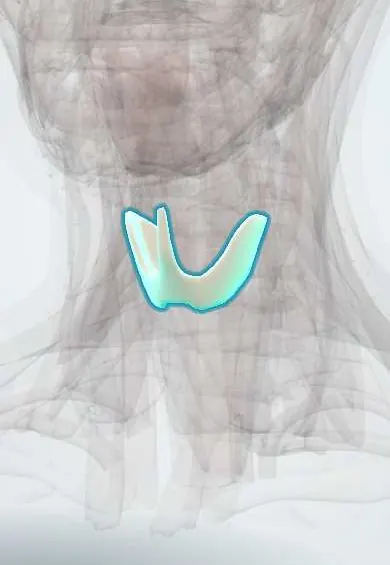
A goitre is an enlarged thyroid gland, seen as swelling at the front of the neck; thyroid function can be normal, low or high.
Updated 2026-10-29
Structures involved
Tap one to see what it is and open it in 3D.
In biochemistry
- Thyroid hormone synthesis: Step 4 · Thyroid peroxidase (organification)
- Thyroid peroxidase (TPO)
- Thyroxine (T4)
- Iodine
In embryology
In the clinical exam
In physiology
Why it happens
- Hyperplasia: physiologic and pathologic
- The thyroid axis: reading TSH and free T4
- Thyroid follicles, C cells and parathyroid
What it is
Enlargement of the thyroid gland, diffuse or nodular, which may occur with normal, low or high thyroid function.
Who gets it
Endemic goitre from iodine deficiency was once common in parts of the Andean region; salt iodisation programmes in Colombia and Latin America have greatly reduced it. Nodular goitre is frequent in older women.
Causes
- Iodine deficiency (endemic goitre)
- Graves disease and Hashimoto thyroiditis
- Multinodular goitre
- Goitrogens and some medicines (lithium, amiodarone)
- Thyroid tumours and rare inborn errors of hormone synthesis
Risk factors
- Low iodine intake
- Female sex and older age
- Pregnancy
- Family history
- Smoking
Pathophysiology
When the gland cannot make enough hormone, the pituitary raises TSH, which stimulates thyroid growth. In Graves disease, antibodies act on the TSH receptor; in Hashimoto thyroiditis, lymphocytic infiltration enlarges the gland. Over time, uneven growth of follicles creates multiple nodules, some of which become autonomous.
Classification
- Diffuse versus nodular (single or multinodular)
- Toxic versus non-toxic
- Endemic versus sporadic
- Substernal (retrosternal) goitre
- WHO grading by size on palpation and inspection
Symptoms and signs
- Visible or palpable neck swelling that moves on swallowing
- Pressure in the neck, dysphagia or cough
- Breathlessness or stridor with large or substernal goitre
- Symptoms of hypo- or hyperthyroidism
Diagnosis
- Clinical
- Inspection and palpation of the thyroid, assessment of tracheal deviation and Pemberton sign.
- Tests
- TSH and free T4; thyroid antibodies (TPO, TSH receptor); fine-needle aspiration of suspicious nodules.
- Imaging
- Neck ultrasound; CT for substernal extension and airway compression; scintigraphy in toxic goitre.
Differential diagnosis
- Thyroid nodule or cancer
- Thyroiditis
- Thyroglossal duct cyst
- Cervical lymphadenopathy
- Pharyngeal pouch
Goal of treatment
Correct thyroid dysfunction, relieve compression and exclude malignancy.
Treatment
- Medical
- Iodine supplementation in deficiency; thyroid hormone for hypothyroidism; antithyroid drugs for toxic goitre.
- Medical
- Radioactive iodine to shrink toxic or some non-toxic goitres.
- Surgical
- Thyroidectomy for compression, suspected cancer, cosmetic concern or failure of other treatments.
- Follow-up
- Ultrasound and clinical follow-up for small asymptomatic goitres.
Drugs for this condition
Complications
- Tracheal or oesophageal compression
- Hyperthyroidism (toxic multinodular goitre)
- Recurrent laryngeal nerve palsy
- Complications of surgery (hypoparathyroidism, nerve injury)
Prognosis
Usually good. Many goitres are stable for years; treatment relieves compressive and hormonal symptoms.
Prevention
- Iodised salt and adequate iodine intake, especially in pregnancy
Test yourself
Think of the answer, then tap the question to see it.
What is the most common cause of goitre worldwide?
Iodine deficiency.
What is Pemberton sign?
Facial congestion and distress on raising both arms, from a substernal goitre compressing the thoracic inlet.
Why does iodine deficiency enlarge the thyroid?
Low hormone output raises TSH, which stimulates thyroid growth.
Which public health measure has reduced endemic goitre in Latin America?
Universal salt iodisation.
Related conditions
- Hypothyroidism
- Graves disease (hyperthyroidism)
- Thyroid nodule
- Thyroid cancer (papillary)
- Cervical lymphadenopathy
Educational information, not medical advice. For any symptom, see a health professional.
Sources: Goiter (StatPearls (NCBI Bookshelf), 2023).
Spotted a mistake?We are always improving for the community. Tell us what is wrong and our team will review it.Report a mistake
Representative model, for educational purposes only.