Conditions · Pediatrics and neonatology
Hyper-IgM syndrome (CD40 ligand deficiency) !
An inherited immune defect, usually in boys, where antibodies cannot switch from IgM to other types, causing severe infections from infancy.
Updated 2026-11-01
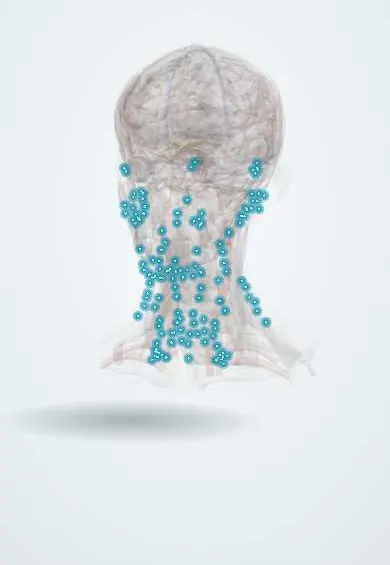
Structures involved
Tap one to see what it is and open it in 3D.
Why it happens
- Mendelian inheritance: autosomal dominant, recessive and X-linked
- Innate and adaptive immunity: overview
- Immunoglobulins (antibodies)
- Lymph node and spleen under the microscope
What it is
A group of primary immunodeficiencies with a defect in immunoglobulin class-switch recombination: IgG, IgA and IgE are low while IgM is normal or high. The classic X-linked form is caused by deficiency of CD40 ligand on activated T cells, so it behaves as a combined immunodeficiency with opportunistic infections such as Pneumocystis pneumonia and Cryptosporidium diarrhoea.
Who gets it
Rare: about 2 per million newborn boys for the X-linked form, which accounts for most cases. Symptoms usually start in the first one to two years of life. Autosomal recessive forms (such as AID or CD40 deficiency) affect both sexes.
Causes
- X-linked recessive variants in CD40LG, encoding CD40 ligand (CD154) on activated CD4 T cells (most common form)
- Autosomal recessive defects in CD40, AICDA (activation-induced cytidine deaminase) or UNG, which mainly affect B cells
Risk factors
- Male sex for the X-linked form
- Mother who carries a CD40LG variant or affected male relatives
- Consanguinity for autosomal recessive forms
Pathophysiology
CD40 ligand on helper T cells binds CD40 on B cells, which drives germinal centre formation, class switching to IgG, IgA and IgE, and memory B cells. Without it, B cells make only IgM, so bacterial infections recur. CD40 ligand also activates macrophages and dendritic cells, so cell-mediated immunity fails as well, allowing opportunistic infections (Pneumocystis jirovecii, Cryptosporidium, Cryptococcus, cytomegalovirus). Chronic Cryptosporidium infection of the bile ducts causes sclerosing cholangitis and raises the risk of liver and biliary cancers. Neutropenia is common.
Classification
- X-linked CD40 ligand deficiency: combined immunodeficiency with opportunistic infections
- Autosomal recessive CD40 deficiency: similar to the X-linked form
- AID and UNG deficiencies: B-cell-intrinsic, bacterial infections and lymphoid hyperplasia, no opportunistic infections
Symptoms and signs
- Recurrent bacterial otitis, sinusitis and pneumonia starting in infancy
- Pneumocystis pneumonia, often the presenting infection in the first year
- Chronic watery diarrhoea and poor weight gain (Cryptosporidium, Giardia)
- Mouth ulcers and infections associated with neutropenia
- Few or small tonsils and lymph nodes in CD40 ligand deficiency (enlarged in AID deficiency)
- Jaundice, itching or abnormal liver tests from cholangitis
Diagnosis
- Clinical
- Suspect it in an infant boy with recurrent bacterial infections plus an opportunistic infection, especially Pneumocystis pneumonia or Cryptosporidium diarrhoea.
- Tests
- Serum immunoglobulins (low IgG, IgA and IgE with normal or raised IgM); B-cell numbers normal but switched memory B cells absent; flow cytometry showing absent CD40 ligand expression on activated T cells; genetic testing for CD40LG and the recessive genes; complete blood count for neutropenia; stool tests (including PCR) for Cryptosporidium; liver tests.
- Imaging
- Chest imaging for pneumonia; liver and biliary ultrasound or magnetic resonance cholangiography for sclerosing cholangitis.
Differential diagnosis
- X-linked agammaglobulinaemia
- Severe combined immunodeficiency
- Common variable immunodeficiency
- HIV infection in infancy
- Transient hypogammaglobulinaemia of infancy
Goal of treatment
Replace antibodies, prevent opportunistic infections and liver disease, and cure the immune defect with haematopoietic stem cell transplantation when a suitable donor is available.
Treatment
- Medical
- Lifelong immunoglobulin (IgG) replacement.
- Medical
- Prophylaxis against Pneumocystis with trimethoprim-sulfamethoxazole; treatment of infections as they occur.
- Conservative
- Boiled or filtered drinking water and avoidance of untreated water and farm animals to reduce Cryptosporidium exposure.
- Procedure
- Haematopoietic stem cell transplantation, the only curative treatment for CD40 ligand deficiency, ideally before liver damage.
- Follow-up
- Monitoring: stool screening for Cryptosporidium, liver tests and imaging, and blood counts; liver transplantation is considered in advanced liver disease.
- Conservative
- Growth factors (granulocyte colony-stimulating factor) for severe symptomatic neutropenia.
Complications
- Pneumocystis pneumonia and other opportunistic infections
- Sclerosing cholangitis and cirrhosis
- Cholangiocarcinoma, liver and gastrointestinal tumours
- Neutropenia
- Bronchiectasis from recurrent infections
- Autoimmune disease and lymphoma
Prognosis
Without transplantation, many patients die in early adulthood from infections or liver disease. Stem cell transplantation in childhood, before organ damage, gives the best long-term survival.
Prevention
- Genetic counselling and carrier testing of mothers
- Prenatal or early diagnosis in families with a known variant
- Safe drinking water to avoid Cryptosporidium
Test yourself
Think of the answer, then tap the question to see it.
What protein is defective in X-linked hyper-IgM syndrome?
CD40 ligand (CD154) on activated helper T cells.
What is the classic immunoglobulin profile?
Normal or high IgM with low IgG, IgA and IgE.
Which opportunistic infections are typical?
Pneumocystis jirovecii pneumonia and Cryptosporidium diarrhoea (which can cause sclerosing cholangitis).
What is the only curative treatment?
Haematopoietic stem cell transplantation.
Related conditions
- Pneumocystis pneumonia (PCP)
- Primary sclerosing cholangitis
- X-linked (Bruton) agammaglobulinaemia
- Common variable immunodeficiency (CVID)
- Non-Hodgkin lymphoma
- Cholangiocarcinoma (bile duct cancer)
- Bronchiectasis
- Adenosine deaminase deficiency (ADA-SCID)
- Acute otitis media
Educational information, not medical advice. For any symptom, see a health professional.
Sources: X-linked hyper IgM syndrome (MedlinePlus Genetics (U.S. National Library of Medicine), 2023).
Spotted a mistake?We are always improving for the community. Tell us what is wrong and our team will review it.Report a mistake
Representative model, for educational purposes only.