Conditions · Infectious and tropical diseases
Leprosy (Hansen disease) !
Leprosy is a curable bacterial infection of skin and nerves; early treatment prevents numb hands and feet, injuries and disability.
Updated 2026-11-01
Structures involved
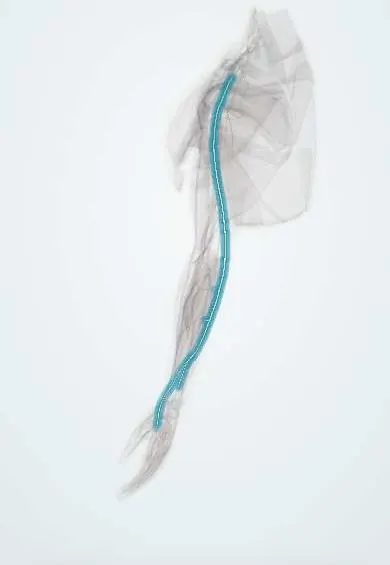
Tap one to see what it is and open it in 3D.
- Ulnar nerve
- Common fibular nerve
- Skin
- Median nerve
- Radial nerve
- Digital nerves
- Tibial nerve
- Superficial fibular nerve
- Deep fibular nerve
Microorganisms that cause it
Why it happens
- Granulomatous inflammation: caseating vs non-caseating, the causes to know
- Special stains in diagnosis: Congo red, Prussian blue, PAS, Ziehl–Neelsen, Gram
- Innate and adaptive immunity: overview
- Peripheral nerve: endoneurium, perineurium, epineurium; myelin
- Glial cells: astrocytes, oligodendrocytes, microglia, Schwann cells
What it is
A chronic infection by Mycobacterium leprae (and M. lepromatosis) that targets the skin and peripheral nerves. Its form depends on the host's cellular immunity, ranging from few, well-defined anaesthetic patches to widespread nodules. It is curable with multidrug therapy.
Who gets it
The Americas report over a tenth of new cases worldwide, more than 90% of them in Brazil. Colombia still notifies a few hundred new cases a year, many with disability at diagnosis, and leprosy is a mandatory notifiable disease under national surveillance.
Causes
- Mycobacterium leprae, an acid-fast bacillus that cannot be cultured and grows best in cooler body parts
- Spread by respiratory droplets from untreated patients during prolonged close contact
- Armadillos are a natural reservoir in the Americas
Risk factors
- Household contact with an untreated multibacillary patient
- Living in endemic areas with poverty and crowding
- Genetic susceptibility
- Contact with armadillos
Pathophysiology
The bacillus multiplies very slowly (incubation of years) and invades Schwann cells of peripheral nerves, especially where nerves lie superficially and are cool. In tuberculoid disease a strong Th1 response forms granulomas, with few bacilli but early nerve damage. In lepromatous disease a weak cellular response allows huge numbers of bacilli in skin, nasal mucosa and nerves. Immune reactions (type 1 reversal reaction, type 2 erythema nodosum leprosum) can occur before, during or after treatment and rapidly damage nerves. Loss of sensation leads to unnoticed injuries, ulcers and deformity.
Classification
- Ridley-Jopling spectrum: tuberculoid, borderline (BT, BB, BL), lepromatous
- WHO treatment classification: paucibacillary (1–5 skin lesions) or multibacillary (more than 5 lesions, nerve involvement or positive smear)
- Leprosy reactions: type 1 (reversal) and type 2 (erythema nodosum leprosum)
Symptoms and signs
- Hypopigmented or reddish skin patches with loss of sensation to touch, pain and temperature
- Thickened, sometimes tender peripheral nerves (ulnar, common fibular, great auricular)
- Numbness and weakness of hands and feet: claw hand, foot drop
- Nodules, thickened skin of the face ("leonine facies"), loss of eyebrows, nasal congestion in lepromatous disease
- Painless injuries, burns and plantar ulcers
- Eye dryness and inability to close the eyelids
Diagnosis
- Clinical
- WHO cardinal signs: a skin patch with definite loss of sensation, a thickened peripheral nerve with loss of sensation or weakness, or acid-fast bacilli in a slit-skin smear. A careful sensory and motor exam of the hands, feet and eyes grades disability.
- Tests
- Slit-skin smear for acid-fast bacilli (bacterial index); skin biopsy with histopathology; PCR in difficult cases. Lepromin test is not diagnostic. Screen household contacts.
- Imaging
- Not routine; nerve ultrasound can show thickening; X-rays of hands and feet for bone resorption and osteomyelitis.
Differential diagnosis
- Vitiligo and pityriasis versicolor (no loss of sensation)
- Cutaneous leishmaniasis
- Diabetic and other peripheral neuropathies
- Cubital tunnel syndrome and other entrapment neuropathies
- Sarcoidosis, cutaneous tuberculosis and fungal infections
Goal of treatment
Cure the infection and stop transmission early, prevent and treat reactions to save nerve function, and prevent disability through self-care and rehabilitation.
Treatment
- Medical
- WHO multidrug therapy free of charge: rifampicin, dapsone and clofazimine for 6 months (paucibacillary) or 12 months (multibacillary).
- Medical
- Leprosy reactions: corticosteroids for neuritis and reversal reactions; clofazimine or thalidomide (strictly avoided in pregnancy) for erythema nodosum leprosum.
- Follow-up
- Regular nerve function tests to detect silent neuritis; contact examination and single-dose rifampicin prophylaxis for contacts; notification to public health.
- Rehabilitation
- Daily self-care of insensitive hands, feet and eyes, protective footwear, physiotherapy and occupational therapy; stigma-reduction counselling.
- Surgical
- Reconstructive tendon transfers, ulcer care and, in selected cases, nerve decompression.
Drugs for this condition
Complications
- Permanent nerve damage with claw hand, foot drop and lagophthalmos
- Plantar ulcers, infections, bone loss and resorption of fingers and toes
- Blindness from corneal exposure or uveitis
- Nasal collapse and testicular atrophy in lepromatous disease
- Stigma, social exclusion and loss of work
Prognosis
Multidrug therapy cures the infection and patients stop being infectious soon after starting it; nerve damage already present is often permanent, so early diagnosis is what prevents disability.
Prevention
- Early diagnosis and complete treatment of cases
- Contact tracing with single-dose rifampicin prophylaxis
- BCG vaccination gives some protection
Test yourself
Think of the answer, then tap the question to see it.
What are the WHO cardinal signs of leprosy?
A skin patch with loss of sensation, a thickened peripheral nerve with sensory or motor loss, or acid-fast bacilli on slit-skin smear.
Which cells does M. leprae invade in nerves?
Schwann cells.
Which drugs make up WHO multidrug therapy?
Rifampicin, dapsone and clofazimine.
What distinguishes paucibacillary from multibacillary leprosy for treatment?
Paucibacillary has 1–5 skin lesions without nerve involvement and negative smears; more lesions, nerve involvement or a positive smear means multibacillary.
What is the nursing priority for insensitive hands and feet?
Daily inspection and protection (self-care, proper footwear) to prevent unnoticed injuries and ulcers.
Related conditions
- Peripheral neuropathy (diabetic and other)
- Cubital tunnel syndrome (ulnar neuropathy at the elbow)
- Diabetic foot
- Leishmaniasis
- Vitiligo
- Erythema nodosum
- Uveitis
- Tuberculosis
Educational information, not medical advice. For any symptom, see a health professional.
Sources: Leprosy (World Health Organization, 2025); Leprosy (Hansen disease) - PAHO/WHO | Pan American Health Organization (Pan American Health Organization, 2025); Leprosy: MedlinePlus Medical Encyclopedia (MedlinePlus (U.S. National Library of Medicine), 2024).
Spotted a mistake?We are always improving for the community. Tell us what is wrong and our team will review it.Report a mistake
Representative model, for educational purposes only.