Peritonitis !
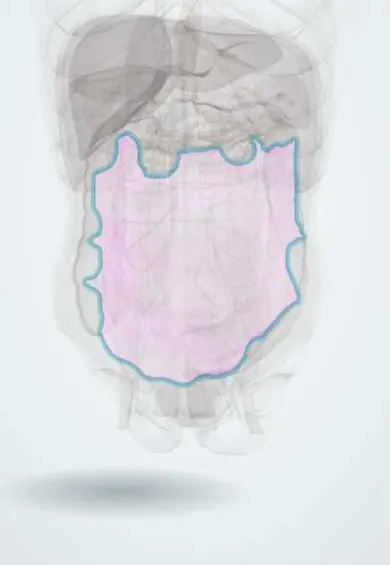
Peritonitis is inflammation of the peritoneum, the lining of the abdomen, usually from infection, often after a gut organ perforates or leaks.
Updated 2026-10-29
Structures involved
Tap one to see what it is and open it in 3D.
Microorganisms that cause it
In histology
- The GI tract wall: mucosa, submucosa, muscularis, serosa; enteric plexuses
- Serous membranes: pleura and peritoneum
In the clinical exam
- Abdominal auscultation: bowel sounds and bruits
- Abdominal palpation: light and deep, guarding and masses
- Rebound tenderness (Blumberg sign)
- Acute abdomen and peritoneal irritation
- Fever, infection and sepsis: the bedside signs
Why it happens
- Patterns of acute inflammation: serous, fibrinous, purulent, abscess, ulcer
- How septic shock develops
What it is
Inflammation of the peritoneum, usually from infection. Primary peritonitis arises without a breach of the gut (spontaneous bacterial peritonitis), while secondary peritonitis follows perforation, leak or necrosis of an abdominal organ.
Who gets it
Secondary peritonitis from appendicitis, perforated ulcer, diverticulitis or trauma is a common reason for emergency surgery. Spontaneous bacterial peritonitis is a frequent infection in cirrhosis with ascites. Tuberculous peritonitis is still seen in Latin America.
Causes
- Primary: spontaneous bacterial peritonitis in cirrhotic ascites, usually from gut gram-negative bacteria; nephrotic syndrome in children
- Secondary: perforated appendicitis, peptic ulcer, diverticulitis or bowel; anastomotic leak; trauma; ischaemic bowel
- Tertiary: persistent or recurrent infection after adequate treatment, usually in critically ill patients
- Peritoneal dialysis-associated peritonitis
- Tuberculous peritonitis
- Chemical peritonitis from bile, gastric acid or pancreatic enzymes
Risk factors
- Cirrhosis with ascites, low ascitic protein, prior SBP or gastrointestinal bleeding
- Delayed treatment of appendicitis, diverticulitis or ulcer
- Recent abdominal surgery
- Peritoneal dialysis
- Immunosuppression, older age
Pathophysiology
Bacteria or irritating fluid in the peritoneal cavity trigger a strong inflammatory response with fluid shift into the abdomen, ileus and absorption of toxins into the blood. The omentum and bowel loops try to wall the process off, which can form an abscess. If not controlled, it progresses to sepsis and multiorgan failure.
Classification
- Primary (spontaneous), secondary or tertiary
- Localised vs generalised
- Community-acquired vs healthcare-associated (guides antibiotic choice)
- Infectious vs chemical (sterile)
Symptoms and signs
- Abdominal pain, worse with movement or coughing; the patient lies still
- Tenderness with voluntary guarding, involuntary rigidity (board-like abdomen) and rebound tenderness
- Fever, tachycardia, nausea and vomiting
- Distension and reduced or absent bowel sounds (ileus)
- SBP may be subtle: fever, confusion, worsening kidney function or only a decline in a cirrhotic patient
Diagnosis
- Clinical
- History of the likely source and examination for guarding, rigidity and rebound; sepsis assessment.
- Tests
- Blood count, CRP, lactate, kidney function, blood cultures. In ascites, diagnostic paracentesis: an ascitic neutrophil count of 250 cells/mm³ or more defines SBP; several organisms, very low glucose or high protein suggest secondary peritonitis.
- Imaging
- CT with contrast finds the source, free air and collections. Upright chest X-ray can show free air under the diaphragm. Ultrasound guides paracentesis and finds fluid.
Differential diagnosis
- Acute pancreatitis
- Acute mesenteric ischaemia
- Bowel obstruction
- Diabetic ketoacidosis or other medical causes of abdominal pain
- Inferior myocardial infarction or lower lobe pneumonia
- Pelvic inflammatory disease or ruptured ectopic pregnancy
Goal of treatment
Control the source, treat the infection and support organ function. SBP is treated medically; secondary peritonitis needs source control, usually surgery or drainage.
Treatment
- Acute
- Sepsis care: fluids, early broad-spectrum antibiotics after cultures, vasopressors if needed, and analgesia.
- Surgical
- Secondary peritonitis: source control by laparotomy or laparoscopy (repair or resection of the perforated organ, washout), or percutaneous drainage of a localised abscess.
- Medical
- Spontaneous bacterial peritonitis: a third-generation cephalosporin or another agent chosen by local resistance, plus intravenous albumin to protect the kidneys; surgery is not indicated.
- Medical
- After a first SBP episode: long-term antibiotic prophylaxis and assessment for liver transplantation.
- Follow-up
- Repeat clinical review, lactate and imaging; relaparotomy on demand or planned in selected patients who do not improve.
Drugs for this condition
- Piperacillin + tazobactam
- Ampicillin + sulbactam
- Cefepime
- Cefoxitin
- Ceftazidime + avibactam
- Ceftolozane + tazobactam
- Amikacin
- Meropenem
- Imipenem–cilastatin
- Ertapenem
- Aztreonam
- Metronidazole
- Tigecycline
Complications
- Sepsis, septic shock and multiorgan failure
- Intra-abdominal abscess
- Hepatorenal syndrome after SBP
- Adhesions and later bowel obstruction
- Wound infection and incisional hernia after laparotomy
- Abdominal compartment syndrome
Prognosis
Depends on the source, how quickly it is controlled, age and organ failure. Localised peritonitis treated early does well; generalised peritonitis with septic shock and SBP in advanced cirrhosis carry high mortality.
Prevention
- Early treatment of appendicitis, ulcers and diverticulitis
- Antibiotic prophylaxis for SBP in high-risk cirrhotic patients and during gastrointestinal bleeding
- Sterile technique in peritoneal dialysis
Test yourself
Think of the answer, then tap the question to see it.
What is the difference between primary and secondary peritonitis?
Primary arises without a breach of the gut (e.g., SBP in cirrhosis); secondary follows perforation, leak or necrosis of an abdominal organ.
Which ascitic fluid finding defines spontaneous bacterial peritonitis?
A neutrophil count of 250 cells/mm³ or more without a surgical source of infection.
Why is intravenous albumin given with antibiotics in spontaneous bacterial peritonitis?
It lowers the risk of hepatorenal syndrome and death.
What is the difference between guarding and rigidity?
Guarding is muscle tensing on palpation, which can be voluntary; rigidity is involuntary, constant tension, a sign of diffuse peritonitis.
Which feature of ascitic fluid suggests secondary rather than spontaneous peritonitis?
Several organisms on Gram stain or culture, very low glucose, high protein or high LDH.
Related conditions
- Cirrhosis
- Acute appendicitis
- Peptic ulcer disease
- Diverticular disease and diverticulitis
- Sepsis and septic shock
- Acute mesenteric ischaemia
- Large bowel obstruction
- Acute pancreatitis
- Pelvic inflammatory disease
Educational information, not medical advice. For any symptom, see a health professional.
Sources: Septic Peritonitis (StatPearls (NCBI Bookshelf), 2022).
Spotted a mistake?We are always improving for the community. Tell us what is wrong and our team will review it.Report a mistake
Representative model, for educational purposes only.